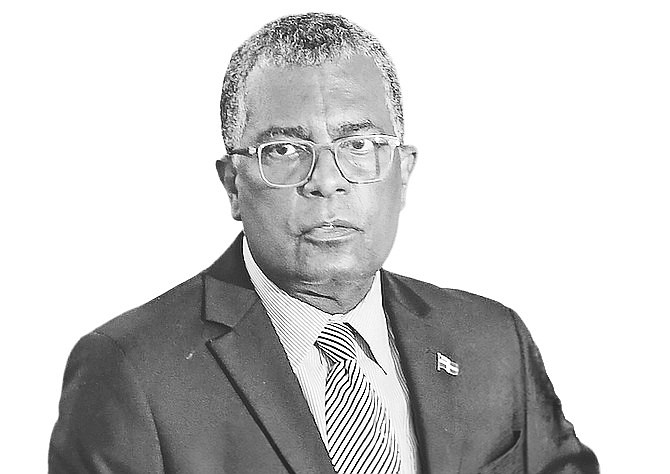
At the ongoing Organisation of American States General Assembly hosted in Panama City, The Bahamas’ Foreign Affairs Minister Fred Mitchell has delivered a clear rebuke of Washington’s decades-long pressure campaign against Cuba, standing firmly in defense of the island nation’s right to full participation in the global economy. Mitchell outlined the Bahamas’ official position: the Caribbean nation unwaveringly supports Cuba’s sovereignty, territorial integrity, unimpeded access to critical supplies including food and medicine, and its right to take part in all hemispheric affairs.
Washington has long justified its sweeping sanctions regime against Cuba by citing claims of political repression, human rights violations, and alleged threats to US national security and foreign policy interests. But for Cuba, this sustained pressure has contributed to one of the most severe economic crises the country has faced in 30 years. Today, the island grapples with acute shortages of food, fuel, and essential medications, widespread prolonged power outages, and a public healthcare system pushed to the breaking point. United Nations human rights experts have specifically highlighted that recent US restrictions on fuel imports have further tightened the screws on Cuba’s energy grid, putting access to even basic life-sustaining services at grave risk. Beyond international criticism of US policy, the Cuban government has also faced ongoing global scrutiny over its own human rights practices, particularly the mass detention of demonstrators who participated in widespread anti-government protests in July 2021.
In a public voice note shared during the assembly, Mitchell noted that what was expected to be a routine, low-key session of policy resolutions has devolved into high-stakes political drama, unfolding against a backdrop of a growing conservative ideological shift across the Americas. He argued that recent political shifts within the United States are directly driving much of the current tension in OAS discussions. While the OAS was originally founded to help member states collaborate on problem-solving while upholding shared values of democratic governance, human rights, human dignity, peace, security, and the rule of law, Mitchell argued the body has a far from perfect track record on delivering on these promises. “There is a sharp divide on ideological grounds between left and right, and the issue of economic dominance and political dominance by the United States of America,” he told delegates.
Mitchell connected the Bahamas’ stance on Cuba to its approach to another long-troubled Caribbean nation, Haiti, saying the same core principles guide the country’s position on both crises. Haiti, which made history as the first independent Black republic led by formerly enslaved people of African descent, remains trapped in a catastrophic cycle of gang violence, mass forced displacement, and widespread hunger that has strained the response capacity of the Caribbean Community (CARICOM), the OAS, and the broader international community working to restore stability there. “We apply the same values to Haiti that struck the first blow for African people in the world for freedom,” Mitchell said. “We agree that there is still a need in this world for affirmative action and reparations for past discrimination against people of African descent.”
As ideological rifts widen across the hemisphere, Mitchell said small CARICOM member states are deliberately avoiding getting drawn into crossfire between larger ideological blocs, but their collective numerical weight in the OAS gives them outsize influence despite their small physical and population size. “Even as small island developing states, low-lying coastal states, our votes predominate by the numbers in the OAS forum,” he explained.
Beyond the debate over Cuba, Mitchell confirmed that the Bahamas is currently assessing what role it can play in addressing the unfolding crisis in Bolivia, where the right-wing national government recently declared a national state of emergency amid escalating mass civil unrest. The Bahamas has received an invitation to join an official OAS delegation that will travel to Bolivia to explore opportunities for constructive mediation that can resolve tensions and prevent a descent into large-scale violent conflict. Mitchell also mapped the current ideological split across South America, noting that nations including Brazil and Mexico now sit on the left of the political spectrum, while Argentina and Chile are led by right-wing governments.
Mitchell also used his platform at the assembly to press for urgent global action on climate change, framing the crisis as an existential threat to small island nations like the Bahamas in particular. He urged all member states to accept the overwhelming scientific consensus on human-caused climate change, invest in adaptation and mitigation measures, and transition away from fossil fuel dependency to avoid the worst impacts of rising temperatures and sea levels.
Closing his remarks, Mitchell drew a parallel between modern hemispheric politics and a popular cultural reference: the Star Wars film trilogy. He called the franchise’s core narrative a “moral tale” about the careful and ethical use of power, noting that the trilogy’s central arc demonstrates that even the most powerful actors can be challenged by smaller, less powerful groups. “That is why we in The Bahamas argue for the judicious use of power, and there is this aphorism: People who say that a small voice doesn’t matter have obviously never spent the night in a dark room with a mosquito,” he said.