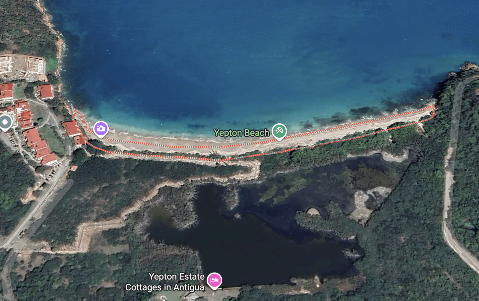
Antigua and Barbuda’s government has given the green light to an innovative public-private partnership initiative that will develop a new beachfront hotel at Yepton, marking a strategic policy shift to expand domestic ownership of the country’s critical tourism sector. The government will commit up to EC$40 million to the project alongside local private investors and funding from the nation’s well-established Citizenship by Investment Programme, in a framework officials are framing as a new template for inclusive tourism growth.
Maurice Merchant, Director General of Communications, unveiled the Cabinet’s approval during a post-Cabinet media briefing held Thursday. He detailed that the 4-star-caliber hotel development will occupy roughly 15 acres of prime beachfront real estate at the Yepton location, a site positioned to draw both international leisure travelers and regional visitors.
Under the agreed investment structure, the national government, in partnership with select state-owned enterprises and statutory corporations, will contribute the maximum EC$40 million public sector allocation. Local private investors will supply additional private capital, with one domestic backer already having finalized a commitment of EC$20 million to the project. Merchant highlighted this early commitment as a powerful vote of confidence in Antigua and Barbuda’s long-term tourism growth trajectory, even as global travel markets continue to evolve post-pandemic.
Additional project financing will be sourced from the Citizenship by Investment Programme, a longstanding government mechanism that channels external investment into high-priority national development projects across the twin-island nation. Merchant emphasized that expanding local ownership and grassroots participation in the tourism industry stands as a core enduring policy objective for the current administration.
As the backbone of Antigua and Barbuda’s national economy, tourism contributes the largest share of annual GDP and employment to the country. However, Merchant explained that the government has long prioritized shifting the current market dynamics to ensure a greater portion of the billions in annual tourism revenue stays within the domestic economy, delivering direct, tangible benefits to all citizens of Antigua and Barbuda, rather than flowing exclusively to external stakeholders.
Following the formal announcement, Merchant addressed questions from reporters, clarifying key details of the investment structure. He confirmed that all capital contributions from state-owned entities and statutory corporations will be held as assets by those public institutions, mirroring the structure used for previous government-supported tourism development projects across the country. He also pushed back against early misinterpretation, noting that the EC$40 million figure solely reflects the public sector’s total contribution. The entire project will be funded through a blended mix of public investment, local private capital, and Citizenship by Investment Programme funding, creating a diversified financial foundation that spreads risk across stakeholders.
Industry analysts note that the new model could serve as a blueprint for future tourism developments across the Caribbean, where increasing domestic ownership of key tourism assets has emerged as a shared policy goal across many small island developing states looking to maximize economic benefits from their natural coastal assets.