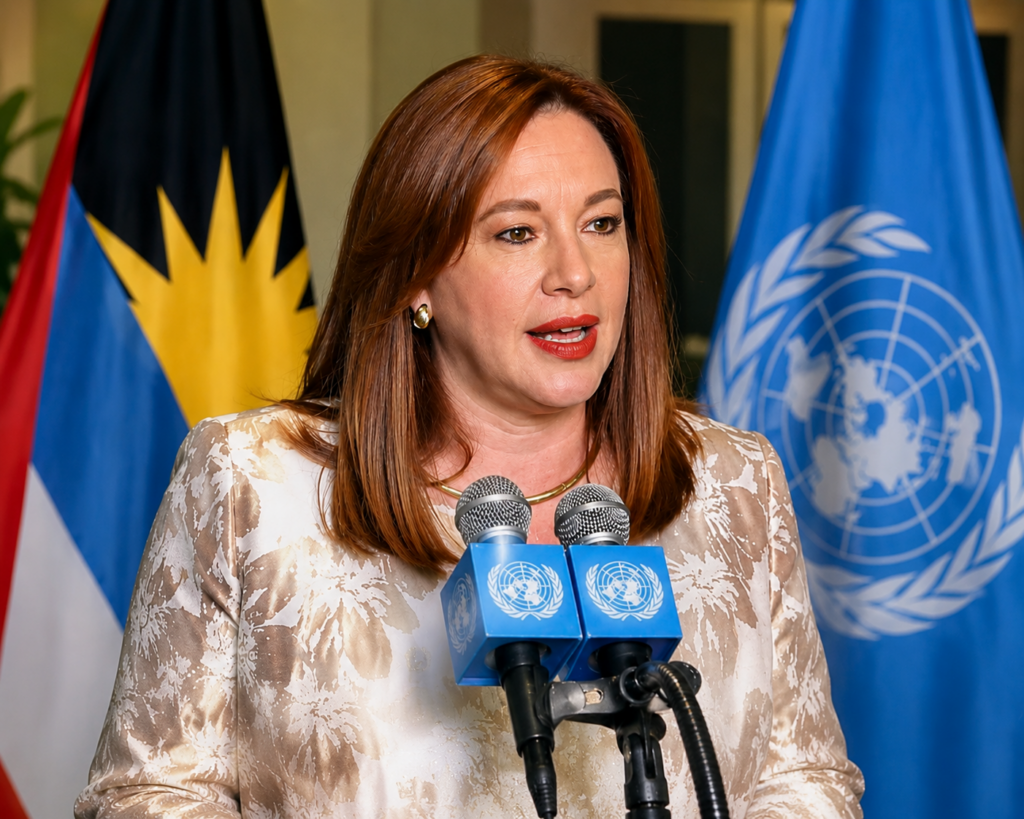
As the global selection process for the next United Nations Secretary-General enters its next phase, the nominee put forward by Antigua and Barbuda has officially laid out her strategic vision for leading the 78-year-old international organization.
María Fernanda Espinosa Garcés, a veteran Ecuadorian diplomat and former President of the UN General Assembly, joined an interactive exchange with representatives from UN member states and global civil society groups on June 15. During the session, she detailed her core policy priorities that would guide her tenure if she is selected to replace outgoing Secretary-General António Guterres, whose second five-year term concludes on December 31, 2026.
First nominated for the role by Antigua and Barbuda back in May, Espinosa emphasized that her candidacy centers on two foundational goals: rebuilding public and intergovernmental trust in the United Nations, and boosting the institution’s capacity to deliver tangible, measurable outcomes for all member nations, particularly small island developing states that are disproportionately affected by global crises.
Espinosa’s formal policy platform is structured around five key priority areas: upholding global peace and security, accelerating progress toward the 2030 Sustainable Development Goals, advancing just energy transition and inclusive digital transformation, narrowing the persistent gap between international commitments and on-the-ground implementation, and reforming internal structures to strengthen the UN’s ability to fulfill its core mandate.
The interactive dialogue with candidates is a core component of the General Assembly’s commitment to a transparent, inclusive selection process. This structured framework gives every contender the chance to articulate their goals and respond directly to questions from government delegations and civil society stakeholders before the UN Security Council puts forward a formal recommendation for the role.
Espinosa is one of six confirmed candidates vying to become the UN’s 10th Secretary-General. The competitive field also includes Rafael Mariano Grossi of Argentina, former Chilean President Michelle Bachelet, incumbent Senegalese President Macky Sall, and Carolyn Rodrigues Birkett, Guyana’s long-serving Permanent Representative to the United Nations.
The candidate who ultimately secures the position will take office in January 2027, starting with an initial five-year term. If elected, Espinosa will make history as the first woman to hold the post of UN Secretary-General since the organization’s founding in 1945.
Antigua and Barbuda first made its nomination public on May 11, throwing its support behind the former General Assembly president as the small Caribbean nation works to contribute meaningfully to shaping the future leadership of the world’s leading multilateral body.