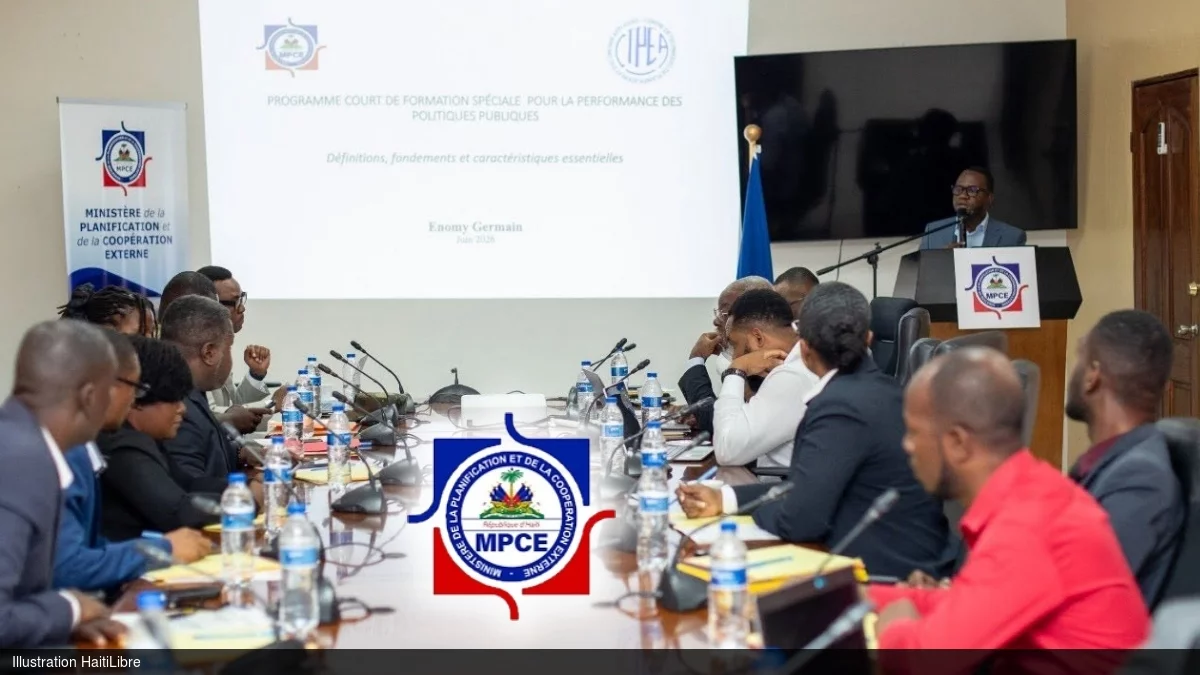
In a key step to reform Haiti’s public administration and upgrade the technical capabilities of government personnel, two leading national institutions kicked off a week-long intensive public policy training program on Monday, June 22, 2026.
Organized jointly by Haiti’s Ministry of Planning and External Cooperation (MPCE) and the Center for Planning Techniques and Applied Economics (CTPEA), the initiative is tailored specifically for staff from the country’s Study and Programming Units (UEP), the core government bodies tasked with policy design and development planning. The training curriculum blends theoretical instruction, real-world case studies, interactive simulations, and hands-on practical exercises to directly enhance participants’ on-the-job operational capabilities.
The program’s curriculum focuses on the full lifecycle of public governance: from initial formulation and rollout to ongoing monitoring and final impact evaluation of public policies and public investment projects. Speaking on behalf of Minister Sandra Paulemon at the opening event, MPCE Director General Guy Roméro Latry shared his enthusiasm for the launch of the landmark initiative.
Latry noted that developing an integrated curriculum covering everything from long-term strategic planning and public policy design to results-based management in such a condensed timeframe is an unprecedented achievement for Haiti. “Specific, actionable expertise is built not just through listening to lectures, but through applied, practical learning,” Latry said. He added, “No nation can advance without intentional planning, nor without strong, capable institutions that can articulate a clear long-term vision, map a sustainable development trajectory, and put effective implementation mechanisms in place.”
The director general also underscored the outsized strategic importance of the Study and Programming Units across all government ministries and public agencies. Positioned as a critical connecting node in the process of designing, coordinating, and assessing public policies, these units are foundational to good governance. Strengthening their capacity, Latry emphasized, is a non-negotiable investment that will directly translate to better public service quality and more impactful government action that improves outcomes for the Haitian population.
Throughout this first week of the broader program, participants will dive into core foundational concepts of public policy development and evaluation. Sessions will cover the defining characteristics of public policies, their core objectives and inherent limitations, and end-to-end frameworks for design, implementation, and impact measurement. Latry closed his opening remarks by encouraging all attendees to leverage the unique learning opportunity, bring full commitment and rigor to their training, and build collaborative networks for experience-sharing across the different participating government institutions.