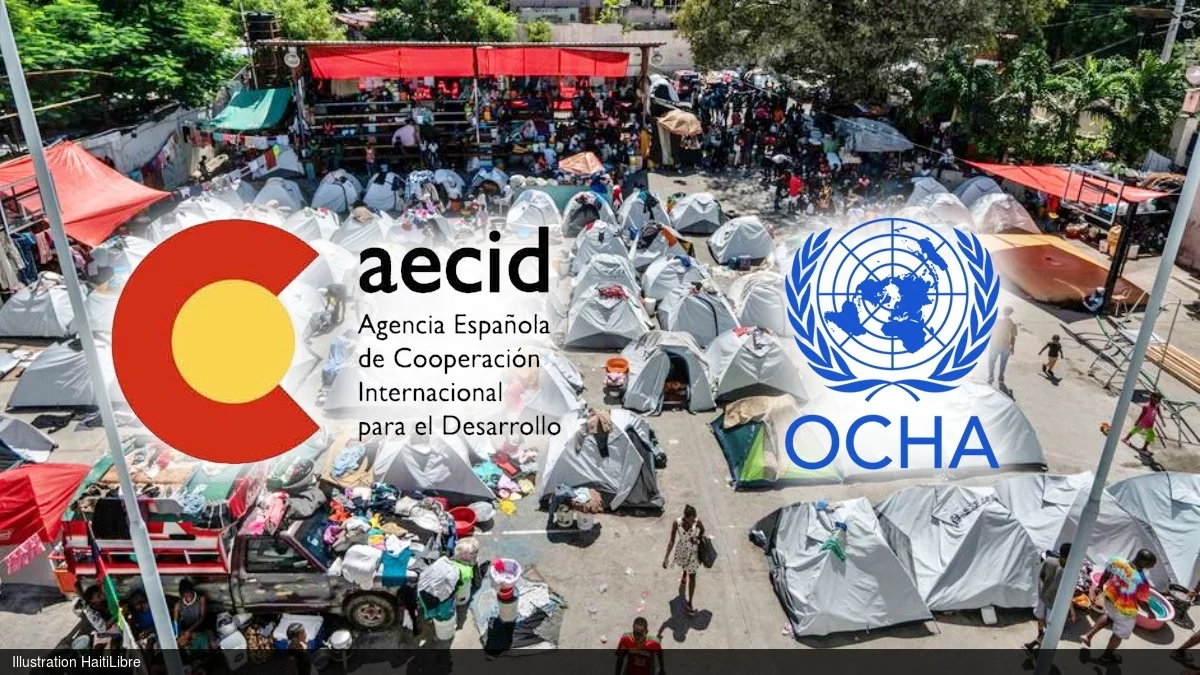
Amid Haiti’s ongoing deepening humanitarian crisis, the Spanish Agency for International Development Cooperation (AECID) has announced a fresh €900,000 contribution to the Regional Joint Humanitarian Fund for Latin America and the Caribbean (RHPF LAC), a humanitarian financing mechanism overseen by the United Nations Office for the Coordination of Humanitarian Affairs (OCHA). Of the total new funding, €400,000 is co-financed through the collective contributions of Spain’s regional Autonomous Communities, reflecting broad domestic support for the international humanitarian response in Haiti.
This new injection of funding marks a significant expansion of Spain’s long-standing commitment to Haiti’s vulnerable populations. Prior to this commitment, Madrid had already allocated a combined €1 million to the fund between 2024 and 2025, a prior investment that delivered tangible life-saving support to tens of thousands of Haitians last year. Official data from the humanitarian coordination framework shows that 32,390 at-risk Haitians, including 17,190 women and girls, accessed critical emergency assistance through Spain’s earlier contributions in 2025 alone.
The latest funding will be directed to a broad range of high-priority humanitarian sectors that address the most urgent needs of Haitian communities impacted by persistent instability and displacement. These priority areas include camp coordination for the country’s growing population of internally displaced persons (IDPs), formal education for out-of-school children, emergency shelter provision, food security programming, public health services, civilian protection interventions, nutrition support for malnourished populations, and water, sanitation, and hygiene (WASH) infrastructure.
Unlike top-down humanitarian aid models, the RHPF LAC centers local leadership, with all programming implemented by regional and local civil society organizations. The fund’s core mission is to drive sustainable, tangible improvement in Haitian communities by strengthening local response capacities, improving cross-stakeholder aid coordination, and boosting the overall effectiveness of interventions across Port-au-Prince and other hard-hit regions of the country. Key programming set to benefit from the new funding includes general food distribution, protection services for women and children who have survived gender-based violence, education access initiatives, and other life-sustaining humanitarian actions that address the most pressing gaps in the country’s crisis response.