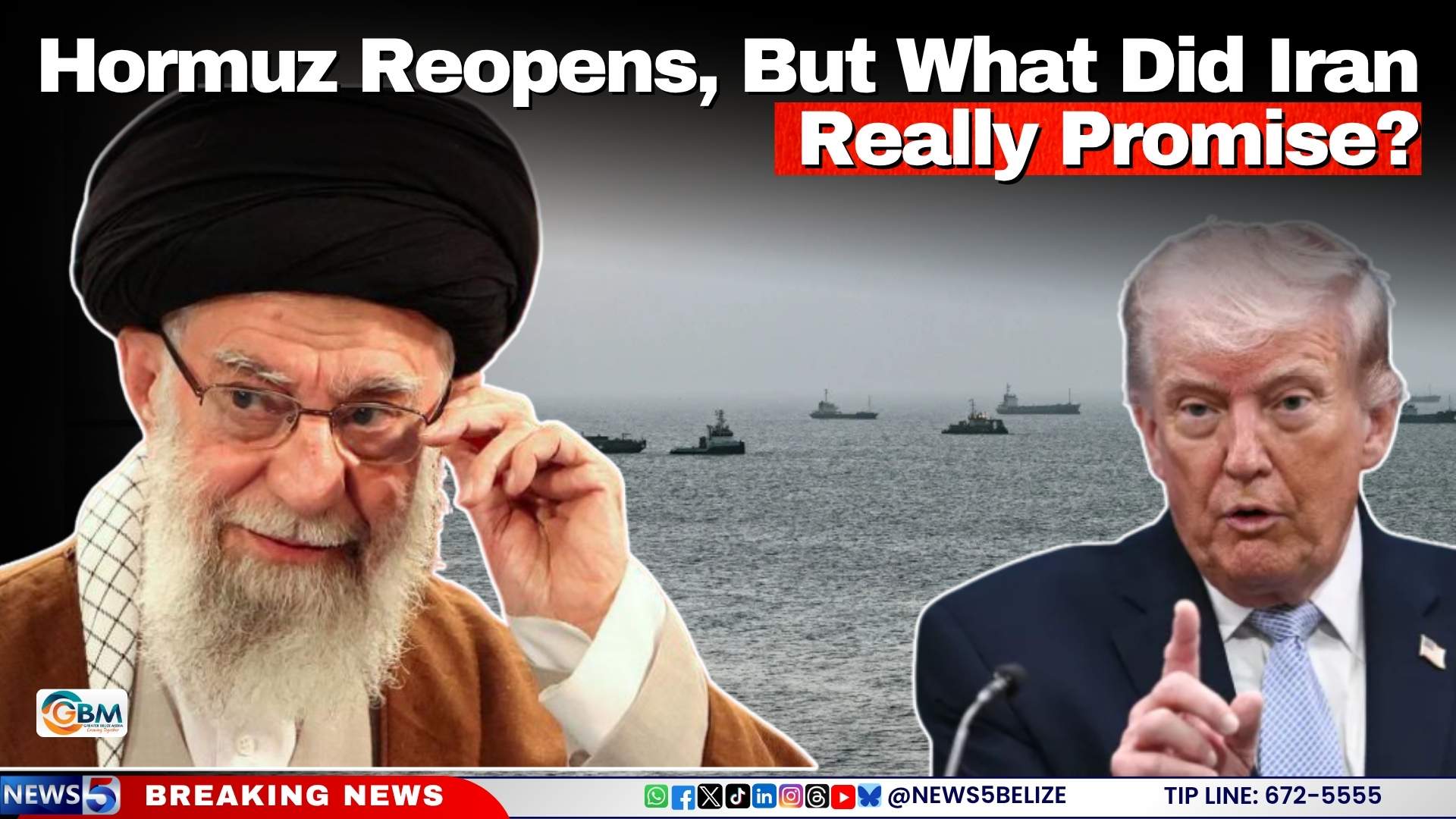
Nearly a week after the Strait of Hormuz reopened to global maritime traffic, a sharp public discrepancy between U.S. and Iranian officials has cast major uncertainty over the future of fragile peace talks aimed at ending their ongoing conflict. The standoff began when former President Donald Trump, who led the U.S. negotiating team, publicly claimed Tehran had made sweeping concessions to resolve the nuclear crisis, including full, unfettered access for international inspectors to all Iranian nuclear facilities. In exchange for this commitment, Trump said, the U.S. had agreed to lift its naval blockade of the strategic chokepoint, a move that has already calmed global energy markets in the short term.
In a post to his social media platform Truth Social, Trump doubled down on his claims, insisting that without Iran’s acceptance of long-term nuclear inspection protocols, no further negotiations would have been possible. “If they did not agree to this, there would be no further negotiations,” he wrote.
But Iranian leaders quickly pushed back against Trump’s characterization of the preliminary agreement, flatly denying that any commitment for unrestricted International Atomic Energy Agency (IAEA) inspections of sites damaged in last year’s U.S. airstrikes had been made. Foreign Ministry spokesperson Esmail Baghaei clarified that the only points Tehran had formally agreed to are a full end to offensive military operations, the immediate reopening of the Strait of Hormuz, and a 60-day window to continue negotiations toward a binding, final peace deal. Iranian President Masoud Pezeshkian echoed that pushback, warning that public statements misrepresenting the agreed text only undermine progress toward a lasting resolution.
The conflicting accounts are playing out as technical negotiations continue behind closed doors in Switzerland, where negotiators are working through a complex set of sticking points: sweeping sanctions relief for Iran, permanent nuclear monitoring frameworks, post-conflict reconstruction for both sides, and long-term security guarantees for the Strait of Hormuz, which carries roughly 20% of the world’s daily oil supplies.
Beyond the diplomatic gridlock, the Trump administration is facing growing pushback on Capitol Hill over its request for additional war funding. According to reporting from the Associated Press, the Pentagon has asked Congress for roughly $80 billion in supplemental funding to cover ongoing costs of the Iran conflict, a request that comes on top of the administration’s already proposed $1.5 trillion national defense budget. Lawmakers from both major U.S. political parties have already expressed skepticism over the massive new spending request, even as the administration frames it as critical to securing a stable peace.
Adding to the already tense atmosphere, fresh violence has erupted in southern Lebanon despite a recently brokered ceasefire between regional armed groups. The resurgence of conflict in the neighboring country has stoked new fears that any agreement between Washington and Tehran could fail to deliver on its core promise of broader regional stability, leaving the Middle East once again teetering on the edge of a larger regional war.