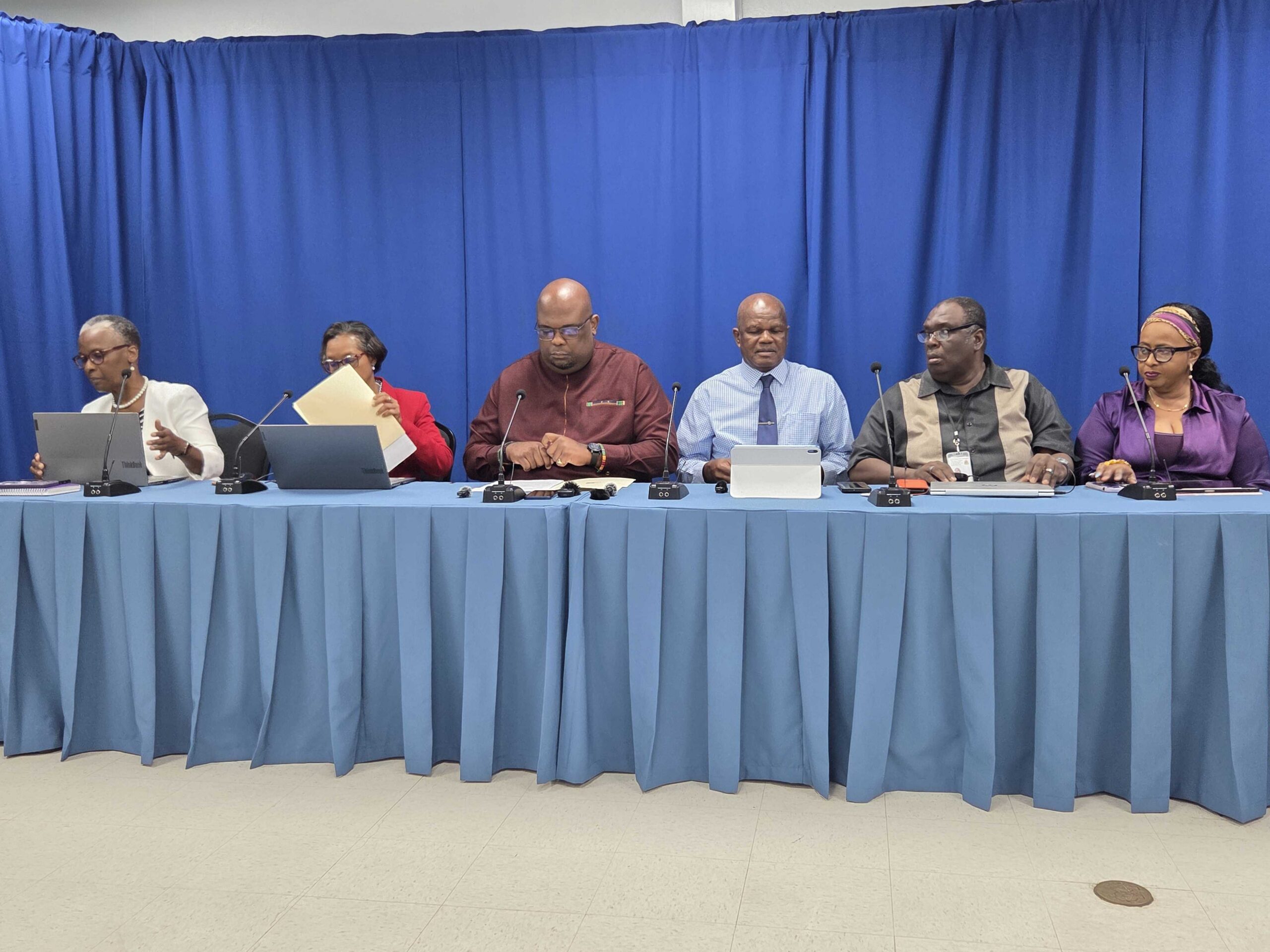
Barbados’ Ministry of Education Transformation has confirmed a landmark shift in the nation’s primary to secondary school transition system, officially announcing that the traditional Common Entrance Examination will be phased out starting this September, replaced by a two-year continuous assessment framework designed to prioritize holistic student development over a single high-stakes test.
Minister of Education Transformation Chad Blackman made the announcement official Monday alongside the release of 2026’s final Common Entrance Examination results, framing the policy change as the cornerstone of a multi-year national education overhaul focused on advancing equity, fairness, and a purpose-driven national curriculum. The change is timed to coincide with two major national milestones: the 60th anniversary of Barbados’ independence and the fifth anniversary of its transition to a republic, making the 2026 academic year a symbolic turning point for the country’s education system.
Blackman acknowledged the deep historical roots of the Common Entrance Examination in Barbados’ education landscape, but argued that the one-day, high-stakes model no longer serves the nation’s students. “I understand the historical significance that a Common Entrance [Exam] has played in Barbados, and this is no different today,” he said. “But it must not determine how people are viewed; it must not determine a person’s self-worth. It must determine, however, your ability to move forward and to help build and shape this nation.”
Under the new continuous assessment model, student progress will be tracked over two full years of primary school, measuring both core academic performance and a range of non-traditional soft and practical skills that the old exam failed to capture. The core goal of the restructuring is to shift the primary to secondary transition focus from a single day’s performance to long-term holistic student growth. All secondary school principals and senior leadership teams have been ordered to fully restructure their incoming student entry and orientation programs to align with the new framework, with Blackman calling on education leaders to reimagine what a supportive, student-centered transition looks like.
“Every child going into secondary school from September must feel that I am going to a school that understands my purpose, understands where I want to go in life,” Blackman said, adding that the changes will also standardize education quality across all Barbadian secondary schools, mandating a consistent high baseline for school morale, learning environment, and teaching capacity regardless of a school’s historical reputation or prestige.
Alongside the policy announcement, the ministry released full statistical data for the 2026 Common Entrance Examination, the last cohort to sit the traditional test. Administered on May 5 across 21 public secondary schools, the 2026 exam drew 2,764 registered candidates from 67 public primary schools, 28 private primary schools, and seven homeschooled students. The data confirms a continuing trend of declining student enrollment across Barbados: this year’s candidate total is 60 students lower than 2025, and a 6.1 percent drop (169 fewer candidates) from 2024’s total of 2,933.
Despite falling overall candidate numbers, the ministry reported a record high in accessibility accommodations for students with learning and physical needs, marking a steady upward trend in inclusive access provisions. A total of 240 special accommodation requests were approved this year, up from 194 in 2025 and 183 in 2024. Accommodations include large-print test booklets, assigned scribes, and dedicated readers to support eligible students. The ministry also approved 15 early sitting candidates – 11 male and four female – students under the age of 11 who hold a minimum 85 percent average in both mathematics and language arts across Classes Two and Three, as required by the Education Act. Blackman framed the expanded accommodations and early sitting approvals as “inclusion in practice.”
To support the phased rollout of the new continuous assessment model, the ministry has already rolled out a series of infrastructure, technology, and training upgrades across the nation’s primary schools. All students in Infants B and Class One have been issued dedicated learning tablets, while teachers have received targeted training and additional device allocations to integrate digital learning tools into daily instruction. A nationwide school refurbishment drive led to the temporary closure of 13 primary schools on June 12 to complete structural extensions and facility upgrades, which Blackman defended as a necessary short-term disruption to build the infrastructure required for modern, student-centered learning.
“As we move forward, we must ensure that we have the ability not just to have training for our teachers, but the infrastructure is the place of course that serves to allow our children, our teachers, our principals to be in an environment where they can thrive,” he explained.
The resource upgrades are paired with new external quality assurance measures, launched after a successful pilot in May 2025. Panels of education officers, principals, and specialist trainers now conduct structured, formal school visits to set and enforce consistent national benchmarks for classroom instruction and institutional leadership. To support families navigating the education system changes, the ministry also launched a national parent education program on May 4, offering workshops on positive parenting, caregiver-student communication, and behavioral management strategies.
Closing his address, Blackman congratulated the 2026 candidate cohort and sought to reassure parents and educators that the ministry remains fully committed to building a modern, inclusive education system that recognizes the full spectrum of student achievement. “The ministry is preparing to usher in a system which better recognises and facilitates the achievements and progress of all of our students,” he said. “I offer congratulations to all students who sat the examination this year, and this is, of course, only another leg in your life’s journey. You will have many other opportunities to achieve on this road of success.”