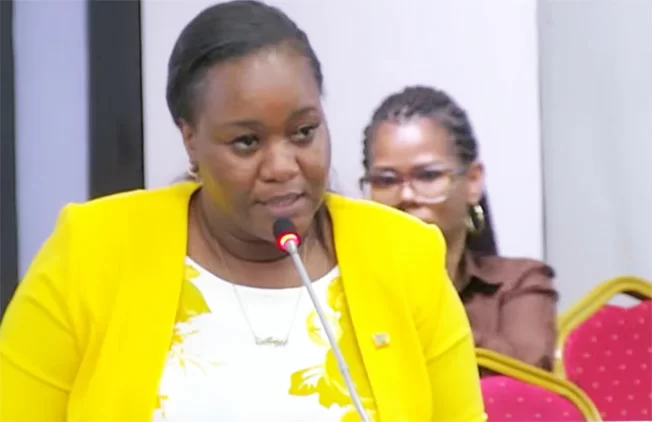
During recent budget deliberations in Suriname’s National Assembly, Miquella Huur, Minister of Regional Development, publicly acknowledged that the current funding allocated to district commissioners is insufficient to allow these local officials to fulfill their legally mandated responsibilities. The minister has publicly backed calls for strengthening district-level financial autonomy and advancing deeper decentralization of governance and public service delivery across the country.
Huur emphasized that the current maximum annual allocation of approximately 1 million Surinamese dollars (SRD) per district falls far short of what is needed to cover core local operations. These essential functions include routine waste collection, maintenance of secondary and tertiary waterways, and upkeep of other critical basic public infrastructure that local communities rely on daily.
“I stand behind your call to increase funding for district commissioner offices,” Huur stated in response to questions and comments raised by National Assembly members. She confirmed that her ministry is currently advancing adjustments to the so-called Article 4 funds outlined in the Interim Law on Financial Decentralization, a policy change designed to boost district-level resourcing.
In addition to increased central government allocations, the ministry is also pushing for revisions to two key pieces of legislation: the General Law on District Taxes and the Law on Financial Relations Between the State and Districts. These amendments are intended to expand districts’ authority to generate their own independent revenue, enabling local governments to operate with greater financial autonomy from the central state.
Huurr reiterated a core principle guiding the government’s decentralization push: devolution of power can only succeed if new administrative responsibilities are paired with adequate funding and skilled local workforces. To address the skills gap, the ministry will roll out targeted training programs in 2026 for members of district and regional councils. These programs will build capacity in governance, administrative processes, and financial management to strengthen local-level operational capacity.
Beyond funding for local districts, the minister also addressed longstanding administrative challenges facing her own ministry. Currently, the Ministry of Regional Development is spread across three separate locations across the capital. Huur explained that this fragmented setup slows internal collaboration, delays decision-making, and undermines the quality of public services the ministry delivers to citizens.
Complicating plans to consolidate offices into a single new purpose-built building is the ministry’s tight budget: roughly 85% of its current annual allocation goes to employee wages and salaries, leaving almost no room for large capital investments like new construction. To move the consolidation project forward, the ministry plans to present its proposal for a new headquarters building to international development organizations, bilateral donor partners, and private donors to secure external funding.
The minister also responded to questions from assembly members about the status of a government-owned plot at Van Rooseveltkade. Huur confirmed that based on current available records, the parcel has not been allocated or transferred to any private entity and remains formally classified as state property. To formalize this status, the Ministry of Regional Development is working alongside the Ministry of Land Policy and Forest Management to conduct a full verification of the land’s ownership. Parliament will receive a full briefing once all relevant documentation is compiled and reviewed, Huur added.