Under the blistering heat of southern Pakistan’s famed mango-growing region, farm workers perch precariously on thick tree branches, moving quickly to pluck ripe golden fruit and drop it into canvas sacks held by colleagues on the dusty ground below. It is peak mango season, but a sharp, unforeseen disruption tied to the ongoing Middle East crisis has upended the entire supply chain, leaving thousands of farmers and traders facing crippling financial losses this year. Pakistan, which has stepped in to mediate talks between conflict parties, has watched its agriculture-dependent economy get dragged into the crossfire of regional instability, with disastrous consequences for the country’s most iconic export crop.
The annual mango harvest in Sindh province, the heart of Pakistan’s mango industry, kicked off in June. A preliminary ceasefire deal between warring parties announced by Pakistani mediators this week came far too late to salvage the 2024 export season, which wraps up in September. Traders and industry leaders confirm that total exports are on track to drop by at least 30% compared to last year, driven by plummeting demand in key regional markets and a four-fold surge in international shipping costs.
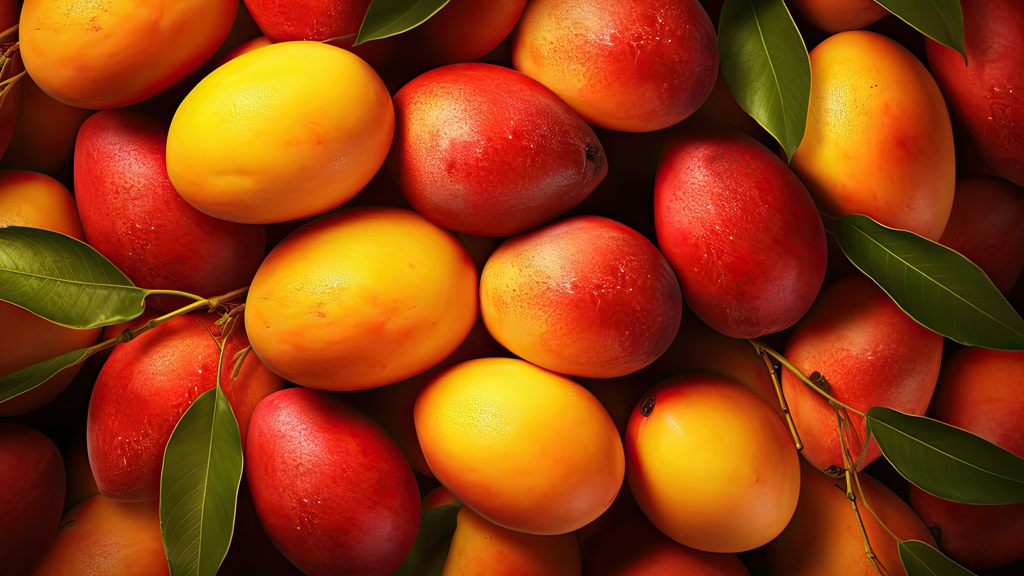
In Tando Allahyar, the core of Pakistan’s mango cultivation belt, orchard manager Mohammad Shakeel oversees fields of the premium Sindhri variety – a golden-skinned mango celebrated across South Asia for its rich, sweet flavor and juicy pulp, named for the province where it thrives. Today, Shakeel says he is staring down losses so severe that many independent contractors have walked away from harvest contracts entirely, abandoning their advance deposits rather than risking further debt. “So many losses have been incurred, the contractors have even left their advance money,” he told AFP in an interview on the orchard floor.
Pakistan is the world’s fourth-largest mango exporter, growing more than two dozen commercial varieties that normally generate roughly $110 million in annual export revenue. The “king of fruits,” as it is known across South Asia, is not just an economic staple but a cultural icon for the country. The current crisis lays bare the deep geopolitical vulnerability of Pakistan’s economy, which relies heavily on an agricultural sector already grappling with growing climate disruptions ranging from extreme heatwaves to catastrophic flooding.
Waheed Ahmed, Chief Patron of the All Pakistan Fruit and Vegetable Exporter Association, explains that nearly 80% of Pakistan’s mango exports go to markets in the Gulf region, Iran, and neighboring Afghanistan – all areas that have been gripped by escalating conflict and political instability in recent months. “The border to Afghanistan is closed, there is war in Iran… there is war in the entire Middle East,” Ahmed noted. He projects that total mango exports will fall from around 110,000 tonnes last season to just 80,000 tonnes this year, a 27% drop that aligns with trader forecasts of a 30% decline in export revenue.
While Ahmed welcomes the preliminary US-Iran ceasefire announced this week, the agreement came too late to reverse the damage to this year’s harvest, and long-term uncertainty remains for future seasons. “The main challenges still remain,” he said. Persistent conflict along Pakistan’s western border with Afghanistan has already frozen cross-border trade, leaving hundreds of loaded trucks stranded at closed crossings for months. Meanwhile, escalating tensions around the Strait of Hormuz – the world’s busiest maritime oil trade route – have driven up global energy prices, pushing shipping costs to unprecedented levels. Last year, Ahmed says, a 25-tonne container of mangoes cost roughly $1,400 to ship to key Gulf markets. This year, that same container costs between $6,000 and $7,000, a more than 300% increase that prices most exporters out of the international market.
Any hopes that flooding the domestic market with cheap, surplus mangoes would offset lost export earnings have quickly been dashed by broader economic pressures spurred by the regional conflict. Pakistan’s inflation rate jumped from 5.5% in the pre-conflict July-February period to 10% in the three months after hostilities escalated, according to official government data. Soaring prices for basic goods including bread, fuel, and housing have left working-class Pakistani households unable to afford even the deeply discounted mangoes now available in local markets.
At a bustling open-air market in Karachi, Pakistan’s largest and most economically diverse city, customer Muhammad Ashad examined stacks of plump, cheap mangoes priced at 200 Pakistani rupees (roughly $0.72) per kilogram – exactly half the price he paid last year. “Mangoes are very cheap this time compared to the last few years… because our export has stopped,” he explained. “I am seeing everywhere that there are very good mangoes, but people are still not able to buy them.”
Shakeel, the orchard manager, says the dynamic creates a lose-lose situation for producers and consumers alike. Local prices are at rock bottom, but millions of households cannot afford to purchase the fruit even at half the 2023 price. “In the local market, the price is low. But not everyone can afford to buy mangoes. Look at the state of the country: expenses are rising… income is low. Should they buy their bread first or our mangoes?” he asked. For Pakistan’s $110 million mango industry, the 2024 harvest will go down as a cautionary tale of how regional geopolitical instability can quickly unravel the livelihoods of millions of people working in one of the country’s most important agricultural sectors.