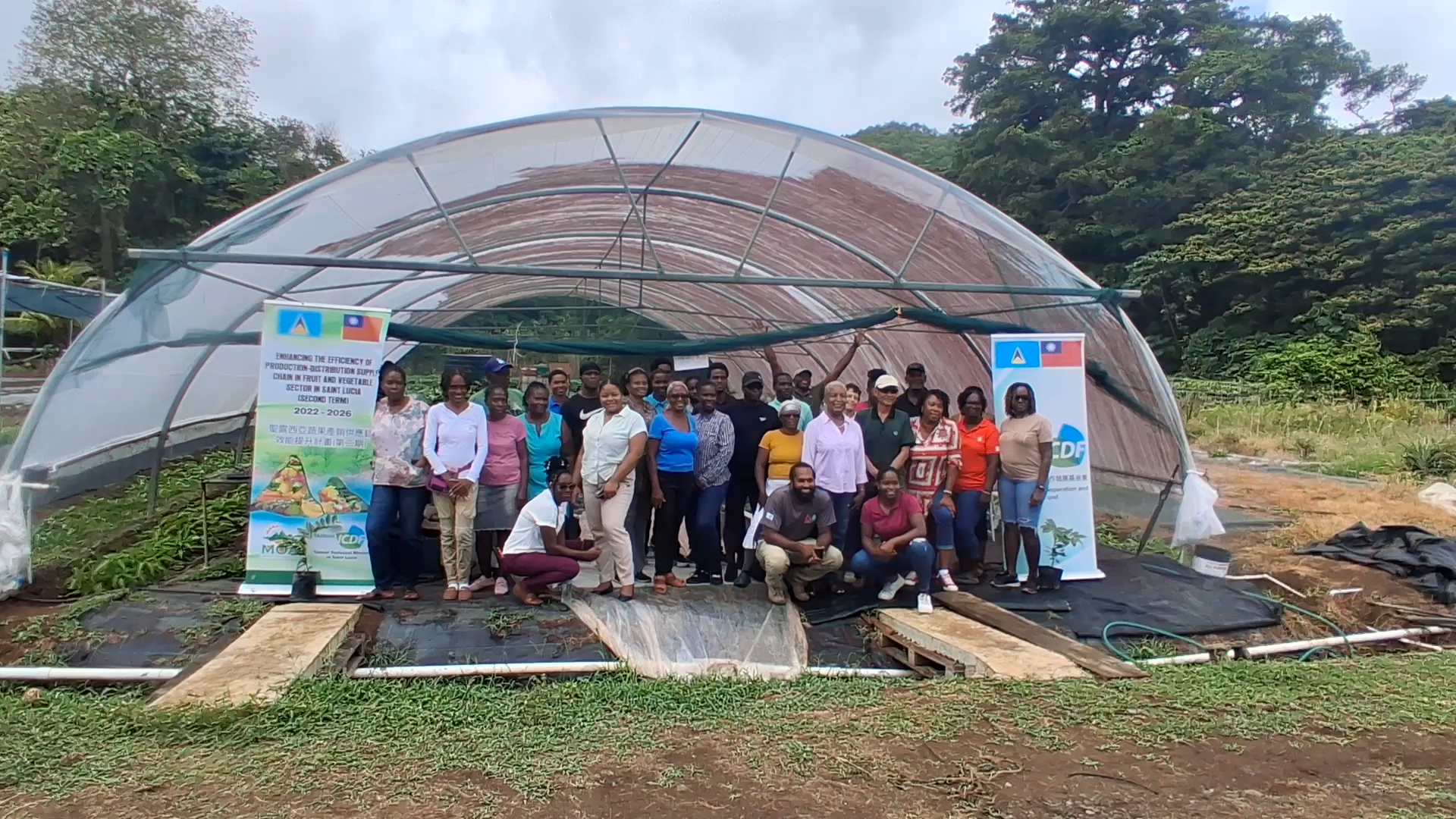
A Taiwan-supported hands-on training workshop focused on advanced guava grafting has equipped local farmers in Saint Lucia with upgraded agricultural skills, in a push to ramp up domestic fruit output and cut the Caribbean nation’s heavy reliance on imported food products.
This capacity-building event falls under the umbrella of the Seven Crops Project, a national agricultural development initiative with a core goal of shrinking Saint Lucia’s national food import expenditure. It pursues this target by bolstering local agricultural output and introducing high-potential commercial crop varieties to the island’s farming sector.
The project launched its first phase with an initial focus on seven priority staple crops: watermelon, lettuce, cabbage, tomatoes, pineapple, honeydew, cantaloupe and bell pepper. As the initiative moves into its second phase, it has expanded its scope to deepen agricultural diversification across the country, working to expand the range of fresh, locally grown produce available to both everyday consumers and bulk commercial purchasers.
The recent guava grafting workshop introduced participating farmers to a new table-grade guava variety imported from Taiwan. Unlike traditional local guava strains, which are mostly suited for industrial processing, this new cultivar boasts a significantly longer shelf life and stronger market attractiveness for direct retail sale.
Adeline Eudovic, coordinator of the Seven Crops Project, explained that the shift to this new guava variety came from direct feedback from major local buyers. “From our different discussions with the buyers, such as the hotels, the different supermarket chains and so on in Saint Lucia, we saw the need to improve the variety of crops offered at the supermarkets. So we’re looking at a different type of guava…. This is not a processing guava, this is a guava that is perfect for eating. It’s a guava, from what we have seen so far – because we’ve had it on the farm in an experimental way – that can have a longer shelf life,” Eudovic said.
Beyond introducing the new cultivar, the workshop delivered immersive, practical training on specialized grafting techniques. These methods are engineered to boost overall fruit quality, lift annual crop yields, and enhance the trees’ natural resistance to common pests and diseases. Project organizers noted that the grafting skills farmers learned are not limited to guava — they can also be adapted to other local tree-grown fruits, including mangoes and other similar tropical varieties.
Local agricultural officials emphasized that this workshop and the broader Seven Crops Project are key components of Saint Lucia’s long-term strategy to strengthen national agricultural resilience. By building technical expertise among smallholder and commercial farmers, expanding production diversity, and increasing the share of domestic food in local markets, the initiative ultimately aims to shore up the island nation’s food security.