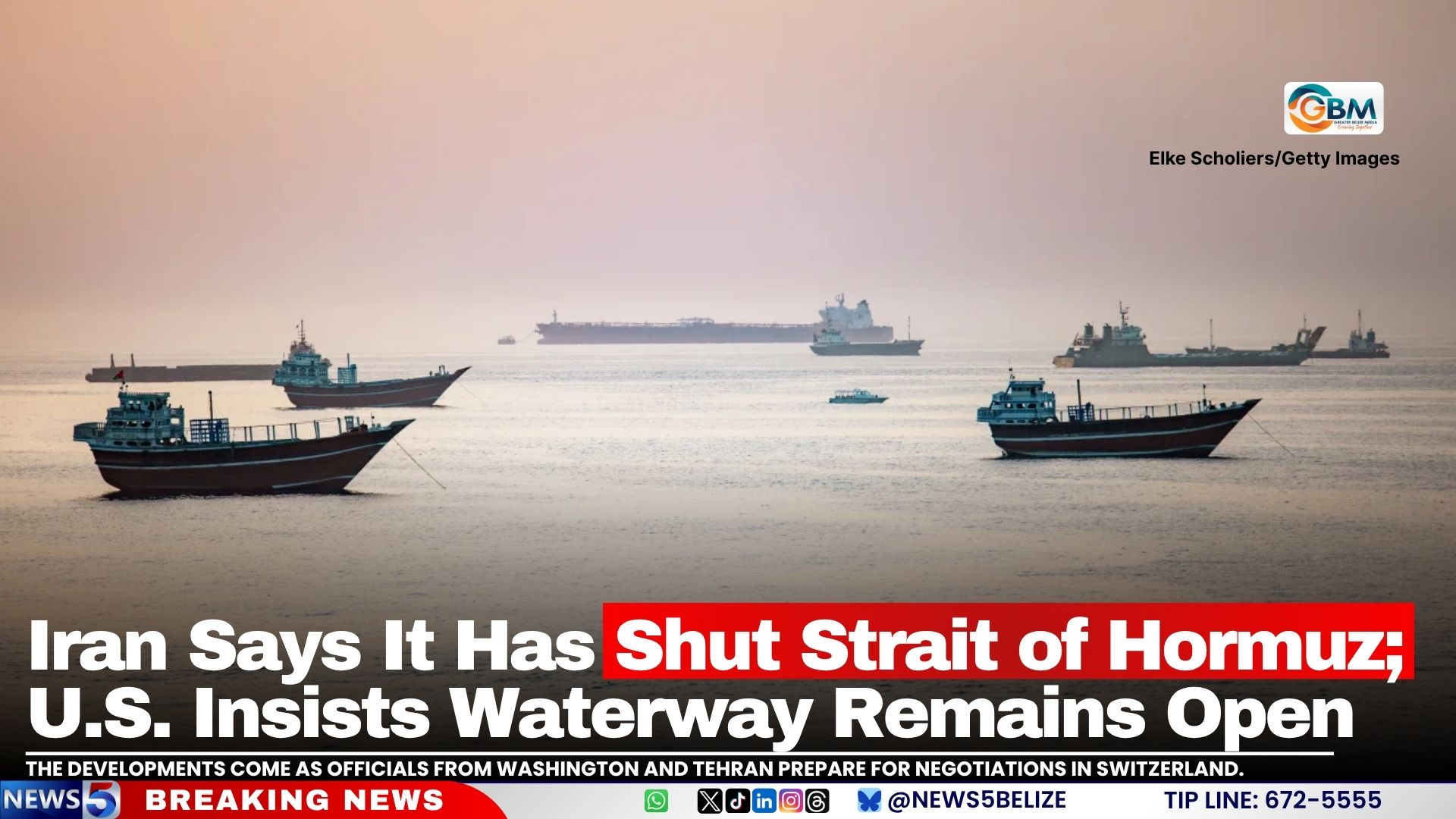
In a tense escalation of Middle Eastern tensions that has sent ripples through global energy and diplomatic circles, Iran announced on June 20, 2026 that it has shut down the Strait of Hormuz — the world’s most vital chokepoint for global oil transit. The move came as Tehran issued formal accusations against Israel for breaking a recently agreed ceasefire in Lebanon, and against the United States for failing to honor the terms of a preliminary, tentative deal designed to de-escalate the broader regional conflict, multiple international news outlets have confirmed.
Contradicting Iran’s announcement outright, U.S. Central Command (CENTCOM) has flatly rejected Tehran’s claim, pushing back that the Islamic Republic does not hold operational control over the strategic waterway, and that commercial shipping traffic continues to flow through the passage without interruption. “Iran does not control the Strait of Hormuz,” confirmed Captain Tim Hawkins, a spokesperson for CENTCOM. He added that U.S. military forces have maintained active surveillance of the entire region, with a core mission of protecting unimpeded passage for all commercial vessels.
Data released by CENTCOM via CNN shows that 55 merchant vessels successfully transited the strait on the day prior to Iran’s announcement, carrying more than 17 million barrels of crude oil to global energy markets. U.S. Vice President JD Vance, who is set to lead the American delegation to upcoming negotiations with Iran in Switzerland, told Fox News that current oil transit volumes through the strait have already returned to pre-conflict levels. Vance also emphasized there is no verifiable evidence that Iran has carried out any effective closure of the key waterway.
These competing claims emerge just days before high-stakes diplomatic talks are scheduled to open in Switzerland. The negotiations will bring together U.S. and Iranian delegations, with third-party mediation from Pakistan and Qatar, as global powers work to prevent a full-scale regional conflict that could upend global energy supplies. Even as diplomatic teams prepare for talks, however, renewed fighting between Israel and Hezbollah continues to undermine chances of a breakthrough. CNN reported that at least 16 people were killed in Israeli airstrikes targeting southern Lebanon on Saturday, with Israeli officials confirming the strikes were launched in direct response to prior offensive actions by Hezbollah.
Iran has issued a stark final warning to the U.S. in the lead-up to the talks, stating that it will implement what it calls “necessary measures” if Washington fails to meet its obligations under the preliminary de-escalation agreement. The standoff over the Strait of Hormuz has already drawn heightened international attention, as the waterway carries roughly 20% of all global oil consumption, and any prolonged disruption would send shockwaves through energy markets worldwide.