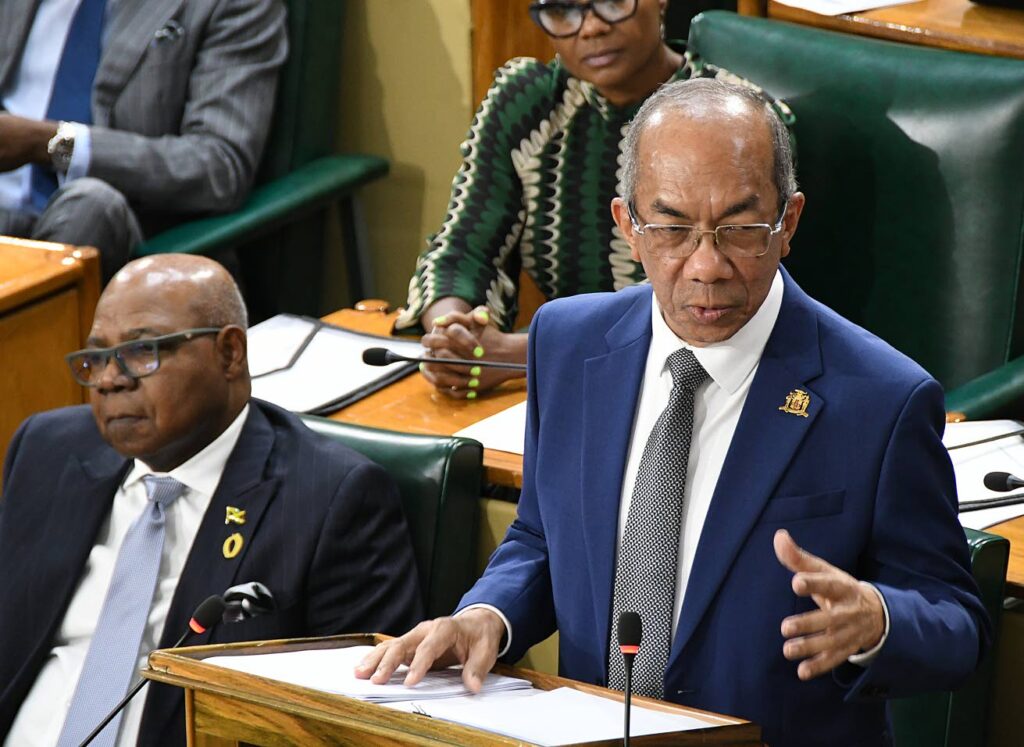
Amid growing scrutiny from the Jamaican diaspora community in New York City, a coalition of influential community leaders, legal experts, and former public officials have publicly come out against the Jamaican government’s proposed third-country nationals (TCNs) migration agreement with the United States, demanding full transparency and public consultation before the deal moves forward. The proposed arrangement would require Jamaica to accept groups of up to 25 non-Jamaican migrants that the U.S. seeks to deport from its territory over two-week periods, with an automatic pause on new arrivals once the total number of TCNs on the island exceeds 10. Third-country deportation frameworks, an increasingly controversial U.S. immigration policy, allow American authorities to transfer migrants the U.S. wants to remove to nations that are not the individual’s country of origin, even in cases where the person has never visited the host country, has no personal or familial ties there, and cannot speak the local language. Unlike prior public TCN agreements struck by the U.S. with other African and Caribbean nations, the Jamaican government has not yet confirmed whether the deal will include financial compensation to Kingston for accepting the deportees. Similar deals in recent years have included explicit multi-million-dollar payments: the Eswatini government agreed to accept up to 160 TCNs in exchange for $5.1 million earmarked for border and migration management infrastructure, while Rwanda secured a $7.5 million payment to accept up to 250 TCNs, and Equatorial Guinea also reportedly received a $7.5 million compensation package for its own agreement. In an effort to address gaps in transparency, Jamaican National Security Minister Dr. Horace Chang has attempted to ease public concern by noting that Jamaica will enforce two key conditions for all incoming TCNs: all deportees must be English-proficient, and none will be accepted if they have a prior criminal conviction. Despite these reassurances, opposition in the large Jamaican diaspora community in the U.S. remains fierce, with critics warning of unaddressed legal, security, and social risks that the government has failed to publicly acknowledge. Leading the charge is Winston Tucker, a prominent New York-based immigration attorney, who told reporters that preliminary indications suggest the deal will operate under the controversial U.S. “Shadow Docket” system, an expedited legal framework created to bypass lower court injunctions and send deportation cases directly to the U.S. Supreme Court for final review. As of the latest update on June 16, 2026, Tucker noted that the Supreme Court has not yet issued a ruling on the legality of third-country transfers, a policy that was not permitted under prior U.S. immigration precedent. He warned that Jamaica could face a severe legal and logistical bind if the Supreme Court ultimately strikes down the entire third-country deportation framework. “Hopefully the court will address the matter before its current session ends, but if the court rules the system unlawful, where does that leave Jamaica?” Tucker asked. He argued that Jamaican leadership should uphold longstanding migration principles, noting that U.S. communities have already rejected similar arrangements, and questioned why the migrants are not being directly deported to their countries of origin instead of being rerouted through a third nation. Wayne Golding, another well-known U.S.-based immigration law expert, echoed Tucker’s opposition, warning that the untransparent deal could quickly become an untenable burden on Jamaica’s already strained national security system. “It is unclear if the full implications of this agreement have been properly considered, but Jamaica could be stepping straight into a tangled, intractable social and legal mess if this plan moves forward,” Golding said. He joined the call for full public release of the bilateral memorandum of understanding (MOU) between Washington and Kingston, arguing that broad public consultation is required before any final decision is made. Dwight P Bailey, a New York-based former member of the Jamaica Constabulary Force, added that the MOU should never have been considered in the first place, raising urgent questions about basic logistics: where TCNs will be housed in Jamaica, what security protocols will be put in place to manage the new arrivals, and what will happen if the migrants’ home countries ultimately refuse to accept them for permanent resettlement. Additional opposition has come from faith and community leaders: Dr. Reverend Marilyn Grant, founder of Connecticut-based Women for Christ Outreach Ministries, called the Jamaican government’s decision to pursue the deal “absurd.” Dr. Rupert Francis, who leads the Diaspora Task Force on Crime Intervention and Prevention, also criticized the arrangement, saying it is clear that insufficient planning has gone into the proposal. Francis raised three critical unaddressed questions: whether Jamaica has the capacity to fully vet all incoming TCNs for security risks, where the arrivals will be housed during their stay on the island, and how Jamaican authorities will handle cases where TCNs file for asylum during their time in the country.