A heated public debate has erupted around a new bilateral memorandum of understanding (MOU) between Jamaica and the United States focused on the transfer of third-country nationals (TCNs), with top Jamaican officials doubling down on efforts to clarify that the incoming individuals are not deportees. Prime Minister Dr. Andrew Holness used a public social media statement to reinforce the administration’s core position, emphasizing that Jamaica has not agreed to accept foreign deportees removed from the United States under this new framework.
The controversy ignited just days after Jamaica’s Minister of National Security Dr. Horace Chang publicly confirmed that the agreement had been finalized, triggering widespread scrutiny over the terms and scope of the transfer arrangement. Chang has repeatedly pushed back against labeling the transferred individuals as deportees, a distinction that Holness has now publicly reaffirmed.
In his statement, Holness made clear that the only deportees Jamaica currently accepts are Jamaican citizens returning to their home country under longstanding existing bilateral agreements between the two nations. This clarification followed detailed comments Chang provided during a post-Cabinet media briefing, where he outlined the strict operational limits built into the new MOU. Under the terms of the deal, Jamaica will accept no more than 25 TCNs every two weeks, and all transfers will be paused immediately if more than 10 transferred individuals remain on the island at any given time.
Chang explained that the arrangement applies exclusively to TCNs who have already exhausted all legal pathways to remain in the United States, but whose home countries are either unwilling or unable to take them back. He stressed that the term “deportee” does not apply here because a deportation formally involves sending an individual back to their country of citizenship, so framing these transit migrants as deportees creates a misleading public perception. To address public concerns, Chang confirmed that every potential transferee will undergo rigorous vetting before Jamaica approves their entry, with full access to identity, medical, and criminal history records provided in advance.
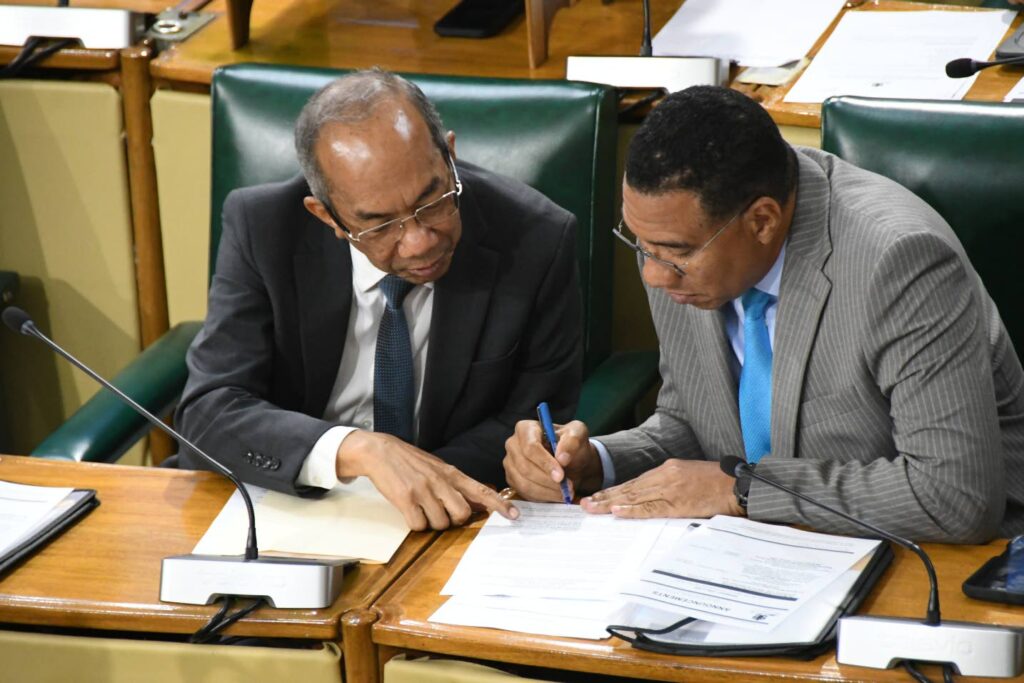
Speaking during a sitting of Jamaica’s House of Representatives, Chang further clarified that the MOU is not a permanent resettlement program. He noted that transferred individuals will only stay in Jamaica temporarily as the government coordinates their onward travel, whether that means eventual repatriation to their country of origin or transfer to another appropriate third country. Jamaica also retains full unilateral discretion to approve or reject any individual transferee on a case-by-case basis, he added.
However, the Jamaican government’s strict distinction between TCNs and deportees has been called into question by global human rights group Amnesty International. The London-based organization, which works globally to protect migrant and refugee rights, defines third-country removals as a policy that sends people the U.S. wants to expel from its territory to countries that are not their own, regardless of their ultimate destination. Amnesty has also flagged broader longstanding concerns about third-country removal policies, including risks to due process for migrants and potential gaps in humane treatment after they arrive in the transit country.