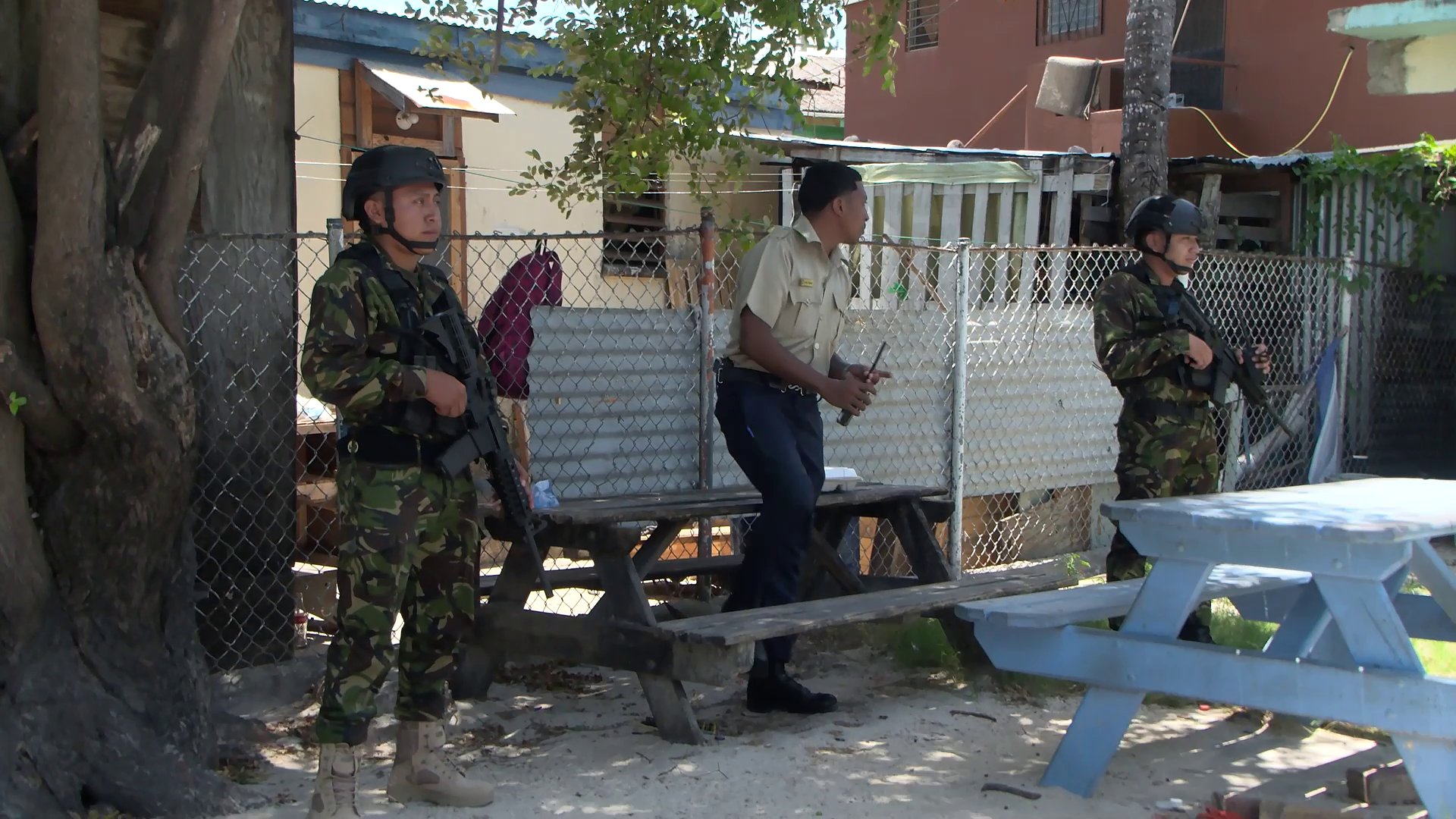
In the aftermath of a chaotic, violence-plagued weekend that shook communities across Belize City, the Belizean government has announced an extraordinary security measure: the deployment of the Belize Defense Force to augment local police patrols and operations in high-crime zones. While the use of military support for domestic law enforcement is typically limited to formal states of emergency, government officials have been clear that this action falls short of that designation, framing it as a targeted, calibrated intervention to de-escalate rising tensions in the former national capital.
Elton Bennett, Chief Executive Officer of the Belize Ministry of Home Affairs, outlined the government’s reasoning and decision-making process in a public briefing following the deployment. “We have certainly increased the tempo of operations,” Bennett explained. “Going back to last week’s series of violent activities in Belize City, the Belize Police Department and all participating security forces carried out extensive strategic planning to design operations that would make a meaningful, long-term dent in violent crime. This hardline security push is being paired with ongoing work to address the root causes of community violence, but we determined that coordinated action from both law enforcement and the military was necessary at this juncture to quell existing tensions.”
Residents can expect to see visible changes across the city: increased personnel at mobile checkpoints, more frequent patrols in well-documented crime hotspots, and a heightened overall security presence throughout high-risk neighborhoods. Despite the visible troop surge, Bennett repeatedly emphasized that the operation does not equate to a state of emergency, and no sweeping restrictions on civil liberties or freedom of movement will be implemented.
“It is not an SOE; it is just below the threshold of an SOE,” Bennett clarified. “We believe we can find that sweet spot just below the threshold where we can be operationally effective: by positioning the right personnel in the right high-need locations, we can address ongoing violent crime without needing to institute the sweeping measures of a formal state of emergency. This is an attempt to deliver operational success without the far-reaching disruptions of an SOE.”
Bennett added that while deployments are concentrated in specific targeted areas across Belize City, the operation does not infringe on the rights of local residents, nor does it impose limits on movement for people living in or visiting any community. The primary goal of the increased presence, he noted, is to send a clear signal that the government views Belize City’s ongoing crime crisis as a top priority and is taking decisive action to improve public safety.
Unlike many security deployments that have a fixed end date, the current military-backed operation will remain in place until tangible results are achieved, Bennett confirmed. There is no pre-set timeline for withdrawing troops, as the government’s priority is reducing violence rather than meeting an arbitrary deadline. The government has also urged residents to remain calm, continue with their normal daily routines, and work with security forces to address longstanding crime challenges in the city.