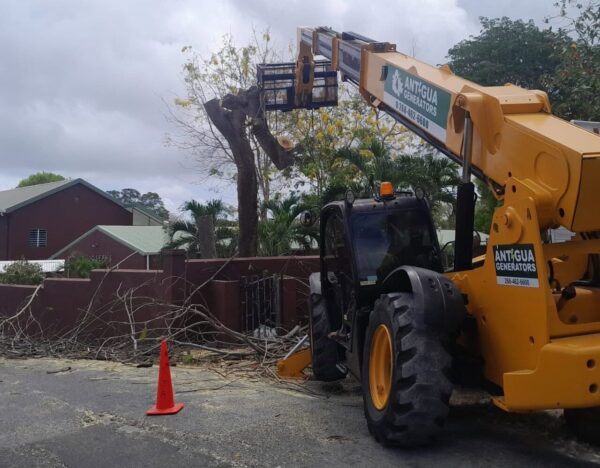
A collaborative safety and environmental initiative at St. Joseph’s Academy has successfully resolved a growing public safety threat while protecting a vulnerable local insect population, through the coordinated work of government bodies and independent environmental stakeholders. The risk originated from a huge beehive that had taken root inside the trunk of a mature flamboyant tree on the school’s campus, which sits frequented by hundreds of students, staff, and local community members daily. For weeks, local officials had flagged the overgrown hive as a major safety hazard, noting that unexpected disturbances to the colony could lead to dangerous stinging incidents that put passersby at severe risk.
To address the issue without unnecessary harm to the bee population, authorities assembled a multi-partner team that brought together complementary skill sets: enforcement and logistical support from the National Solid Waste Management Authority, tree removal resources from the Ministry of Public Works, and specialized apiculture expertise from Davina Joyce, a veteran local beekeeper and active member of the Antigua and Barbuda Bee Keepers Cooperative. Before the diseased and structurally unstable tree was taken down, Joyce and her team conducted a meticulous extraction of the entire hive, carefully moving hundreds of live bees to a new, remote location where the colony can thrive without posing a risk to nearby people.
Following the completion of the operation, the Ministry of Public Works released a statement emphasizing that the successful outcome was a direct product of intentional cross-sector collaboration. Rather than opting for a fast but destructive approach that would have eliminated the bee colony entirely, the team prioritized both public safety and environmental stewardship, balancing the needs of the school community with the ecological value of local pollinator populations. Officials framed the operation as a replicable model for communities across the region, proving that proactive public safety management does not require trading off the protection of local wildlife. By aligning the goals of government agencies and environmental stakeholders, the project delivered a positive result that serves both people and the local ecosystem.