As the 2026 FIFA World Cup unfolds across North America, it has already delivered no shortage of breathtaking goals, tense on-pitch drama, and iconic moments that have captured the attention of football fans worldwide. Yet far from the action of penalty shootouts and last-minute winning goals, one unexpected off-pitch issue has become the tournament’s most divisive talking point barely a week into the competition.
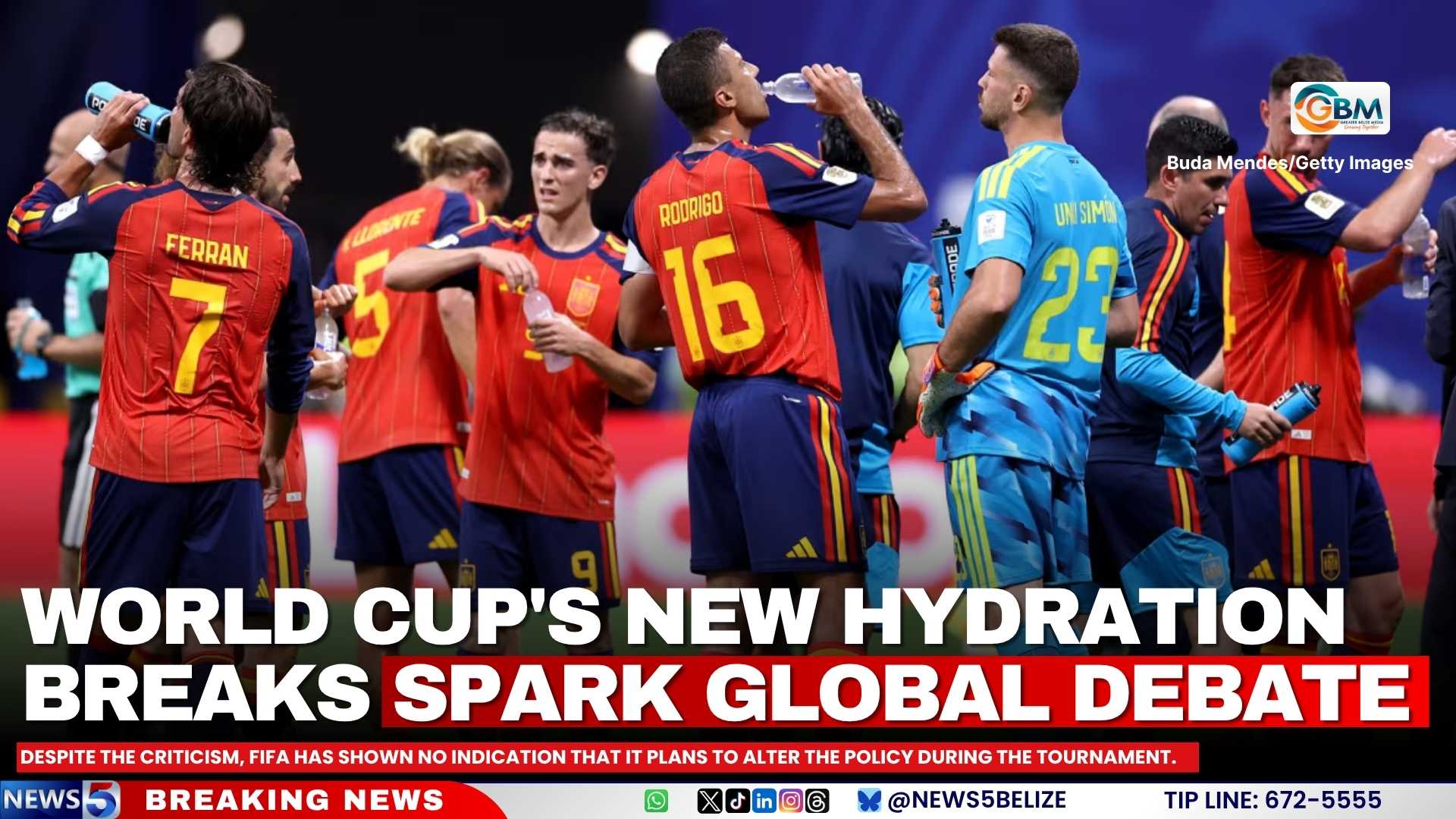
The source of the heated debate is FIFA’s new mandatory hydration break policy, rolled out as a flagship player welfare initiative for this summer’s tournament. The rule requires play to stop for three minutes at the midpoint of each half of every match, giving players a scheduled window to replenish fluids and lower their core body temperatures amid the typically hot and humid summer conditions common across host cities in the United States, Canada, and Mexico.
FIFA has defended the policy as a evidence-based measure to protect athlete health. The initiative has also received public backing from leading sports medicine and health experts, who have long warned of the risks of heat exhaustion and heat-related illness for elite footballers competing in high temperatures.
But critics have quickly pushed back against the universal application of the rule, pointing out that the mandatory breaks are enforced for every fixture regardless of actual on-site weather conditions. Critics highlight recent matches played in far more moderate conditions, including a Toronto game where temperatures hovered around a comfortable 19 degrees Celsius. Even matches held in fully enclosed, climate-controlled stadiums are required to take the three-minute breaks, a quirk of the policy that has led many observers to question whether player welfare is the only driving force behind the new rule.
A key point of contention is the structural impact of the breaks on match flow: the mid-half stoppages effectively split the traditional 45-minute halves into two distinct segments, turning the standard 90-minute match into four implicit quarters. This restructuring creates extra natural stoppages that television broadcasters can leverage for additional commercial advertising, and major network partners—particularly those in the large U.S. broadcast market—have already moved to capitalize on the extra airtime.
This has fueled widespread speculation and concern that commercial revenue interests, rather than just athlete safety, have shaped the new policy. Despite the growing backlash from players, coaches, fans, and pundits alike, FIFA has given no public signal that it plans to review or adjust the rule for the remainder of the 2026 tournament.