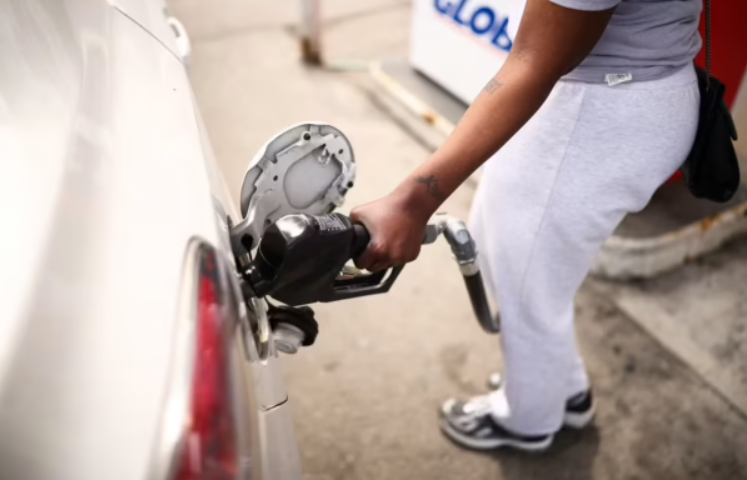
For the first time in nearly four months, the average price of regular unleaded gasoline at American fueling stations has fallen below the key $4 per gallon threshold, a welcome shift for consumers across the United States after months of soaring energy costs.
New data from automotive services group AAA confirms that the national average slid to $3.999 per gallon on Thursday, marking a nearly 3 cent drop from the previous day’s reading. As of this announcement, 28 US states already enjoy average pump prices below $4, with Indiana posting the nation’s lowest average at $3.40 per gallon. Separate tracking from fuel price analytics firm GasBuddy echoes the decline, placing the early Thursday national average at roughly $3.98, after the metric first crossed below $4 the prior Sunday.
This long-awaited milestone aligns with the impending reopening of the Strait of Hormuz, a key global oil chokepoint, outlined in an official memorandum of understanding between Iran and the United States that brings an end to recent hostilities. The strait’s closure in late February cut off roughly 20% of the world’s total crude oil supply, triggering a dramatic spike in global oil and retail gasoline prices that pushed the US national average to a record peak of $4.56 per gallon on May 21.
Since that peak, pump prices have declined on a daily basis, lifted by growing market optimism that diplomatic negotiations would successfully lead to the strait’s reopening. However, industry analysts warn consumers not to expect a return to the pre-conflict average of $3 per gallon any time in the near future, even if the downward price trend continues.
One primary barrier to a rapid full recovery is the slow timeline to restore normal global oil flow. Matt Smith, lead oil analyst at commodity analytics firm Kpler, explained to CNN that it will likely take three to four months for full commercial tanker traffic to resume through the strait. Replenishing the global oil inventories depleted during the months of closure will take even longer, he added.
Tankers stranded in the Persian Gulf are far from the only challenge. When the strait was closed, much of the region’s oil production and refining infrastructure effectively halted operations. According to experts, some facilities also sustained damage during the conflict, meaning additional time will be required to complete repairs and bring production back online.
Crude oil operates as a fully global market, and even though the United States is the world’s largest oil producer and relies on relatively little Middle Eastern crude, shifts in regional supply still directly set the prices that American consumers and businesses pay at the pump. Most notably, long-term global crude prices — the single biggest driver of retail gasoline costs — show no indication of falling back to the pre-war benchmark of $70 per barrel before the next decade.
Another factor slowing retail price declines is the behavior of independent gas station owners. Unlike the rapid pace at which owners raised prices when wholesale costs climbed, they are now cutting retail prices at a much slower rate. This is because many station operators absorbed reduced profit margins to stay competitive during the earlier price surge, and are now seeking to recoup those lost earnings.
This uneven adjustment explains why the national average retail price has only fallen by an average of 2 cents per day since hitting its peak, a stark contrast to the more than $1 per gallon price increase recorded in the first month of the conflict — the largest one-month jump in retail gas prices so far this century.
While coordinated releases of emergency oil reserves and drawdowns of excess global inventories prevented prices from climbing even higher during the closure, global stockpiles now sit at their lowest levels in decades. This has led some analysts to warn that pump prices could climb back above $4 per gallon later this summer, as peak driving season increases consumer fuel demand across the country. Even if another price surge does not materialize, experts broadly agree that a return to sub-$3 per gallon gasoline is extremely unlikely.
“We’ll figure out what the new normal is,” said Dan Pickering, founder and chief investment officer of energy investment firm Pickering Energy Partners. “But it isn’t going to be $2.85 gasoline.”
CNN business correspondent David Goldman contributed reporting to this article.