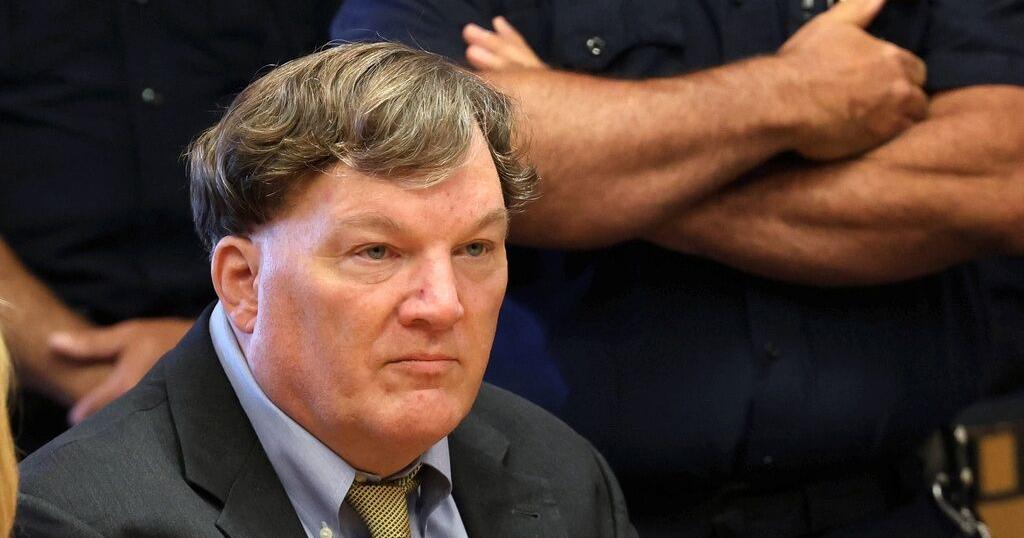
After decades of uncertainty and one of New York’s most high-profile cold case investigations, 62-year-old former Manhattan architect Rex Heuermann has been sentenced to spend the rest of his life in maximum security prison with no chance of parole, closing a chilling chapter of serial violence that shook Long Island for nearly 30 years.
Handing down consecutive life sentences at Suffolk County Court in Riverhead on Tuesday, Judge Timothy Mazzei delivered a scathing rebuke of the married father of two, calling him “disgusting—a despicable man, if you are a man at all” and labeling him a coward for his unrepentant actions. The sentence guarantees Heuermann will die behind bars for the torture, mutilation and murder of eight women, whose remains were found scattered across coastal Long Island between the 1990s and 2010s.
Among Heuermann’s confirmed victims is Sandra Rajkumar-Costilla, a 28-year-old woman who immigrated to the U.S. from Trinidad and Tobago’s Sangre Grande at age 17 in 1982. She was stabbed, strangled and mutilated by Heuermann in 1993, 11 years after her migration, leaving behind a two-year-old son who is now 35. In a victim impact statement read by Suffolk County District Attorney Ray Tierney, Costilla’s stepsister Ruth Ramos said her family finds closure in the knowledge Heuermann will never harm another person again.
“While justice cannot bring [the victims] back, it ensures they are no longer forgotten, and it brings our families peace knowing the person responsible for our irreversible pain can never harm anyone else,” Ramos’ statement read. “Sandra had endless potential. My hope was that someday the person who was responsible would be held to account, and that day is here.”
Costilla’s murder was the first in a long string of killings that spanned more than 15 years. Most of Heuermann’s victims, many of whom were sex workers, disappeared between 2000 and 2010, with their remains later discovered in the sandy scrubland along Ocean Parkway near Gilgo Beach. Costilla’s remains were found in the Hamptons in 1993, while the remains of an eighth uncharged victim, Karen Vergata, were recovered on Fire Island in 1996. Heuermann formally admitted to killing Vergata during his guilty plea in April, though he has never been formally charged in her death.
The emotional sentencing hearing saw 13 victim impact statements delivered by grieving family members, who confronted the killer directly before the judge handed down his sentence. “A million years isn’t enough. Nothing will ever make this right,” said Jasmine Robinson, cousin of victim Jessica Taylor. Amanda Funderburg, sister of victim Melissa Barthelemy, recalled the 15-year-old received a taunting phone call from Heuermann days after her sister’s 2009 disappearance. Facing the killer, she said plainly: “I hope you suffer.”
JoAnn Mack, mother of victim Valerie Mack, reminded Heuermann that he had stolen all of her daughter’s future dreams. “Justice has been done, but it can’t replace what has been taken,” she told the court. Liliana Waterman, who was just three years old when her mother Megan Waterman disappeared, spoke outside the courthouse after the sentencing, saying she had waited her whole life for this moment: “She can finally rest in peace. He can’t hurt anybody else.”
When given the opportunity to address the court, Heuermann declined to issue a formal apology, offering only cryptic remarks: “There are words I could say. I am responsible for all that was said in this room. The words I would say have no meaning.” When Judge Mazzei asked directly if he felt even a small amount of remorse, Heuermann nodded and mouthed “yes,” a gesture District Attorney Tierney dismissed as hollow. “There is no doubt this defendant is sorry. He is sorry he got caught,” Tierney told reporters.
Heuermann’s defense attorney, Michael Brown, claimed the former architect has cried during discussions of his crimes and that his remorse may hold some sincerity, noting that Heuermann appeared outwardly unremarkable and even charismatic during their meetings—a stark contrast to the brutal violence he inflicted. As part of his guilty plea deal reached in April, Heuermann agreed to cooperate with the FBI’s Behavioral Analysis Unit to help law enforcement identify and apprehend other active serial killers.
The case that became known as the Gilgo Beach serial killings first came to public attention in 2010, when investigators searching for missing sex worker Shannan Gilbert (whose death was later ruled an accidental drowning) stumbled upon the first set of remains along Ocean Parkway. The case went cold for more than a decade until 2022, when detectives followed up on a decades-old witness report of a suspicious pickup truck seen near the disappearance of one victim in 2010, a lead that ultimately pointed them to Heuermann.
Investigators secured a critical break when they matched DNA recovered from a discarded pizza crust Heuermann threw away in a Manhattan trash can to degraded genetic material from hair fragments found on the victims’ remains. Additional evidence, including cellphone tracking data that placed Heuermann near meeting spots with multiple victims shortly before their disappearances, and a “blueprint” for the killings found on his personal computer—complete with checklists for limiting noise, cleaning crime scenes and destroying evidence—solidified the case against him.
Heuermann has been held in solitary confinement in a Suffolk County jail for the past three years, where he has reportedly read crime novels and even exchanged brief correspondence with Keith Jesperson, the infamously named “Happy Face Killer.” He is set to be transferred to a state maximum security prison in the coming days. In a statement after the sentencing, Tierney called Heuermann a monster, adding that no words could ever lessen the harm he caused.
Heuermann’s ex-wife and two adult children released a statement saying they would not attend the sentencing out of respect for the victims’ families. For the relatives of the victims, Tuesday’s sentencing brings a long-awaited end to decades of uncertainty, even as it cannot reverse the lifelong damage Heuermann inflicted on hundreds of grieving family members.