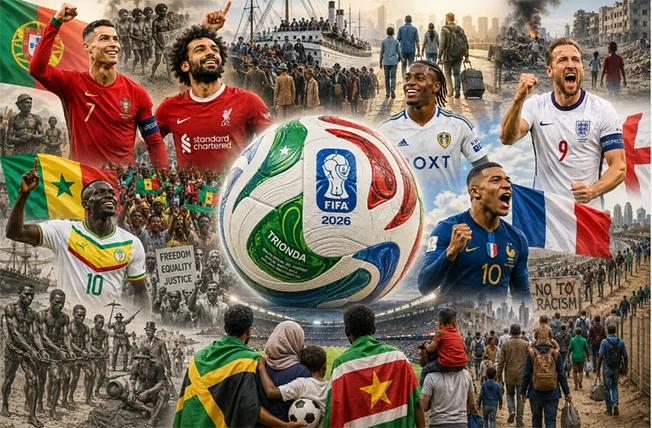
The FIFA World Cup is far more than a 90-minute contest of athletic skill and tactical maneuvering. For billions of fans across the globe, this global quadrennial tournament is never experienced through just the lens of on-pitch action. Every individual watches the game filtered through their own personal background: ancestral history, cultural origin, family ties, core beliefs, and even deep-seated political or economic views. One fan may dissect every tactical shift and defensive formation, while another sees a decades-spanning historical confrontation. Some align their support with a national team based on their familial roots, others cheer for the side boasting their favorite star, and many simply tune in for the pure joy of beautiful, fluid soccer. In this way, the World Cup always reveals more about the people watching it than it does about the goals scored on the pitch.
Professional soccer analysts and coaches approach matches very differently than casual supporters. Where industry insiders focus on high pressing metrics, possession rates, off-ball running lanes, counterattack transitions, and tactical discipline, average fans often fixate on raw tension, emotional highs, and goals. A head coach may leave a 0-0 draw praising a perfectly executed game plan, while a supporter sitting on their couch at home will dismiss the same match as unbearably boring for its lack of scoring. But beyond the narrow framework of professional sports analysis, countless other perspectives shape how fans experience the tournament, and history plays a far larger role than most observers initially recognize.
Matches between nations with intertwined shared histories almost always carry extra emotional weight, not because current players bear responsibility for past events, but because fans bring their own family memories, intergenerational experiences, and historical traumas or connections to the game. Take for example a group stage matchup between Senegal and France: while some fans see only an exciting clash of talented teams, others cannot separate the contest from the historical relationship between a former colonial power and its one-time colony. The same dynamic plays out for any match between nations whose histories are deeply intertwined, turning the soccer pitch into a temporary meeting ground where the past and present collide.
Migration and diaspora communities also reshape how fans engage with the World Cup. Today, hundreds of millions of people live in a country different from the one where their parents or grandparents were born, creating often complex dual loyalties. A person may feel fully at home in their country of residence, while still retaining a deep emotional bond with the nation of their ancestry. This reality is visible across every World Cup: Moroccan fans based in the Netherlands, Turkish communities in Germany, Senegalese diaspora members in France, Mexican supporters in the United States, and countless other displaced and migrant communities all experience the tournament through a unique, personal lens shaped by their dual identity.
This dynamic is particularly visible in Suriname, where attitudes toward the Dutch national team split sharply along lines of history and connection. For many Surinamese fans, supporting the Netherlands feels natural, shaped by close family ties, shared cultural bonds, and the long legacy of Suriname-born players who have defined Dutch soccer for decades. For others, however, attitudes toward the Dutch side are shaped by the shared colonial history between the two nations, and current social and political debates ranging from migration policy to visa restrictions. For these fans, a simple group stage match becomes far more than a sporting contest — it becomes a mirror that reflects broader societal tensions and long-held grievances.
Beyond identity and history, some fans completely ignore national borders to center their support around individual star players. It matters little to these fans whether their favorite athlete plays for Argentina, Portugal, France or Brazil; what draws their support is the player’s individual skill, style of play, and charisma. For these supporters, the national team jersey becomes secondary to the unique talent of the soccer star they follow.
Still other fans care most about the entertainment value of the game, prioritizing the aesthetic beauty of skilled soccer over final results. They delight in technical masterclasses, unexpected attacking runs, spectacular goalkeeping saves, and the electric atmosphere of packed stadiums. For them, soccer is first and foremost a global form of entertainment, and how a match is played often matters more than who wins it.
A growing segment of fans and observers also engage with the World Cup through an economic lens. For this group, the multi-billion dollar industry behind modern soccer — from sponsor deals and broadcast rights to advertising revenue and the global transfer market — is just as much a part of the spectacle as 90 minutes of play on the pitch. For other fans, sports betting and match predictions add an extra layer of personal investment to every contest.
The World Cup’s unique magic lies in its ability to bring all these wildly different perspectives together. Billions of people tune in to watch the same match footage, but every individual walks away with a completely different story. No other global sport can stir up such a diverse range of emotions, memories and expectations across the entire planet.
Perhaps the most profound takeaway from every World Cup is this: the ball is round for everyone, the pitch is the same size for every team, the rules of the game never change — but the lens through which each person watches and experiences the tournament varies completely from one individual to the next. It is this diversity of perspective that makes soccer far more than just a game. It tells a story of who we are, where we come from, and the personal and collective histories we carry with us.