Two months after a US-Israeli military campaign sparked a regional conflict that disrupted global energy supplies, the United States and Iran have signed a preliminary agreement to end open hostilities, with Iran committing to roll back its nuclear enrichment activities in exchange for sweeping economic sanctions relief.
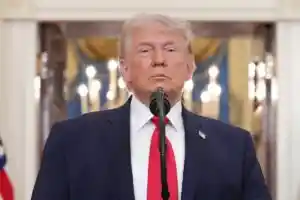
The historic signing took place on Wednesday evening, following the conclusion of the G7 summit in France. U.S. President Donald Trump put his signature to the memorandum of understanding during a working dinner with French President Emmanuel Macron at the Palace of Versailles, a senior U.S. official confirmed to Agence France-Presse. As he exited the palace, Trump simply told waiting reporters, “Just signed it.”
Iranian state news agency IRNA later confirmed the authentication of the document, quoting Foreign Ministry spokesman Esmaeil Baqaei who said the deal was finalized once both heads of state affixed their signatures.
The conflict that the agreement aims to resolve began on February 28, when the United States and Israel launched military operations against Iran. Iran responded with barrages of missiles and drones targeting regional interests linked to its adversaries, and effectively shut down the Strait of Hormuz — the strategic chokepoint through which roughly 20% of the world’s daily oil supplies pass, triggering immediate fears of a global energy crisis. “Now it is time to test the implementation of the agreement,” Baqaei noted.
The core terms of the preliminary deal lay out immediate, concrete measures for both sides. Washington has committed to immediately lift crippling oil sanctions that have gutted Iran’s economy for years. Once a permanent, comprehensive agreement is reached on Iran’s nuclear program, the deal also paves the way for the release of $300 billion in reconstruction funds backed by regional nations, though U.S. officials clarified Washington will not contribute any of its own money to the pool. For Iran’s part, the country has agreed to dilute its existing stockpiles of enriched uranium, a process expected to be carried out on site under direct supervision from the International Atomic Energy Agency, the United Nations’ nuclear watchdog.
The path to the signing saw a last-minute shift in protocol: the deal was originally scheduled to be signed by Iran’s chief nuclear negotiator and parliament speaker Mohammad Bagher Ghalibaf and U.S. Vice President JD Vance, but Iran scrapped plans for an in-person signing ceremony. Even as the agreement was finalized, Iranian officials framed the outcome as a strategic win for Tehran, with Ghalibaf stating on state television Wednesday night that the deal amounted to a U.S. “failure.” “People will see it and judge,” he added.
Global powers have already weighed in on the agreement, with China’s top diplomat emphasizing to Iranian counterparts Wednesday that full, genuine implementation of all commitments is the key to long-term stability. However, the deal has sparked sharp backlash even within U.S. political circles, as Trump’s decision to end a conflict that left 13 American service members dead and depleted massive U.S. ammunition stockpiles has split his own allies.
Crucially, the agreement is only an interim arrangement designed to create space for detailed negotiations on the most intractable issue: long-term curbs on Iran’s nuclear ambitions, which the U.S. has long argued conceal a secret nuclear weapons program. Trump warned earlier Wednesday that he remains prepared to “bomb the hell” out of Iran if the country violates the terms of the ceasefire. But Republican Senator Bill Cassidy offered a scathing rebuke of the deal, arguing it represents the worst foreign policy mistake in modern U.S. history. “Iran’s nuclear ambitions were not curbed, and they have learned that threatening the Strait of Hormuz works,” Cassidy said. “Sanctions will be lifted, and the bombing has stopped.”
Pro-Iranian regional groups have echoed Tehran’s positive framing of the deal. Naim Qassem, head of the Lebanese Shiite movement Hezbollah, described the agreement as a “great victory” for Iran Wednesday, thanking Tehran for securing a truce that includes Lebanon. Lebanon was dragged into the conflict after Hezbollah launched rocket attacks against Israel on March 2 in solidarity with Iran.
A 60-day negotiating window for a permanent agreement has now officially opened, with the immediate first step being the full reopening of the Strait of Hormuz. Global energy markets have already reacted to the news with significant volatility: oil prices had fallen steadily in recent days as optimism for a peace deal grew, but swung wildly Wednesday, jumping 5% at one point as uncertainty over the signing spread before stabilizing later in the day.
While violence has largely tapered off across the region following the truce announcement, sporadic clashes continue in southern Lebanon. Lebanese state media reported that at least five people have been killed in Israeli strikes since the deal was announced, and that Israeli forces carried out raids across southern Lebanon on Wednesday. The Israeli military confirmed that five of its soldiers were wounded, one critically, after an explosive drone struck positions in southern Lebanon — the first such casualty incident confirmed since the truce was signed. The military also added that its air defenses intercepted multiple rockets fired toward Israeli troops operating in the area, with no additional casualties reported.