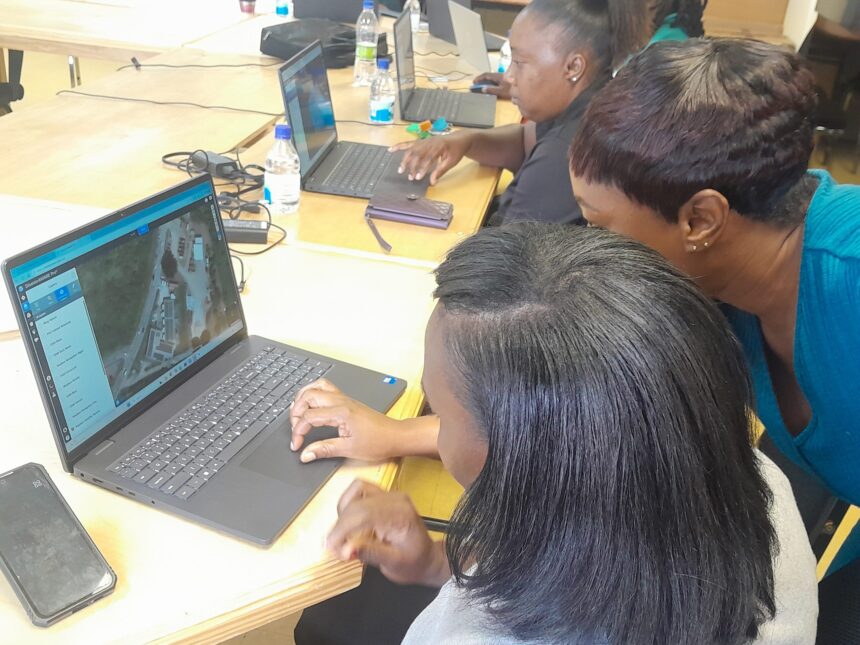
When extreme weather and other hazard events grow increasingly frequent globally, small island nations like Antigua and Barbuda face disproportionate risk to their communities and critical infrastructure. To address this vulnerability, the country’s National Office of Disaster Services (NODS) has taken a key step forward to upgrade its emergency response capabilities, equipping its staff with advanced technical training on a cutting-edge global disaster risk management platform.
Last week, all participating NODS personnel completed a virtual specialized training course focused on DisasterAWARE, a leading decision-support and risk reduction platform developed by the Pacific Disaster Center (PDC). Headquartered at the University of Hawaii, PDC has earned international recognition as a pioneer in advancing science and technology for global disaster risk reduction. The training session was led by Alex Carias, PDC’s Liaison to U.S. Southern Command (US SOUTHCOM), who guided participants through the platform’s core functions and real-world use cases.
Widely adopted by emergency management professionals across the globe, DisasterAWARE currently serves more than 25,000 users worldwide. What sets the platform apart is its ability to aggregate and analyze multi-source data to support proactive hazard management: it delivers real-time monitoring and customized alerting for 28 distinct types of hazards, ranging from natural disasters and biological outbreaks to human-caused events and geopolitical threats. By combining authoritative open and proprietary data sources, cutting-edge impact modeling, artificial intelligence, advanced predictive analytics, and targeted risk intelligence tools, DisasterAWARE enables emergency managers and senior decision-makers to act early, before hazards escalate into large-scale crises that threaten lives, destroy property, and disrupt critical community services.
During the hands-on training, NODS staff gained practical skills to integrate DisasterAWARE into daily operations at the country’s Emergency Operations Center (EOC). A key component of the training focused on leveraging data from Antigua and Barbuda’s 2024 National Disaster Preparedness Baseline Assessment, a project completed in close collaboration between NODS and PDC earlier this year. Trainees learned how to draw on this locally specific baseline data to generate more accurate, context-aware risk analyses that support sound, timely decision-making during emergency events.
Beyond technical skills, the training program centered on tangible, on-the-ground applications for all phases of disaster management: from pre-event preparedness planning and early warning, to on-the-ground response during active crises, to post-disaster recovery and long-term hazard mitigation. By building these capabilities, the initiative directly supports Antigua and Barbuda’s broader goal of strengthening national resilience against growing disaster risk. NODS has reaffirmed its ongoing commitment to continuously upgrade national disaster preparedness, improve operational readiness across all levels of response, and ensure the country always has access to the cutting-edge tools and reliable information required to manage disasters effectively and protect every community across Antigua and Barbuda.