### Introduction
Deepening energy insecurity, rooted in decades-long United States economic sanctions and amplified by two 2025 executive orders framed as collective punishment, has upended the rhythm of daily life for ordinary Cubans across the island. What was once a routine of turning a key for gas or flipping a switch for power has become a daily struggle to adapt to rolling blackouts, fuel shortages, and widespread supply crunches that touch every corner of life—from household cooking to critical neonatal healthcare. Yet even amid overwhelming hardship, interviews with Cubans from multiple regions reveal a quiet, unbroken stubbornness to persist and resist.
### Morning Routines Re-shaped by Scarcity
Long before the sun crests over Cuban neighborhoods, the day starts not to the beat of a clock, but to the demands of unstable energy access. “If power is available, you use every second of it,” explains 71-year-old retired Bayamo resident Rosa María Suárez Montalbán, as she stokes a pile of low-quality charcoal on a makeshift stove cobbled together from pressure cooker lids. For Rosa María, even the simple ritual of a morning cup of coffee requires careful, time-consuming work: the poor-quality charcoal burns out in minutes, smoke stings her eyes, and every ember must be saved. What she longs for most is the reliable liquefied gas service Cuban households once relied on—but that service has collapsed under the weight of sanctions.
Rosa María does not blame local distributors or truck drivers, who have gone months without deliveries to her community. She points squarely to the U.S. blockade, the decades-long trade embargo that successive U.S. administrations have tightened to pressure the Cuban government. “When will they leave us in peace?” she asks. She recounts recent weeks of extreme blackouts: nearly 44 hours without power, with only two hours of steady service in total. All limited domestic fuel reserves are diverted to hospitals and critical infrastructure—even running water pumps are not prioritized, forcing her son-in-law to make multiple bicycle trips to haul a single tank of drinking water. Still, she tells herself: “Stay calm… we’ll get through this.”
### Hardship Shared Across Regions
Eighty-year-old Elvira Quintana Arbolea from Cienfuegos has dug out an old charcoal stove she kept stored for years, now her primary cooking tool amid frequent blackouts. Like many Cubans, she expresses confusion and frustration at the stance of Cuban exiles abroad who celebrate these hardships. Even so, she holds gratitude for the international solidarity Cuba has received amid shortages, and recalls the decades of medical and humanitarian aid the island has itself sent to vulnerable communities across the globe.
In smaller municipalities far from major provincial capitals, the energy crisis is even more severe. In Lajas, resident Alberto Hidalgo Sánchez reports that blackouts can stretch past 50 consecutive hours. His family cooks with firewood, not charcoal—charcoal has become too expensive to afford regularly. “It’s overwhelming,” he admits. “It would be a lie to say it’s easy.” On top of rising food prices, families now have to expend extra time and labor just to prepare the food they can access.
Alberto frames the crisis as deliberate punishment imposed by Washington, and places hope in growing opposition to the embargo among the American public, calling out anti-Cuba politicians like Marco Rubio for pushing abusive policies. He pushes back against arguments that U.S. annexation would solve Cuba’s problems, pointing to ongoing blackouts in U.S.-ruled Puerto Rico and the chaos that followed foreign intervention in Libya. “If they invade, they will attack the thermoelectric plants, and building one will take at least five years,” he argues. “We must resist and win. If any people can do it, it is the Cuban people.”
### Scarcity Reaches Even Critical Healthcare
The strain of the blockade reaches beyond household life, penetrating even the most critical public services. Retired Granma province resident Estela Carrazana went through a cataract surgery last year that exposed the depth of medical supply shortages driven by sanctions. After receiving her surgery date, she was told she would need to source her own supplies for the procedure: five syringes, protective goggles, four pairs of non-disposable surgical gloves, and the medication chlordiazepoxide—all of which were difficult to find amid widespread scarcity.
“I had the surgery, thank God,” she says now, her vision restored. “But tell me, how long will we have to deal with this pressure? They’re limiting us down to the smallest things.” She praises the skill and dedication of Cuban doctors, but notes they cannot do their jobs properly without the supplies and medication they need. “This blockade is suffocating us,” she says.
### Nurses Carry On Despite Personal Hardship
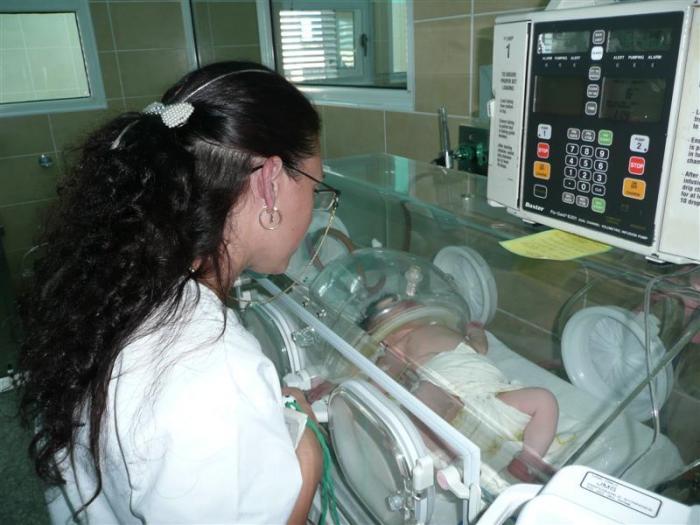
The dedication of Cuban healthcare workers shines through even amid systemic scarcity. By 5 a.m., Rujaine García Linares is already awake, after another night of restless sleep plagued by mosquitoes and power outages at her Santa Clara home. She works as a nurse in the Neonatal Intensive Care Unit (NICU) at Mariana Grajales Hospital, where dozens of critically ill infants rely on her care to survive. A day prior, a 40-hour blackout spoiled most of the food in her refrigerator, forcing her to cook everything she had left to feed her two children and 85-year-old mother. Now, by candlelight, she boils eggs and cooks rice over a charcoal stove, rushing to finish before she has to leave for work.
She cannot afford the daily cost of a private tricycle ride to the hospital, so she walks to the bus terminal at 7 a.m., hoping a kind driver will offer her a ride. Once she arrives at the hospital, she shifts her full focus to the most important work: saving the lives of the infants in her care, who are put at additional risk by the medicine and fuel shortages caused by the U.S. blockade. Rujaine leaves her own personal struggles at the hospital door; she knows the families waiting outside are already suffering, and that neither the children nor their families are to blame for the crisis crippling Cuba’s healthcare system, which she describes as a deliberate act of genocide by the U.S. government to break the Cuban people.
Away from work, Rujaine juggles her roles as a mother, daughter, nurse, and community member, often sharing what little she has with more vulnerable neighbors. The article’s authors note that when these difficult times pass, Cuban women like Rujaine—who serve as the quiet backbone of families and communities, pulling the country through each hard day—deserve to be honored for their resilience.
### Conclusion: Persistence Through Generations
As night falls, exhaustion adds to the darkness that covers Cuban neighborhoods. If residents are lucky, a charged rechargeable fan provides a small measure of relief from the heat and mosquitoes. “Sleeping like this is difficult, but tomorrow we have to get up,” Rosa María says—and that simple phrase captures the intergenerational persistence that has defined Cuban life through decades of blockade.
Even amid overwhelming hardship, Cubans continue to move forward. Carrying daily burdens requires immense fortitude and repeated sacrifice, but the resolve of the people remains unbroken. When the history of this era is written, it will remember a noble, courageous people, and a cowardly, ruthless enemy that tried and failed to break their will.