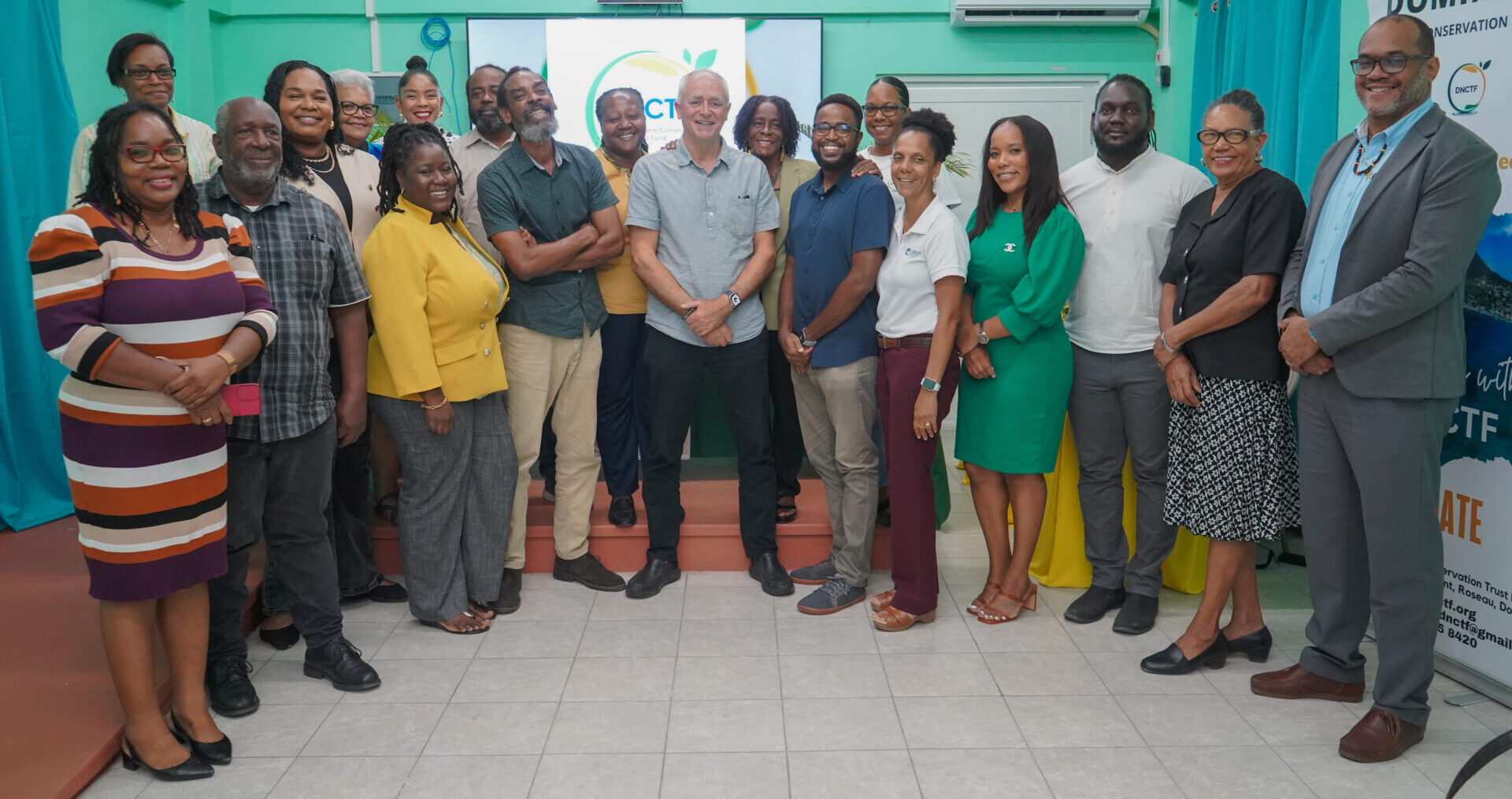
On June 12, 2026, the Dominica National Conservation Trust Fund (DNCTF) awarded $103,000 in targeted grants to two local environmental initiatives during its second annual Grant Award Ceremony, backed by a regional Caribbean biodiversity protection framework. The funding, disbursed through the Caribbean Regional Architecture for Biodiversity (CRAB) Pro-Nature Grant Facility, breaks down into $93,000 in direct project funding and an extra $10,000 earmarked for specialized technical support and institutional capacity-building across awardees.
The technical assistance portion of the grant program is designed to build grantee capabilities in high-priority operational areas, including transparent financial reporting, systematic project monitoring and evaluation, adherence to rigorous environmental and social safeguards, and intentional integration of gender equality and social inclusion into conservation work. The entire CRAB initiative receives strategic backing from the Agence Française de Développement (AFD) and the Fonds Français pour l’Environnement Mondial (FFEM), which channel support through the regional Caribbean Biodiversity Fund (CBF).
One of the two selected projects is led by Dominica’s Ministry of Agriculture, Fisheries, Blue and Green Economy. Titled “Rapid Response to Lethal Yellowing Disease: Protecting Coastal Ecosystems and Restoring Biodiversity,” the initiative targets a devastating pathogen that has been spreading through Dominica’s coconut palm populations—an iconic species that underpins both coastal ecosystem stability and local smallholder livelihoods. Project activities will include expanded disease surveillance across at-risk coastal areas, targeted control of the insect vectors that spread the pathogen, widespread public outreach to educate communities on disease prevention, and systematic management of already infected trees to stop further spread.
The second grant recipient is local marine conservation non-profit Oceans Forward Dominica, which will partner with management of the Soufriere-Scott’s Head Marine Reserve (SSMR) to upgrade marine biodiversity protection at one of Dominica’s most ecologically significant coastal protected areas. The project, “Enhancing Biodiversity Protection in the Soufriere-Scott’s Head Marine Reserve through Coral Restoration and Improved Monitoring, Surveillance and Compliance,” will combine active coral reef restoration work with upgrades to the reserve’s long-term management capacity, including more robust biodiversity monitoring, expanded patrols to prevent illegal activity, and stronger enforcement of reserve protection rules.
Speaking at the official grant award ceremony, Permanent Secretary Ryan Anselm noted that the ministry’s coconut disease response project aligns with national priorities that tie environmental protection to economic resilience. “Protecting our coconut resources isn’t just about preserving trees—it’s about protecting the coastal ecosystems that buffer our communities from storms, the biodiversity that makes our island unique, and the livelihoods that depend on both,” Anselm explained. He also emphasized the critical cross-cutting value of healthy coral reefs, which reduce coastal erosion and storm damage while supporting productive fisheries and the sustainable tourism that forms a core pillar of Dominica’s economy.
DNCTF Chief Executive Officer Dr. Rhonda Linton framed the new grants as far more than one-off project funding, calling them a long-term investment in Dominica’s environmental and economic future. “This funding represents a deliberate commitment to protecting and restoring the ecosystems that sustain our communities, boost our ability to withstand climate impacts, and preserve the one-of-a-kind biodiversity that makes Dominica such a special place,” Dr. Linton said. Closing with a call for collective action on environmental stewardship, she added, “If we do not protect our planet, there will be no planet left to protect.”
The awards reflect a growing coordinated effort between local, regional, and international partners to safeguard Dominica’s extraordinary natural heritage, with the ultimate goal of ensuring the island’s ecosystems remain healthy, resilient, and productive for generations to come.