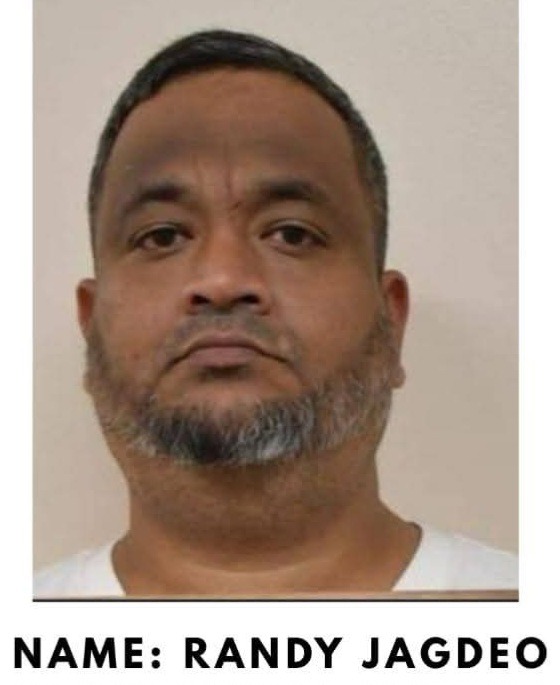
A major illegal firearms investigation in Guyana has taken a new turn, with a local city businessman turning himself in to authorities on Sunday, June 14, 2026, following a massive seizure of 23 US-manufactured AK-47 assault rifles and hundreds of rounds of ammunition earlier this week.
Randy Jagdeo, 40, surrendered peacefully at the headquarters of the Guyana Police Force’s Criminal Investigations Department (CID) in the company of his legal representation, confirmed Deputy Police Commissioner Wendell Blanhum, who heads the CID. As of Sunday afternoon, Jagdeo remained in police custody as investigators continue to unpack details of the smuggling case.
The large cache of weapons — 23 assault rifles and 503 matching rounds of ammunition — was intercepted by law enforcement late Thursday during a seizure at Schoonard, on the West Bank of Demerara. Blanhum previously confirmed that all the firearms originated in the United States. While one weapon still retained its original factory serial number, investigators found that the identifying serial numbers on every other rifle had been intentionally erased, a common tactic for illegal arms traffickers.
One suspect has already been taken into custody in connection with the Schoonard bust: 28-year-old Jonathan Gans, a Venezuelan man who resides in Third Street, Grove, East Bank Demerara. Authorities have also issued an official wanted bulletin for a second Guyanese suspect, Orlando Gabriel, who is still being sought on charges of unlawful weapons possession linked to the case.
This seizure marks the second large interception of illegal assault rifles in Guyana in just one month. Just last month, authorities seized 10 AK-47 rifles in Berbice, and three Guyanese nationals have already been formally charged and are currently going through court proceedings for that incident.
As of Sunday, top Guyanese security officials have declined to comment on the driving forces behind what appears to be a growing influx of high-powered assault weapons into the country, leaving many open questions about the intended destination and use of the seized contraband. The case underscores growing regional concerns over cross-border illegal arms trafficking in South America.