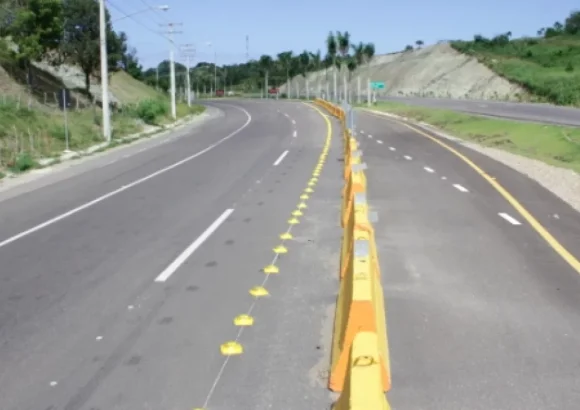
For the Dominican Republic’s northern corridor, the Amber Highway is far more than an uncompleted public works project tucked into a list of pending initiatives. This long-planned infrastructure venture stands as a transformative strategic link that, if delivered to the promised technical specifications, has the potential to reshape connectivity, trade, tourism, and long-term economic growth across Santiago, Puerto Plata and the entire North Coast for generations to come. The project has recently reemerged at the center of public debate, driven by advancing bidding processes, ongoing evaluation of technical proposals, and mounting expectations from communities across the region, including Santiago, Puerto Plata, Montellano, Sosúa, Cabarete, the Gregorio Luperón International Airport and the wider North Coast tourism corridor. While most public discussion frames the highway as a simple solution to cut travel time between Santiago and Puerto Plata, its purpose extends far beyond reduced commute times: it will directly connect Cibao’s primary economic heartland to a major tourist province that is actively working to reposition itself through new hotels, large-scale real estate developments, expanded airport infrastructure and commercial growth projects. According to official data reviewed by local outlet InfoENN – El Nuevo Norte, the completed highway will stretch between 32 and 32.7 kilometers, featuring four total lanes (two in each direction) and a designed operating speed of 100 kilometers per hour. Its core goal is to establish a modern, more direct and far safer connection between the existing Santiago Northern Bypass and the Puerto Plata–Sosúa highway. A critical detail that has gone largely undiscussed in public discourse is the highway’s alignment: rather than terminating directly in central Puerto Plata, it will route to the Montellano area, linking to the Puerto Plata–Sosúa corridor near the existing transport axis that connects Puerto Plata city, Gran Parada, Gregorio Luperón Airport, Sosúa and Cabarete. This routing fundamentally changes the project’s impact, repositioning Montellano from a forgotten transit town to a strategic hub for road transport, tourism, logistics and real estate development. From this new hub, vehicles departing Santiago will be able to access Puerto Plata, Sosúa, Cabarete, Playa Dorada, Maimón, the airport, Punta Bergantín and other key North Coast destinations without being forced onto crowded, outdated traditional routes. Traversing a rugged mountainous region, the Amber Highway breaks from the pattern of narrow, slow, curve-heavy mountain roads common to the area. Available technical plans outline a mixed engineering approach that incorporates open roadway sections, terrain cuts, embankments, retaining walls, bridges, viaducts, interchanges, overpasses and two purpose-built tunnels. The tunnels stand as one of the project’s most defining features: one will measure approximately 1.8 kilometers long, while the second will span roughly 0.7 kilometers, engineered to cut through mountain barriers, minimize sharp curves and steep grades, and reduce overall driving hazards. This modern design sets the new highway apart from the existing Gregorio Luperón Tourist Highway, a long-serving but notoriously challenging route marked by tight curves, steep slopes and elevated driving risks. The new corridor is designed to deliver a smoother, faster and safer route for passenger vehicles, tourist shuttles, intercity buses, commercial trade, cargo transport, business services and airport connections. The project’s greatest potential impact lies in broad regional economic development, rather than just improved transport. It promises to deliver direct, lasting benefits to the economies of both Santiago and Puerto Plata: Santiago acts as the commercial and industrial core of the Cibao region, while Puerto Plata ranks among the Dominican Republic’s top tourist destinations, with world-class beaches, established hotel infrastructure, commercial ports, an international airport, growing real estate development and a coastal corridor with massive untapped expansion potential. A high-speed link between the two provinces will boost domestic visitor flows, streamline freight transport, ease commutes for workers, cut overall logistics costs, and lift land and property values across corridor-adjacent areas. In Puerto Plata, growth will likely be concentrated in Montellano, Gran Parada, Sosúa, Cabarete, the zone surrounding Gregorio Luperón International Airport and developments tied to the Punta Bergantín project. A wide range of local stakeholders stand to benefit, including suppliers, construction firms, tour operators, transport companies, investors, merchants, hoteliers, restaurateurs and residential real estate developers that rely on improved connectivity to Santiago and the rest of the country. One largely underreported aspect of the project is how the Amber Highway aligns with Puerto Plata’s planned new regional tourism map. Punta Bergantín has been positioned as one of the most ambitious projects to revitalize tourism across the North Coast, and large-scale success for the development hinges on reliable, high-speed land connectivity. A modern highway from Santiago will streamline access for investors, visitors, employees, suppliers, construction contractors and supporting service providers heading to the development, while also strengthening Gregorio Luperón International Airport’s position as a more convenient travel terminal for residents and visitors across the Cibao region. If the airport can establish an effective high-speed link to Santiago, Puerto Plata will be able to compete far more effectively as a combined air and tourism gateway for much of the Dominican Republic’s northern territory. The project is being advanced by the Dominican Ministry of Public Works and Communications through the RD Vial Trust. The national public tender, identified as FIDEICOMISO-CCC-LPN-2025-0010, aims to award a contract for both the design and construction of the full highway. Initially, the deadline for proposal submission was set for March 2026, but officials extended the deadline to May to encourage broader participation and strengthen competition among interested construction groups. Following the extension, RD Vial confirmed that it had received and opened technical proposals (Envelope A of the bidding process) from three competing consortia: Consorcio Autopista del Ámbar, Consorcio AutoAmbar, and Consorcio Ruta del Ámbar. To ensure transparency, the bid opening stage included oversight from a Citizen Oversight Commission, public notaries, bidder representatives and members of the Purchasing and Contracting Committee. As of the latest update, no final award has been announced. The process has advanced to evaluation of the submitted technical proposals, with opening of financial bids from qualified participants and the final contract award still pending. The total estimated cost of the Amber Highway project exceeds RD$32 billion, making it one of the largest and most impactful road infrastructure investments in the Dominican Republic’s recent history. However, the project’s value extends far beyond its construction price tag. Its true significance lies in its potential to reshape economic development across the North, integrate two of the country’s most important provinces, and unlock tourism growth in a region rich with natural, cultural and real estate assets. For Santiago, the highway delivers a long-sought direct route to the Atlantic coast. For Puerto Plata, it creates a far stronger connection to the Cibao region’s economic engine. For Sosúa, Cabarete and Montellano, it could open the door to an entirely new era of growth and development. Even as regional stakeholders express enthusiasm for the project, success will require proactive planning to address emerging challenges. A project of this scale will bring transformative development, but also complex new pressures. Municipalities across Montellano, Gran Parada, Sosúa and Cabarete will need to update land use planning, enforce zoning controls, upgrade drainage infrastructure, expand road safety measures, regulate new access points, strengthen environmental protections and expand public services to accommodate incoming growth. As connectivity improves, pressure from real estate, commercial and tourism development will rise. When managed strategically, this growth can deliver a once-in-a-generation economic boost, but unplanned growth can lead to urban disorder if local governments are not prepared to accommodate new development. The Amber Highway has the potential to redraw the Dominican Republic’s northern economic map, but its long-term success will depend on far more than just asphalt. It will require intentional planning, sustained transparency, high-quality construction, and collaborative effort to help local communities integrate new development opportunities effectively.
Amber Highway: the project that will change the economic map of Santiago and Puerto Plata