Antigua and Barbuda’s Prime Minister Gaston Browne has stepped forward to defend a major planned luxury tourism development at Sandals Grande Antigua, framing the project as a critical investment to keep the island nation competitive in the fast-growing global high-end travel market. During his weekly public radio address Saturday, Browne pushed back against widespread criticism of the proposed overwater bungalows, laying out his case that the expansion will boost national tourism revenue while safeguarding public access to one of the country’s most popular coastal destinations, Dickenson Bay.
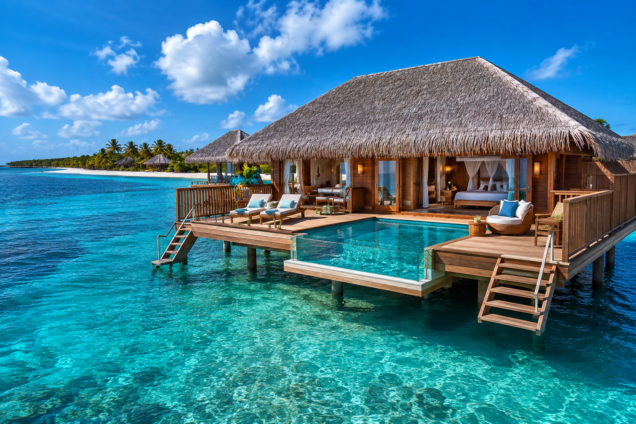
Sandals Resorts international has already announced plans to inject more than $100 million into the expansion project, which will add more than 100 new guest rooms to the Sandals Grande Antigua property. The centerpiece of the upgrade is the addition of approximately 16 exclusive overwater bungalows, a luxury accommodation option that has become a major draw for high-spending travelers worldwide.
To address widespread public concern over restricted beach access, Browne confirmed the government has placed clear geographic restrictions on where the structures can be constructed. The bungalows will not be sited along the central stretch of Dickenson Bay’s beach, he explained. Instead, development will be shifted south toward the existing groyne, a positioning that ensures the structures will not block public use of the main beach area. Browne emphasized that the bungalows are built over open water, not on the beach itself, so fears of restricted access to Dickenson Bay are unfounded. “These are not going to take up beach,” he said. “Dickenson Bay will still be accessible to all stakeholders.”
The prime minister pushed back against narrative that the country already has an oversupply of hotel rooms, arguing that turning away high-value investment would be economic folly. He pointed to top global luxury destinations including the Maldives, Bora Bora, and the Seychelles, which have built entire world-renowned tourism economies around premium offerings like overwater villas and bungalows. Currently, Antigua and Barbuda generates roughly $2 billion in annual tourism revenue, a figure Browne said the country can and must grow to strengthen its economy.
Luxury overwater accommodations command premium nightly rates that far outpace standard hotel rooms, Browne noted. He cited existing overwater units at Antigua’s Royalton resort, which already regularly bring in roughly $3,000 per night and remain consistently popular with travelers seeking ultra-luxury experiences. “These units provide a high yield,” Browne said. “They’re far more exciting. It enhances the product and places us in a more competitive space compared to other regional countries involved in tourism.”
Browne also addressed two other common points of criticism: environmental risk and structural vulnerability to hurricanes, a persistent threat for Caribbean island nations. He said the project will implement science-backed mitigation measures to limit any negative ecological impacts, and noted that overwater structures have a proven track record of withstanding major storms in hurricane-prone regions across the region. Even in the worst-case scenario that a storm damages the structures, Browne added, the development is fully insured, allowing for full reconstruction after extreme weather events. Existing overwater developments across Antigua have already weathered major hurricanes without catastrophic failure, he said, proving that the bungalows can be built safely and sustainably.
Sandals Executive Chairman Adam Stewart has told the prime minister the proposed Antigua overwater bungalows could become one of the most attractive luxury offerings in the entire Caribbean, Browne revealed, adding that the new units will feature a unique design that sets them apart from existing overwater accommodations already operating on the island.
The expansion is part of a broader national strategy by the Antigua and Barbuda government to grow the country’s total room stock and solidify its position as a top-tier global tourism destination. Browne reiterated that attracting high-spending luxury travelers remains one of the most critical priorities for growing the country’s overall economy and expanding revenue from the tourism sector, which is the backbone of Antigua and Barbuda’s national economy.
“As far as we can build out more of those overwater bungalows and they do not impact other users and stakeholders, I think we should encourage them,” he said. “Because it will help to uplift our product.”