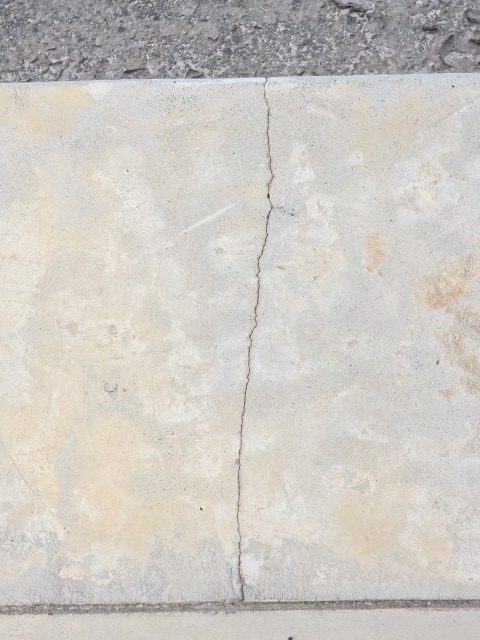
Eight months after its grand opening, Guyana’s US$260 million Bharrat Jagdeo Demerara River Bridge has drawn public attention over reports of visible fine cracks on pedestrian walkways and minor corrosion on metal components. But top infrastructure officials are moving quickly to reassure the public that the critical cross-river link poses no safety risks to users. Public Works Minister Juan Edghill addressed public concerns in an interview with Demerara Waves Online News on Sunday, breaking down the engineering context behind the observed defects following official inspections of the 2.6-kilometer cable-stayed bridge.
Edghill explained that the fine cracks spotted on pedestrian walkways and sleeper beams are an expected byproduct of normal bridge operations, not a sign of structural failure. The main bridge structure expands and contracts naturally in response to daily and seasonal temperature shifts, as well as the constant weight of passing vehicle traffic. This minor deformation is transferred to the bridge’s non-load-bearing auxiliary components, resulting in the surface cracks that have been observed. To put this in perspective, Edghill compared these auxiliary elements to a residential home’s exterior wall finishes or entrance steps—components that serve functional and aesthetic purposes but do not support the overall structural load of the entire building.
The minister added that construction teams followed all engineering standards when building the bridge, including installing contraction joints aligned with strict specifications set by the American Association of State Highway and Transportation Officials (AASHTO) to manage cracking. Even with these proper precautions in place, he noted, it is a well-documented reality in civil engineering that fine surface cracks cannot be fully eliminated, due to the inherent shrinkage properties of concrete materials used in construction.
Beyond cracking, Edghill also addressed separate public concerns about minor corrosion spotted on the bridge’s inspection vehicle track and a small number of bolts. For the track corrosion, he explained that the factory-applied anti-corrosion coating was accidentally removed during routine operation of the inspection vehicle. Once the bare metal surface was exposed to moisture in the air, light surface rust formed. Edghill emphasized that this superficial rust is comparable to the thin rust layer that forms on automotive brake rotors, and does not weaken the track’s structural strength at all. To prevent further corrosion, the bridge’s maintenance team will add regular touch-up coating applications to their routine upkeep schedule.
As for the rust observed on some bolts, Edghill noted this developed from minor coating damage sustained during the installation process, when bolts were threaded into place. The original contractor will complete targeted rust removal and reapply anti-corrosion treatment for these affected bolts, and the government has committed to conducting formal bi-annual inspections of the bridge’s components to catch and address any future issues early. Edghill reiterated that neither form of corrosion poses any threat to the bridge’s overall structural safety, and ongoing preventative maintenance will keep the crossing in good working order for decades.
The four-lane east-west crossing, constructed by China Railway Construction Corporation, was officially opened to traffic on October 5, 2025, and has since served as a critical infrastructure connection for the region, cutting travel times and boosting economic connectivity between communities on either side of the Demerara River.