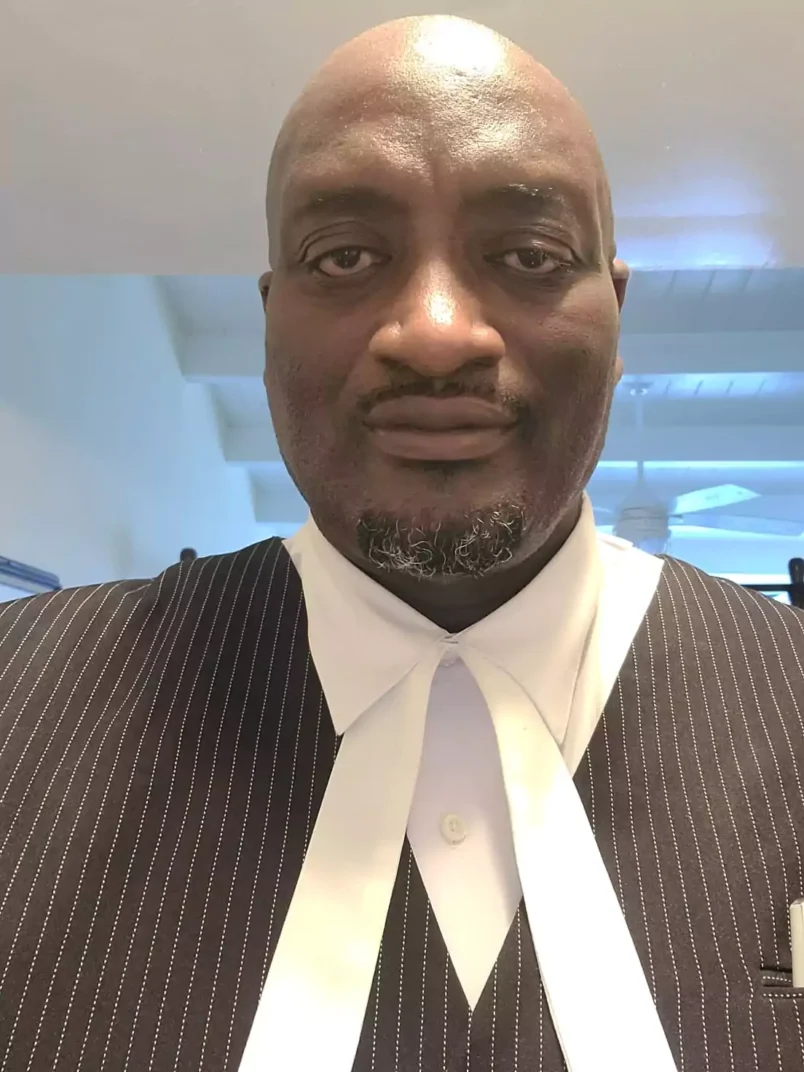
A public accountability debate has erupted in Antigua and Barbuda after Prime Minister Gaston Browne pushed back against recent comments from Director of Public Prosecutions (DPP) Clement Joseph, who claimed he is under no constitutional obligation to explain his prosecutorial discretionary decisions to the general public. Speaking during his regular weekly radio address on Saturday, Browne acknowledged the constitutional independence granted to the DPP’s office, but argued that this autonomy does not equal a blanket exemption from public transparency, especially when high-stakes decisions spark widespread citizen concern.
Browne first opened the door to the possibility that Joseph’s remarks may have been misrepresented in media reporting, granting the DPP the benefit of the doubt. However, he made clear that if the comments were accurately captured, they signal a deeply concerning approach to governing that ignores the public’s right to information. “He’s right in terms of his independence. He’s right in terms of his constitutional authority,” Browne stated of Joseph’s position. “But when you have situations in which the public becomes concerned about certain decisions, he has an obligation to allay the fears and to provide, at least, a level of justification for his decisions, obviously without revealing confidential information.”
The prime minister stressed that no public official, regardless of the formal independence of their role, operates entirely beyond public accountability. The constitutional authority granted to the DPP is not absolute, he argued, noting that the position draws its power from public trust, not unaccountable autonomy. Drawing a contrast with his own leadership approach, Browne pointed to his weekly radio appearances as an example of his commitment to updating citizens and answering for his government’s work. “I come here on a Saturday not only to inform the public but also to give account of my stewardship,” he said. “I don’t see how DPP could take the position that he’s not accountable to the public.”
Browne’s criticism is directly tied to recent public uproar over two high-profile narcotics-related prosecutions that were abruptly discontinued by the DPP’s office. The core controversy, he emphasized, is not inherently the decisions to drop the cases themselves, but the complete lack of public explanation that has fueled widespread speculation about improper influence. Among the cases was one involving a seriously ill female prisoner, where Browne noted existing legal frameworks already offer a formal, transparent process for compassionate release or sentence commutation, requiring input from the prison superintendent, Attorney General, and ultimately the Governor General.
Using this case as an example, Browne explained that public transparency could have easily resolved public concerns without compromising confidentiality. When he received a medical recommendation for compassionate release from the prison superintendent, he noted, he would have acted on the advice and published the supporting explanation publicly. “There’s nothing untoward about that,” he said. “What is so confidential about that?” A second case involved a Jamaican national connected to narcotics trafficking charges whose prosecution was also dismissed, a decision Browne acknowledged could be rooted in legitimate legal reasoning—but still requires public explanation.
Browne repeatedly stressed that he is not making any allegation of misconduct against Joseph, whom he described as a leader of “impeccable integrity.” Even so, he warned that a refusal to explain controversial decisions creates fertile ground for harmful rumors that outside political or financial influence swayed the case outcomes. Beyond eroding domestic public trust in the DPP’s office, Browne added, unexplained decisions carry the risk of damaging Antigua and Barbuda’s international reputation, particularly among global partners focused on counter-narcotics cooperation.
With two narcotics defendants receiving prosecutorial reprieves within a two-week window, Browne noted that international observers in key capitals—including Washington D.C.—may draw unfair but damaging conclusions about the integrity of the country’s justice system. “Two sets of people involved in narco-trafficking got a reprieve within the space of a week or two,” he said. “What’s going on in Antigua?”
Transparency in these cases does not require the disclosure of sensitive confidential information, Browne clarified. It only requires enough public detail to confirm that decisions were made on legitimate legal grounds, rather than improper influence. He closed by pushing back firmly against the DPP’s claimed lack of accountability, warning that a dismissive approach risks permanent damage to public trust. “All I’m saying to the DPP is be sensitive to the fact that those kinds of decisions even go beyond you in terms of consequences,” Browne said. “You’re wrong, you’re dead wrong, to say that you’re not accountable to the public.”