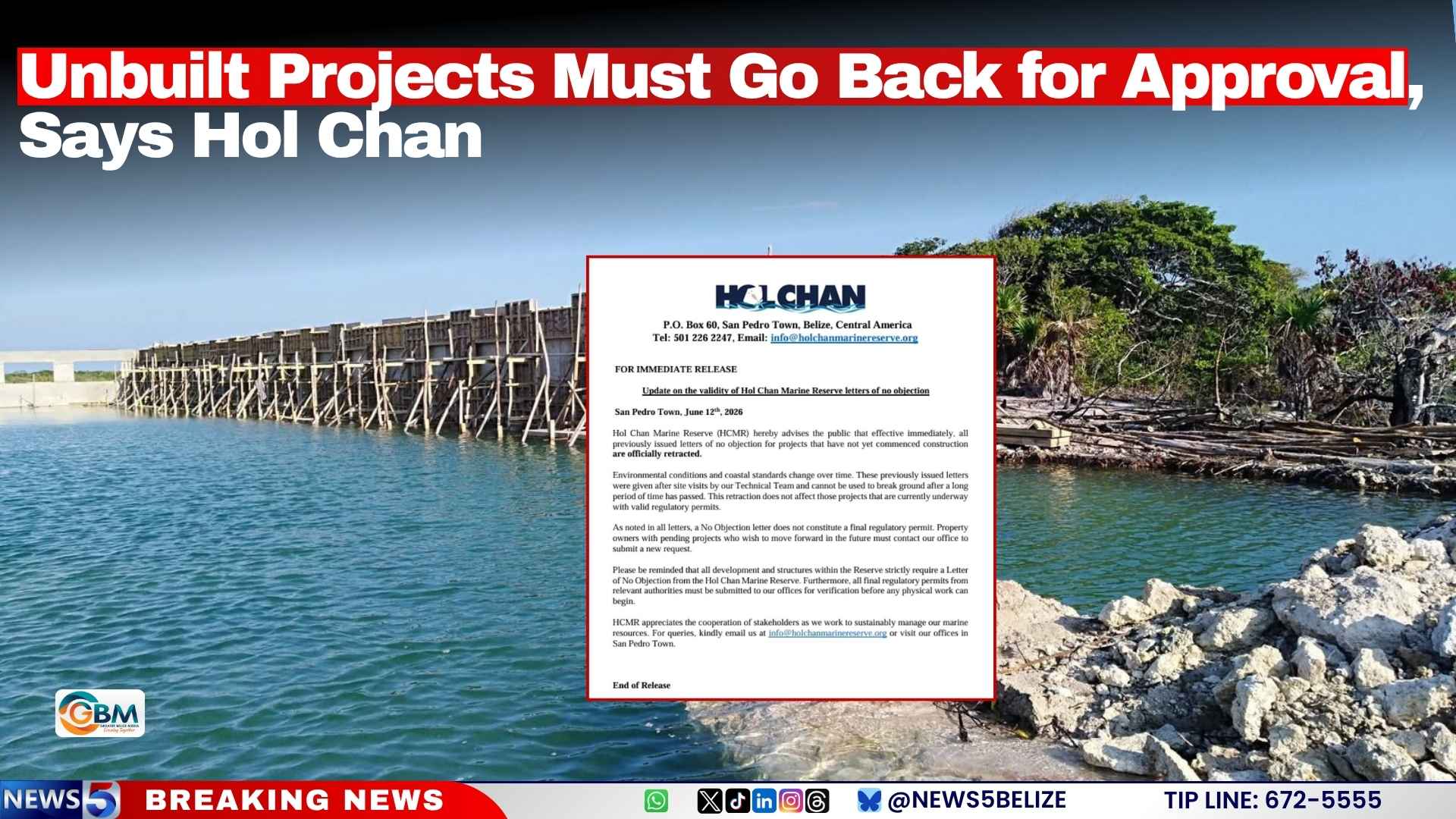
In a significant policy shift aimed at protecting Belize’s vulnerable coastal and marine ecosystems, the management of Hol Chan Marine Reserve announced Friday that it has immediately withdrawn all previously issued “letters of no objection” for unbuilt development projects within its protected boundaries. The new rule does not apply to developments already under construction that hold all valid, up-to-date regulatory permits, the agency clarified in its official notice.
Hol Chan officials explained the reasoning behind the retraction: environmental conditions along the reserve’s coastlines and regional coastal development standards evolve over time. Approvals granted based on outdated environmental assessments from years prior no longer align with current ecological realities, particularly for projects that have remained stalled for an extended period after initial approval. Going forward, any developer seeking to restart a previously approved but unstarted development will be required to submit an entirely new application for review before any ground can be broken.
The agency also took the opportunity to remind stakeholders of the regulatory structure for development in the protected reserve: a letter of no objection from Hol Chan is never a final construction approval. Any construction within the reserve’s boundaries requires both formal sign-off from reserve management and valid permits from other relevant government regulatory bodies before work can commence.
This policy update comes just three weeks after Belize’s national government enacted a sweeping six-month moratorium on approving and constructing buildings over 45 feet tall or three stories in four nearby coastal communities. That moratorium does not formally extend to the territory of Hol Chan Marine Reserve, but the reserve’s new move aligns with growing calls for more cautious development in sensitive protected areas. The national Cabinet’s decision to implement the moratorium followed sustained advocacy from national and international environmental groups, which have pushed for a full pause on new development approvals in all protected areas and ecologically sensitive habitats until full, inclusive community consultations can be completed.