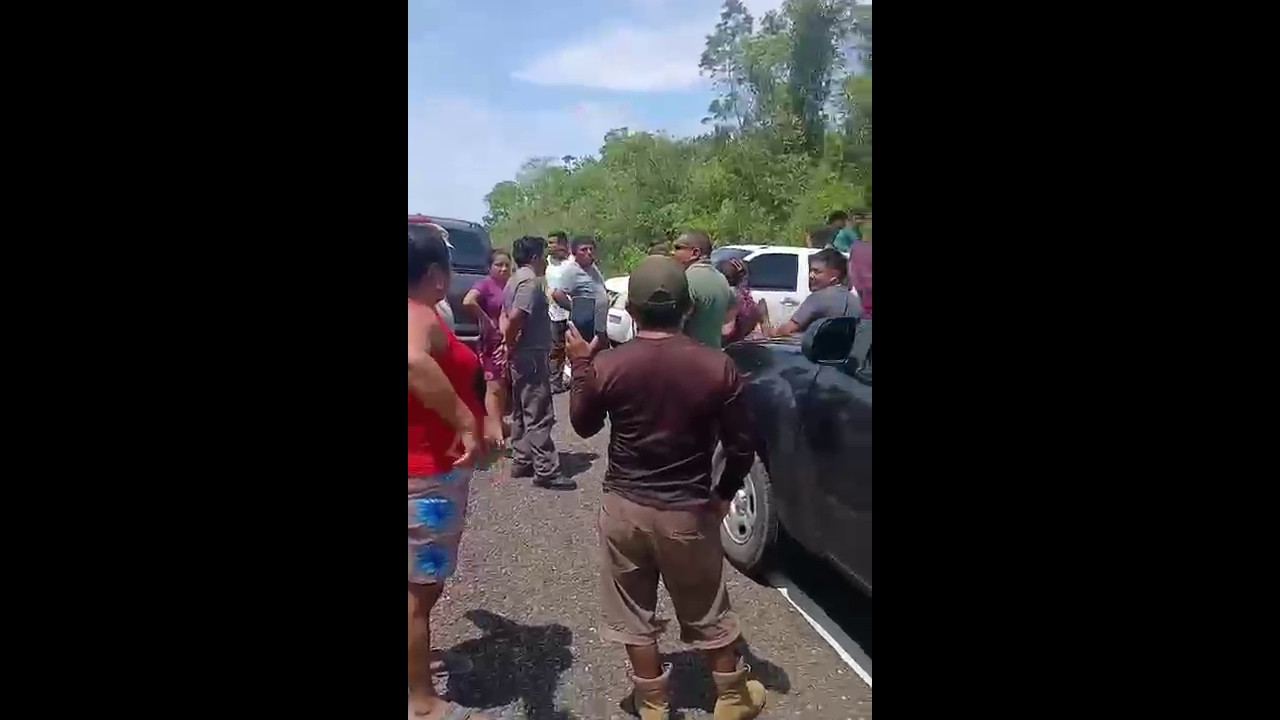
A simmering conflict over unapproved bush stick extraction has erupted into open tension in Belize’s Indian Creek Village, exposing deep fractures in local governance and reigniting a long-running national battle over Indigenous Maya land rights.
The unrest unfolded earlier this week when Cristina Coc, spokesperson for the Maya Leaders Alliance (MLA), encountered the standoff while traveling through the area. Coc explained that the community’s long-standing internal land and resource permitting system has collapsed in recent years, leaving villagers dependent on small-scale extraction permits issued by the national Forest Department. Under existing local rules, any national permit requires formal endorsement from the village’s alcalde – the traditional local governing authority – before extraction can proceed. On this occasion, Coc confirmed, the permit was granted without the required local sign-off, leaving residents unaware of the planned activity.
“For villagers, this amounts to illegal extraction,” Coc said in an on-the-record interview. The dispute has been fueled by conflicting claims to the land: the village council has recognized a third party’s ownership claim, arguing that the third party only needed council approval to harvest bush sticks, while community members maintain the land is part of their traditional territory, and their own local regulatory framework should take precedence.
Coc pulled no punches in assessing the root of the local crisis, blaming a complete breakdown of cooperative governance among village leaders. “None of the leaders are willing to set aside their differences and do what is right for the village members,” she said. “This division has eroded all mutual respect. There is disregard for the village police, disregard for the alcalde, and a great deal of misinformation being spread.” Contrary to circulating false claims, Coc confirmed that the alcalde was not present at the extraction site and did not attempt to block the movement of harvested materials. The situation quickly escalated when a truck carrying a group of young men, brought to the site by allies on the village council, arrived and immediately began engaging in physical violence. Coc, who was already on site to mediate, prioritized de-escalation to prevent serious injury, noting that conflict over bush stick extraction did not justify harm to community members.
This local flare-up comes as the MLA is already challenging a national government land rights reform bill that was explicitly intended to reduce intercommunal and state-community land conflicts across Belize. Instead of easing tensions, the new proposal has triggered fresh pushback from Indigenous leaders, who argue the legislation fails to uphold the Maya community’s constitutionally guaranteed and internationally recognized land rights.
Coc emphasized that the MLA does not oppose land rights reform as a concept – on the contrary, the group has long called for clear legislative frameworks to resolve ongoing territorial disputes. “We want legislation that advances our rights, but it has to align with existing court judgments, our constitutional rights, and international indigenous rights standards,” she explained. “The current proposal does not do that – it actually limits our rights and threatens our control over our traditional lands.”
To address the government’s proposed framework, the MLA has filed a request with the Caribbean Court of Justice (CCJ), the region’s highest appellate body, to clarify the scope of the Maya community’s land rights as defined in the court’s original landmark ruling on the issue. The government has claimed that the proposed legislation aligns with a prior consent agreement between the state and the Maya community, but Coc argues the government has misrepresented the agreement’s terms. “That agreement was never an empty document,” she said. “It was built on the lower court ruling, which explicitly confirms our rights based on our centuries-long use and occupation of these lands.”
Looking ahead, local village leaders have scheduled a meeting with the Forest Department next week to negotiate a peaceful resolution to the Indian Creek Village conflict, while the broader legal fight over national land rights policy will now proceed back to the CCJ for formal review.
This report is adapted from a transcript of a televised evening newscast, with all quoted content from English-language statements preserved accurately from the original broadcast.