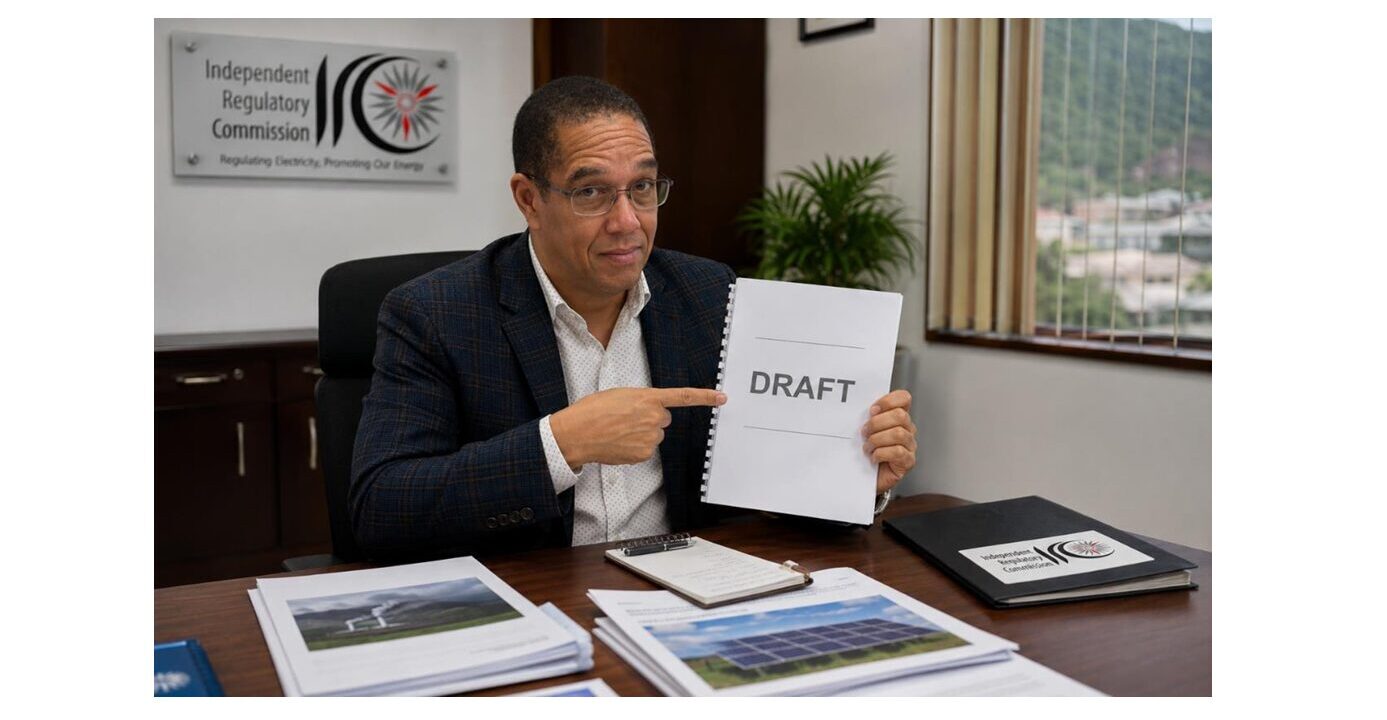
In recent days, widespread conversation has erupted across social media and public platforms in Dominica regarding the proposed Distributed Renewable Energy Generation Framework, which is currently undergoing review by the country’s Independent Regulatory Commission (IRC). After observing the discourse for some time, the head of the commission has stepped forward to correct widespread misinformation that has caused unnecessary anxiety among residents and stakeholders.
The core misunderstanding that has spread through public conversation is the false claim that the framework has already been finalized, approved, and is ready to be imposed on the country’s electricity sector. The commission stresses that this could not be further from the truth. What is currently being discussed is nothing more than an initial working draft compiled by an external consultant, who pulled together regulatory models and approaches successfully used in other jurisdictions to create a starting point for public conversation. At this early stage, the document was never intended to serve as a final, binding policy.
The entire purpose of the current process is to assess this draft, separate elements that fit Dominica’s unique energy landscape, electricity grid, and customer needs from those that do not, and ultimately craft a customized framework aligned with the country’s specific goals. Even more importantly, the commission emphasizes that the review process is still in its absolute earliest phases, far from any final decision.
To address concerns that policy would be developed behind closed doors without public input, the IRC proactively established a diverse stakeholder committee before work on the framework even began. The committee includes owners of existing distributed renewable energy systems, industry vendors, residential energy customers, representatives from Dominica’s key hospitality sector, and other relevant sector stakeholders. This broad membership was intentionally selected to ensure all voices can be heard, and all perspectives can shape the framework before any final votes are taken. To date, the committee has held only one introductory meeting, where members shared initial feedback, raised concerns, flagged elements that may not work for Dominica, and identified areas in need of adjustment. That is the full extent of progress made so far.
One of the most heated sources of public confusion surrounds the proposed “buy all, sell all” energy model referenced in the consultant’s draft. Many residents with existing solar photovoltaic (PV) systems have raised alarms that this model would be forced on them, but the commission clarifies that the model is only one of many options under review. During the first committee meeting, concerns about the model’s impact on existing renewable system owners were raised immediately, and committee members acknowledged that key aspects of the approach may not fit Dominica’s context. That said, early discussion is already trending toward making participation in any grid connection or buy-sell arrangement voluntary, letting customers themselves decide whether they want to opt in. No final decisions on this point have been made.
A second major source of misinformation involves rumors of finalised buy and sell pricing for distributed renewable energy, which the IRC says are completely unfounded. Pricing structures have not been settled, and will not be discussed and finalized until core framework elements including capacity thresholds, participation categories, technical safety requirements, and grid integration protocols are fully developed. Any pricing decisions will require detailed negotiation and analysis between the IRC and DOMLEC, the island’s main electricity provider, to ensure the model is fair, technically feasible, and financially sustainable for all parties.
Contrary to claims that the framework is intended to restrict distributed renewable energy growth, the IRC stresses that the opposite is true. The entire project is designed to create a clear, fair regulatory environment that incentivizes expanded renewable energy adoption across the island. The commission recognizes that many Dominicans install solar and other distributed systems to gain energy independence, improve resilience after tropical storms, and lock in long-term energy cost savings, and these priorities are central to the drafting process. At the same time, the commission has a legal and ethical responsibility to ensure any new framework is technically safe for the national grid, fair to all customers, and sustainable over the long term for the country as a whole.
For the past two months, the IRC’s work was prioritized to a comprehensive tariff review for DOMLEC, which delayed progress on the renewable framework. Now that the tariff review is largely complete, the commission will schedule additional committee meetings to advance discussions. After the stakeholder committee concludes its work, the revised draft will be released for a full, island-wide public consultation period, to capture additional feedback and concerns that may have been missed during early discussions.
The IRC says it welcomes all constructive public engagement, including questions, comments, and fair criticism of the draft framework. However, it urges residents and stakeholders to distinguish between an early discussion draft and a final, binding regulatory decision – two very different stages of the policy process. The commission appreciates the widespread public enthusiasm for expanding renewable energy in Dominica, which it calls a positive sign for the country’s clean energy future, but it wants to reassure residents that no final decisions have been made, and official updates will be released regularly as the process moves forward. The public is encouraged to follow official IRC channels for accurate updates, and to continue participating in the process by submitting feedback to ensure the final framework reflects the needs and interests of all Dominicans.