BELIZE CITY — A recently upheld appellate court decision granting more than $6 million in compensation to a southern Belize Maya community has sparked urgent warnings from the country’s top legal official, who says the ruling could upend decades of land rights governance and impose overwhelming unplanned costs on national taxpayers.
In a public briefing following the Court of Appeal’s June 2026 judgment upholding the award for the Maya village of Jalacte, Attorney General Anthony Sylvestre outlined deep government concerns that the verdict creates a problematic dual framework for calculating land compensation in Belize, splitting rules between private and communal land holdings.
The appellate court crafted a unique valuation standard to assess damages for the alleged unlawful deprivation of Jalacte’s communal land, a metric that differs substantially from the long-standing process used to calculate compensation for private property claims. According to Sylvestre, this disparate framework sets a precedent that could open the floodgates for hundreds of additional overlapping land claims across the country, most notably in southern Belize’s Toledo District, where boundaries between private third-party holdings and claimed communal land have remained ambiguous for generations.
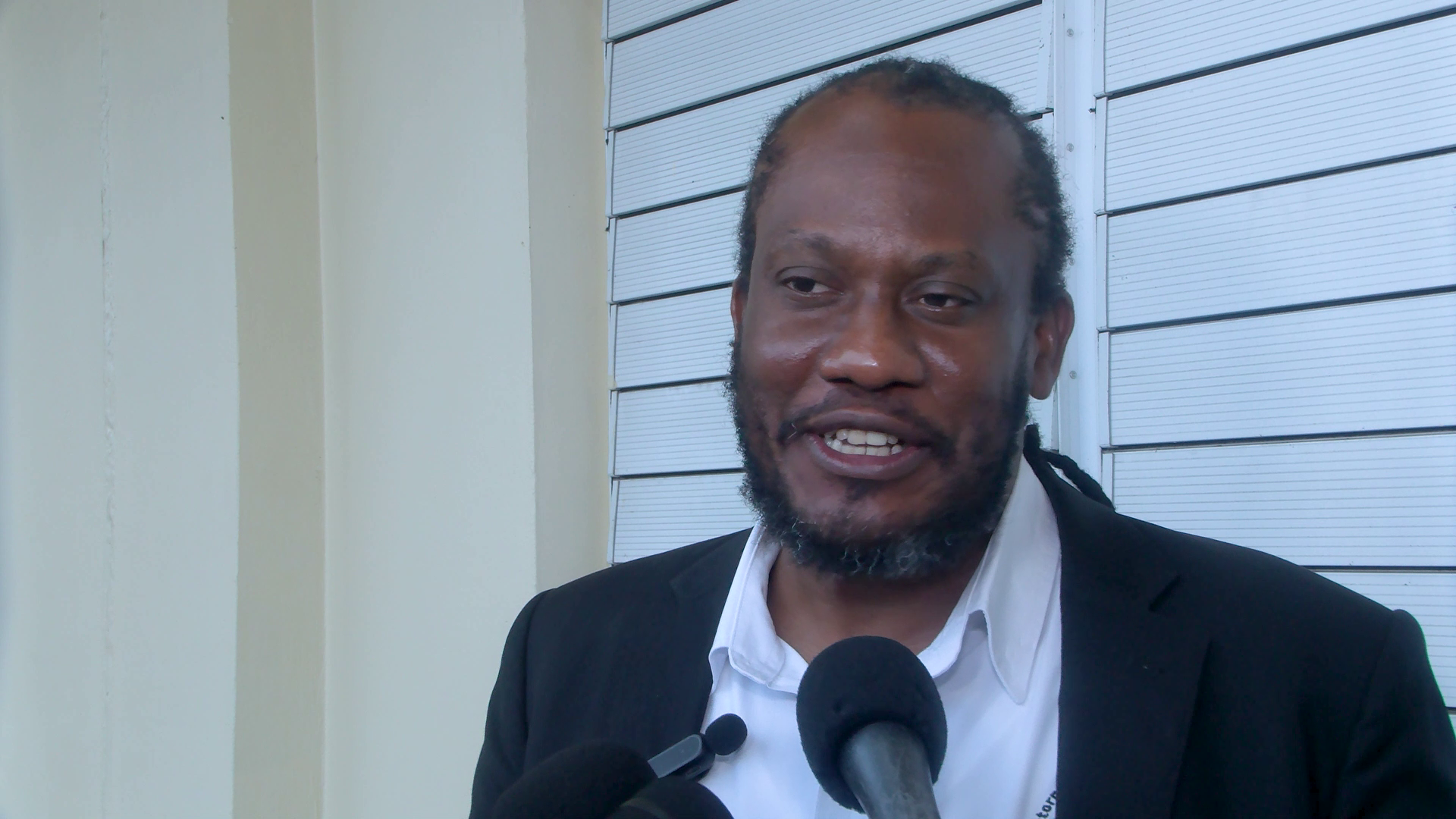
“There are aspects of that decision which the court made an award with respect to deprivation of land. In this case, it was in respect to communal land, and the court crafted its assessment of compensation for land using a metric which is not used when determining and assessing compensation for other land or private land,” Sylvestre explained during an on-camera interview for local broadcast. “What we fear is that you will have two regimes for compensation of land in the country — one for private non-communal land, and one for communal land. That creates a concrete potential for serious issues, particularly in the Toledo District, where you have third-party private land interests that may potentially be subsumed or reclassified as communal land.”
While the court rejected the government’s challenge to the classification of the contested land as communal — a challenge centered on the lack of formally established formal boundary surveys for the community’s holding — Sylvestre confirmed the government’s primary concern rests with the unprecedented compensation standard and its long-term fiscal impact. When asked if the core remaining dispute centered on the total monetary award, Sylvestre affirmed, “Yes. Yes.”
Sylvestre added that the government intends to bring the dispute before Belize’s highest court to seek clarity on whether the dual compensation standard will remain the binding law of the land going forward. “It is very necessary for us to at least have and know if this will be the case moving forward that will be the stated law,” he said. “There is wisdom in approaching the highest court, the appellate court of last resort, and saying, ‘Look, this is the position. Two regimes with respect to compensation for land now seems to be the state of law in the country. Tell us, is this the case or is this not the case?’ That certainly would be extremely helpful and beneficial to all stakeholders.”
The landmark ruling has already reignited long-simmering tensions over indigenous land rights in Belize, where Maya communities have fought for decades to formalize communal holdings that were gradually encroached on by private development and state acquisition over the 20th century. Legal analysts note that a ruling upholding the differential compensation standard could result in billions of Belize dollars in new claims, a cost that would ultimately fall to public coffers.