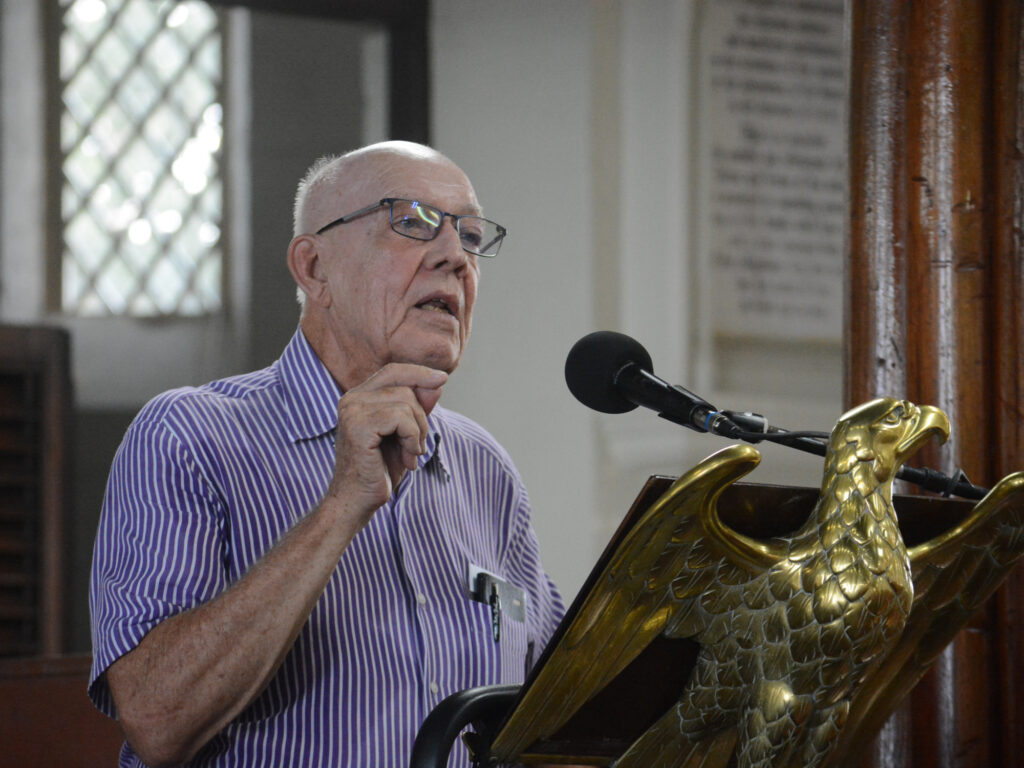
Barbados’ irreplaceable collection of historic architecture is facing an unprecedented existential threat, driven by decades of inaction from every consecutive national administration, a leading global expert on Barbadian built heritage has warned. Professor Emeritus Sir Henry Fraser, a former president of the Barbados National Trust and one of the nation’s most respected voices on cultural preservation, issued a scathing rebuke of both past and current governments, calling the current state of heritage stewardship an unmitigated disaster.
In an exclusive interview with Barbados TODAY, Sir Henry said that national efforts to protect the island’s one-of-a-kind architectural landscape have been effectively frozen for generations, stretching back to the administration of Prime Minister Tom Adams. “This government, the last government, the previous government, and the government before that, has made no effort to preserve our built heritage, absolutely none,” he stated. “Not since Prime Minister Tom Adams has there been any serious interest in the magnificent heritage of Barbados.”
While the expert acknowledged that a small number of isolated preservation wins have been achieved – most notably the phased restoration of Bridgetown’s Parliament Buildings, which he credited entirely to the persistent advocacy of Dame Billie Miller – even these high-profile milestone projects have fallen victim to longstanding bureaucratic neglect. As a key example, he pointed to the Museum of Parliament, which has remained shuttered and inaccessible to the public for years despite the completion of the main building restoration.
“This is a very poor job of caretaking our heritage. These are our national treasures that carry the story of Barbados’ history that have been allowed almost to rot,” Sir Henry argued. He added a stark warning: the island’s crown jewel of heritage, Historic Bridgetown and its Garrison, a designated UNESCO World Heritage Site, could lose its international protected status if the current trend of neglect continues. “They will sooner or later take it away,” he cautioned.
Sir Henry’s critique lands amid a period of rapid physical transformation across the Barbadian landscape, as new construction reshapes much of the island’s urban and coastal areas. The professor emphasized that he is not opposed to thoughtful modern architecture, highlighting contemporary projects such as the Sagicor building on Lower Collymore Rock as excellent examples of well-executed contemporary design. The core problem, he argued, lies in a broken regulatory framework that consistently fails to strike a healthy balance between new development and heritage preservation.
In his view, town planning regulators have repeatedly approved destructive construction projects that should never have been granted permission. Fixing this systemic failure does not require just minor tweaks to existing legislation, Sir Henry explained – it demands a complete shift in institutional priorities and cultural sensitivity towards heritage assets.
Current planning regulations, overseen by the Planning and Development Department (originally founded in the early 1960s as the Town and Country Planning Department), are constrained by rigid, technocratic rules focused narrowly on site efficiency, property boundaries, building setbacks, and parking requirements. The system has no formal mandate to conduct qualitative, aesthetic assessments of proposed developments that impact historic sites, Sir Henry said.
Beyond heritage protection, the flawed regulatory framework has created practical public safety risks, he added: “It doesn’t appear to have the power to improve many a blind corner that lead to traffic accidents. And it hasn’t appeared for some time to have town planners who either have the vision, sensitivity, or authority to take decisions that relate to aesthetics. You would have to have a determination on the part of the Minister of Planning, and you would have to have professionals with the appropriate training to have any sort of impact on town planning decisions.”
The ripple effects of this decades-long neglect extend beyond cultural preservation, directly damaging community heritage and the fast-growing sports tourism sector, a topic Sir Henry explored in depth in a recent Barbados TODAY column. His comments come after the current government announced plans to formally grant heritage status to the childhood homes of two Barbadian cricket legends: Sir Frank Worrell and Sir Garfield Sobers. Reacting to the announcement, Sir Henry offered a measured mix of cautious optimism and deep skepticism, rooted in 35 years of failed efforts to preserve Worrell’s former home.
He detailed the long and frustrating history of Bostonville, Worrell’s childhood residence in Bank Hall, located just behind the Empire Cricket Club. Sir Henry first discovered the abandoned property 35 years ago, and led a volunteer pro bono restoration effort alongside former West Indies cricketer and builder Richard “Prof” Edwards. The project concluded with a formal ceremony, where then Prime Minister Sir Lloyd Sandiford unveiled a commemorative marble plaque marking the site’s significance.
Despite that successful community-led restoration, bureaucratic inaction allowed the property to fall back into disrepair and ruin within years. A second effort to redevelop the site into a popular cricket-themed café and museum ahead of the 2007 ICC Cricket World Cup also collapsed when pledged government funding was diverted to other unrelated projects, leaving the historic landmark abandoned once again.
The property holds unique cultural meaning: its stone veranda was modified by Sir Frank’s father specifically so he could watch his son play cricket from behind the Empire Cricket Club wall. Sir Henry emphasized that the site holds enormous potential to inspire local communities and draw cricket-loving tourists from across the globe. He urged the current government to break the long cycle of official neglect by finalizing a binding formal agreement between the national government, the Worrell family, and the Empire Cricket Club to secure the site’s future.
As one of the most pivotal figures in West Indian cricket history, Sir Frank Worrell transformed the sport and became a powerful symbol of regional Caribbean pride. Decisive action from national leaders is urgently needed, Sir Henry argued, to ensure that irreplaceable cultural landmarks like this are preserved as living parts of Barbadian history, rather than left to crumble or cleared for short-sighted modern development.