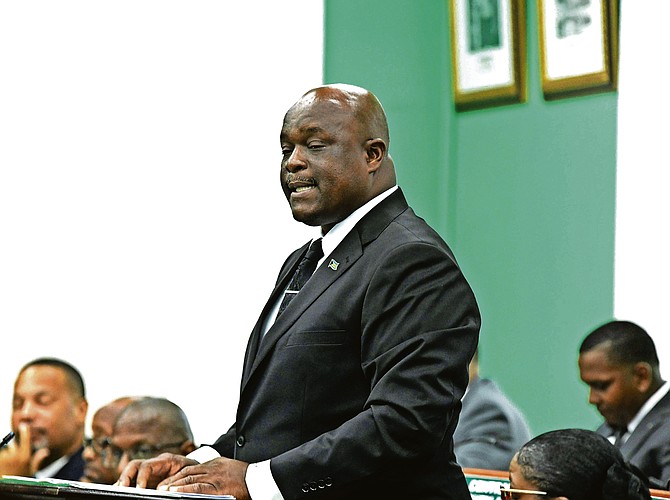
In a speech during the House of Assembly debate on the 2026/2027 national budget, J. Leo Ferguson, the recently elected Free National Movement (FNM) MP for the MICAL constituency, has publicly expressed growing frustration over the slow pace of progress in the southern Bahamian island group he represents. Comprising Mayaguana, Inagua, Crooked Island, Acklins and Long Cay, MICAL has long grappled with systemic energy and infrastructure challenges that Ferguson says continue to hold back residents and economic growth.
Ferguson highlighted that nearly all power across the constituency is generated by expensive diesel, leaving local households and small businesses facing some of the highest electricity rates in the entire Bahamas. Daily unplanned power outages are a persistent reality, forcing low-income families to choose between basic necessities and basic comfort, while sky-high energy costs have choked off potential private investment and prevented existing local businesses from expanding.
While the MP threw his support behind the national government’s planned policy to roll out solar microgrids across the Bahamas’ Family Islands — a solution he called practical to cut reliance on costly diesel generation, reduce household utility bills, and boost energy resilience during hurricane season — he pressed for faster implementation. MICAL is already included on the government’s list of communities set to receive the renewable energy systems, but Ferguson demanded clarity on when residents will actually see tangible results, arguing the initiative is needed urgently, not years down the line.
Beyond renewable energy, Ferguson outlined a range of additional economic and community benefits that expanded solar infrastructure could unlock for MICAL. Cheaper energy would lower operating costs for small local businesses, support the growth of the constituency’s burgeoning eco-tourism sector, and create new local jobs through training programs for solar panel installation and maintenance, he said.
The first-term MP also turned his attention to the long list of unfulfilled infrastructure promises made to MICAL in previous national budgets. While he acknowledged that the current budget allocates planned funding for key projects including road repairs, clinic upgrades, airport modernization, drainage improvements and new administrative buildings, he noted that dozens of previously announced projects across the constituency remain either unfinished or have yet to break ground.
Speaking on behalf of MICAL residents, Ferguson rejected the idea of empty political promises, echoing the words of his predecessor V Alfred Gray to urge the government: “fix it.” He called for urgent investments in a wide range of community-critical infrastructure, including reinforced seawalls, improved docking facilities, upgraded fishing stations, enhanced public water systems, more reliable telecommunications services, and upgraded hurricane shelters to protect residents during storm season.
Ferguson also raised two longstanding local employment issues: delayed contract payments to small local government contractors, and the large number of long-term temporary contract workers in the constituency who have never been granted permanent, pension-eligible positions in public service.
To further stimulate economic growth and retain local population, Ferguson laid out a series of additional policy proposals. He called for targeted tax relief on essential consumer goods, the creation of a VAT-free trade zone for the southern Bahamian islands, expanded technical and vocational training programs through the Bahamas Technical and Vocational Institute (BTVI), and increased government support for the constituency’s core local industries: traditional fishing, general tourism and eco-tourism.
Ferguson closed by emphasizing that targeted investment in improved infrastructure and lower energy costs is critical to reversing steady population decline across MICAL’s islands. By expanding opportunity and lowering the cost of living, the government can give residents a tangible reason to stay in their home communities rather than relocating to more developed islands, he argued, urging the government not to write off MICAL as a region to abandon, but to recognize it as a place worthy of long-term investment.