The moment a special emergency bulletin cuts into regular radio programming, a quiet, practiced urgency unfolds across a Caribbean household. Before the meteorologist finishes reporting the incoming threat, a mother is already counting canned goods in the pantry—stacking tuna, milk, and crackers against the coming storm. A sibling drags every pot, bucket, and empty container in the home to fill with fresh water. A grandmother tests the wick of the kerosene lamp and checks the charge on every solar light, while the father stands on the verandah studying the sky, the skill passed down to him from generations before. No one needs to say the words out loud: the whole family knows a hurricane is on its way.
A generation ago, a catastrophic hurricane was a singular, generational event—one whose stories would be told for decades. Hurricane Gilbert, which tore through the Caribbean in 1988, fit that mold: a terrifying force that left widespread destruction, irreversible loss, and deep emotional scars, yet remained an extraordinary, one-of-a-kind disaster.
Since 2016, however, devastating hurricanes have become a grim, routine reality for the region. The string of disasters paints a clear picture of the growing crisis:
– In 2016, Hurricane Matthew reached Category 5 intensity at its peak before hitting Haiti as a Category 4 storm with 150 mph sustained winds. It was the strongest storm to hit the country in more than 50 years, killing more than 500 people, destroying 90 percent of Haiti’s crops, and leaving more than 120,000 families homeless.
– In 2017, Category 5 Hurricane Maria wiped out infrastructure and assets worth 226 percent of Dominica’s total annual GDP, rolling back decades of hard-won development in just a few hours.
– In 2019, another Category 5 storm, Hurricane Dorian, stalled over the Bahamas for two days, leaving the community of Marsh Harbour completely destroyed and families searching for missing loved ones for weeks after the storm passed.
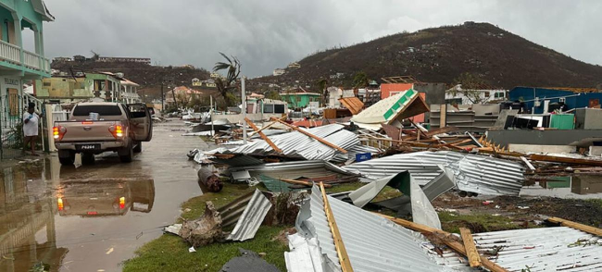
– In July 2024, Hurricane Beryl made history as the earliest-forming Category 5 storm ever recorded in the Atlantic, forming before the official hurricane season even fully began. The storm hit Carriacou as a Category 5, stripping the island of nearly all vegetation and infrastructure, leveling agricultural fields across Jamaica, and leaving the entire region reeling and questioning what would come next.
– In 2025, only 15 months after Beryl, yet another Category 5 storm, Hurricane Melissa, became the strongest Atlantic hurricane ever recorded, with maximum sustained winds of 185 mph. The storm claimed 95 lives, and its name was later retired by the World Meteorological Organization—an acknowledgment that some disasters are too devastating to reuse the name for future storms.
So what has driven this sharp increase in catastrophic storms? The change was not caused by the Caribbean itself: the entire region contributes less than 0.1 percent of global greenhouse gas emissions. For two centuries, the global economy has benefited from fossil fuel-powered development, but the world’s ongoing, unchecked overreliance on carbon-emitting energy and widespread reluctance to transition to renewables is what has created the current climate crisis. The Caribbean had no part in making this choice, yet it is Caribbean communities that are forced to fill water buckets, rebuild shattered roofs, and bury victims after every disaster driven by a warming climate.
The science behind the trend is clear and unambiguous: hurricanes draw their energy from warm ocean water. Decades of carbon pollution have trapped excess heat in the atmosphere, and 90 percent of that extra heat has been absorbed by the world’s oceans. The Caribbean Sea is now far warmer than historical averages, and every new storm that crosses it gains more destructive energy than storms that hit the region just a generation ago. A rapid attribution analysis from Climate Central confirms that human-caused climate change directly strengthened Hurricane Melissa’s winds, and the record warm ocean temperatures that powered the storm were made hundreds of times more likely by human carbon emissions.
The human toll of this crisis stretches across every corner of the region. When Hurricane Maria hit Dominica in 2017, then-Prime Minister Roosevelt Skerrit shared live updates from inside the storm, his own roof torn away and floodwaters rising around him, as the island known as the “Nature Island of the Caribbean” fell apart around him. When Dorian stalled over the Bahamas for 48 hours, entire communities on Abaco and Grand Bahama islands were completely erased from the map. When Beryl tore through Carriacou, 90 percent of the island’s structures were damaged or destroyed—including family homes, schools, and the fishing boats that provide food and livelihoods for most local households. When Melissa made landfall, outer rainbands triggered deadly landslides in Haiti, Cuban authorities evacuated more than 735,000 people in a single night, and western Jamaica was left flattened, with crops submerged for the second time in less than two years. Across the region, critical infrastructure—hospitals, food supply chains, roads built and rebuilt repeatedly over decades—took yet another catastrophic blow.
Caribbean communities, on the front lines of the climate crisis despite contributing almost nothing to it, have shown extraordinary resilience and composure in the face of repeated devastation that most of the world will never experience. But resilience is not a substitute for climate justice. Resilience alone cannot rebuild a destroyed hospital, and it is unfair to ask a region to “bounce back” over and over again while the root conditions that cause the destruction remain completely unaddressed. At a certain point, constant praise for the region’s strength becomes a convenient distraction from the urgent conversation about which nations and actors are responsible for the burden Caribbean people are forced to bear.
That urgent conversation is rooted in the principle of climate justice: it demands that the world’s wealthiest, highest-emitting nations honor their long-standing climate finance commitments as an owed debt, not a charitable handout. In recent years, momentum for this cause has shifted dramatically in the region’s favor. In May 2026, the United Nations General Assembly voted to endorse an advisory opinion from the International Court of Justice (ICJ) on climate change—a opinion co-sponsored by Caribbean nations including Barbados and Jamaica. The ruling clarifies that all countries have binding legal obligations under international law to protect the global climate system, and that nations that fail to meet these obligations can be held legally liable for the harm they cause, and required to pay reparations to affected states.
Translating this victory into tangible change for the Caribbean requires concrete action. It means loss and damage funding reaching small island developing states as outright grants, not new loans that trap nations in cycles of debt. It means the Caribbean gets a permanent, meaningful seat at every global negotiating table where climate policy decisions are made. It means all major emitting nations actually follow through on the national climate action plans they committed to under the Paris Agreement, cutting emissions rapidly and meaningfully. For Caribbean citizens, it also means remaining steadfast in advocacy, using our voices to demand justice for our region. Beyond educating ourselves on how climate change amplifies hurricane risk, we must hold our own leaders accountable to push the international community to act, and support the local and global organizations fighting for climate justice every day.
It is true: the Caribbean is paying the price for a climate crisis we did nothing to create. But our experience is not just a warning to the rest of the world—it is evidence of the injustice at the heart of the global climate crisis. And the most powerful thing we can do right now is refuse to stay silent about the harm we have endured.
This commentary is by Kayla Wright, a Jamaican youth advocate working at the intersection of public health, youth rights, and policy development across Jamaica and the wider Caribbean.