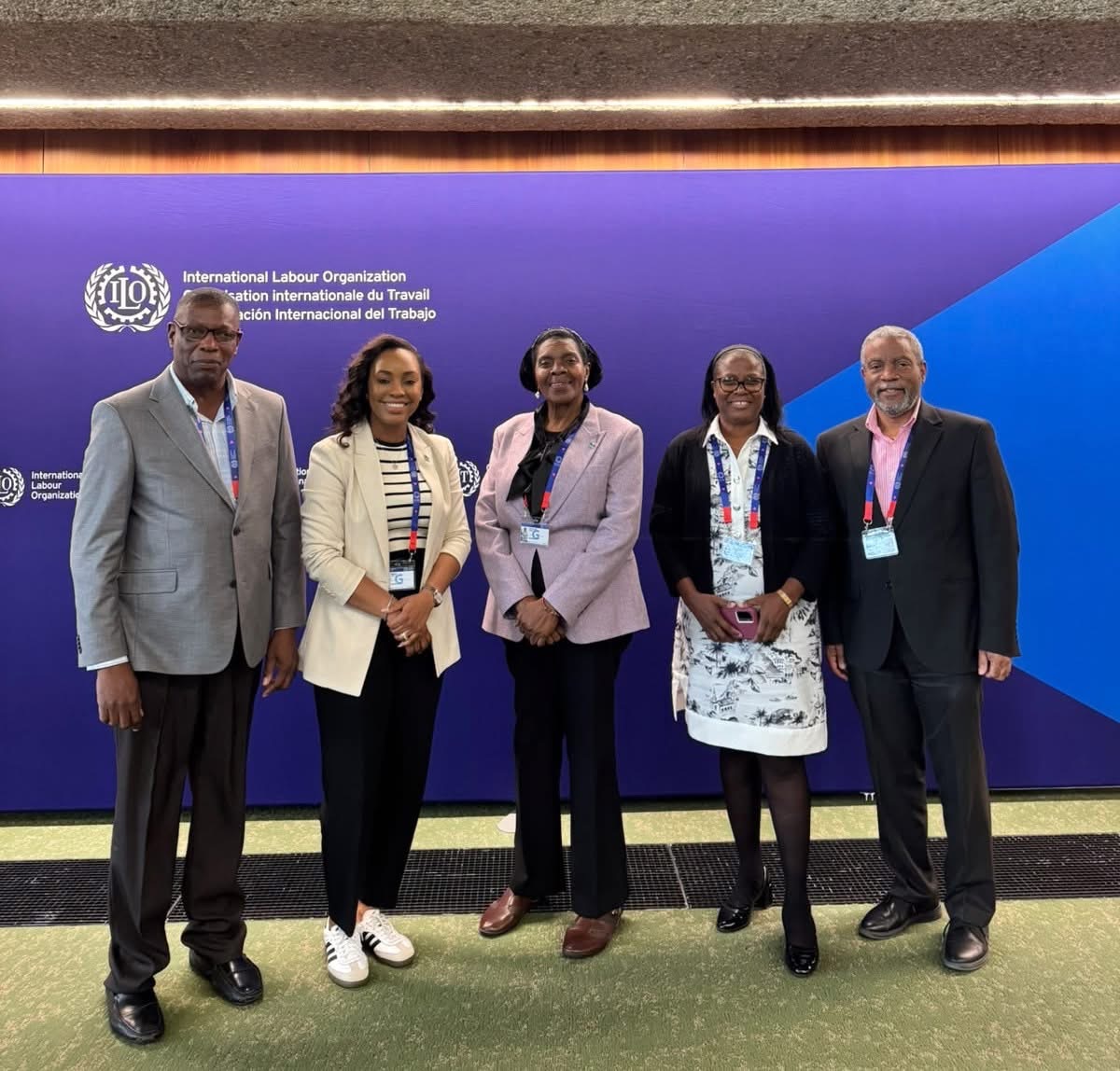
Against the backdrop of this month’s International Labour Conference (ILC) hosted in Geneva, the Caribbean island nation of Saint Lucia has taken the global stage to outline its sweeping advancements across three core labour-focused priorities: workers’ rights protections, expanded social safety nets, and meaningful gender parity in the workforce, according to an official statement released by the country’s government.
Leading the presentation for Saint Lucia, Minister for Labour and Social Justice Emma Hippolyte addressed a cross-sectional gathering of delegates from 187 member states of the International Labour Organization (ILO), bringing together representatives from national governments, employer associations, and labour unions. In her address, she detailed the sustained policy push Saint Lucia has pursued in recent years to cultivate a more equitable and inclusive national labour market that leaves no demographic group behind.
A central pillar of Hippolyte’s address centered on the urgent need to embed gender equality into every layer of working life, with a particular focus on elevating the undervalued care economy. She emphasized that unpaid and underpaid care work forms an invisible backbone of national economic and social development, yet this critical sector has been systematically sidelined for decades, with women bearing the overwhelming majority of this unrecognized burden.
“Addressing this longstanding oversight is a fundamental act of social justice,” Hippolyte told delegates, as she issued a call for more robust, coordinated international policy frameworks that can back national efforts to advance gender equality and inclusive participation across all sectors of the global workforce.
Beyond its commitments to gender parity, the minister also outlined a series of tangible policy wins that Saint Lucia has delivered to improve working conditions and social welfare for all residents. Key achievements include the implementation of a binding national minimum wage, the conversion of nearly 1,900 precarious public sector contract positions into permanent, fully benefited roles, the expansion of public assistance programs to reach more low-income households, and ongoing progress toward rolling out universal healthcare coverage. She added that Saint Lucia has now completed ratification of all core ILO conventions, cementing its alignment with global labour standards.
Most recently, Hippolyte noted, the country ratified ILO Convention 144, which governs tripartite consultation among governments, employers, and workers, and established its first-ever National Tripartite Advisory Committee to formalize this collaborative governance structure. She framed inclusive social dialogue as a foundational tool for building economic stability, boosting national resilience to external shocks, and driving long-term sustainable development that benefits all segments of society.
Hippolyte also highlighted targeted policy reforms designed to break down systemic barriers that have historically excluded women and other vulnerable groups from full participation in public life and the economy. Among these measures is the elimination of Value Added Tax on sanitary napkins, paired with government support for schools to distribute free menstrual hygiene products to female students, a policy that ensures no young woman has to miss class due to lack of access to essential supplies, protecting their right to uninterrupted education.