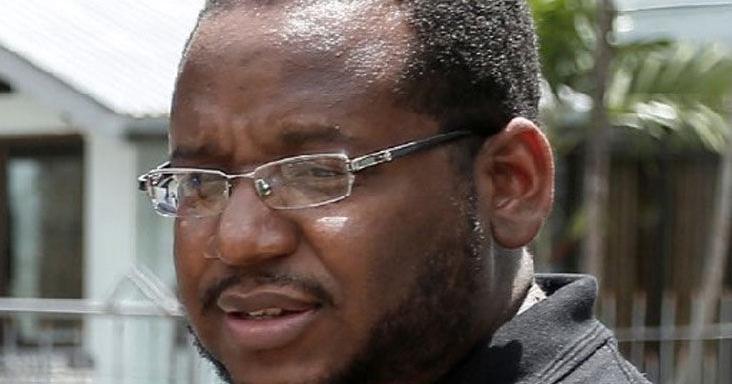
A deadly violent incident at Trinidad and Tobago’s maximum-security correctional facility in Arouca has left one remand prisoner dead and thrown a harsh spotlight on long-standing, dangerous infrastructure and operational failures plaguing the institution. The victim has been publicly identified as 48-year-old Christopher Banfield, who was killed in a fatal beating carried out by a mentally ill fellow inmate between Monday evening and early Tuesday morning.
The attack unfolded inside a shared cell at the G&R Division building of the facility’s Remand Unit. Unverified accounts from the prison have indicated that other incarcerated people were present in the cell during the assault, but were too intimidated to step in and stop the attack. Prison staff first discovered Banfield’s motionless body during a standard routine headcount conducted when shift changes took place early Tuesday. First responders found his body in a fetal position, with clear visible trauma, and he showed no signs of life when found.
In the wake of the incident, prison authorities have launched a full investigation. All inmates who shared the cell with Banfield at the time of his death have been moved out of the general prison population to a separate section of the facility, as investigators work to collect witness statements and other critical evidence. Both the Trinidad and Tobago Police Service and the national Prison Service are running parallel investigations to map out the full sequence of events that led to Banfield’s killing.
In an official statement released Tuesday, Prisons Commissioner Carlos Corraspe confirmed the details of the discovery and extended the Prison Service’s formal condolences to Banfield’s family and loved ones. Corraspe noted that responding medical staff were called immediately after the body was found just after 6 a.m., and administered first aid and attempted lifesaving measures before the death was confirmed. He added that an assigned Prison Welfare Officer has already reached out to Banfield’s next of kin to notify them of his passing.
Gerard Gordon, head of the Prison Officers Association (POA), spoke publicly Tuesday to frame the fatal incident as an avoidable tragedy rooted in long-unaddressed systemic problems at the Arouca Maximum Security Prison. Gordon stressed that the facility lacks the capacity to properly categorize and separate incarcerated people based on their physical and mental health needs, a gap that directly created the conditions for the attack.
Gordon identified severe overcrowding as one of the most critical contributing risk factors, noting that the facility was never originally designed to hold remand prisoners in the first place. Beyond overcrowding, the prison suffers from widespread neglected maintenance and crippling infrastructural deficiencies. “From no lighting, no ventilation, no water, faulty gates or the gates not working at all and that’s just the tip of the iceberg when it comes to that facility,” Gordon explained.
He also called out overcrowding in individual cells, confirming that cells in the division where the attack occurred were engineered to hold a maximum of three men, but often hold far more. While he could not confirm the exact number of people in the cell on the night of the killing, he made clear that three occupants is far from the norm. Gordon added that understaffing also exacerbates risk, noting that it is common for only a single officer to cover overnight shifts, creating an unsafe environment for both staff and incarcerated people.
Gordon framed the deadly incident as a broader failure of society, noting that people are confined in conditions that no one would keep a pet in. “As long as you are dealing with the human condition, with a man, a mind, a desire, hopes, dreams, all of these things in an environment that you wouldn’t even keep your dog in, it says something about us as a society,” he said. Gordon emphasized that any death behind prison walls is a profound tragedy, and called for urgent action to address the dangerous conditions at the facility.