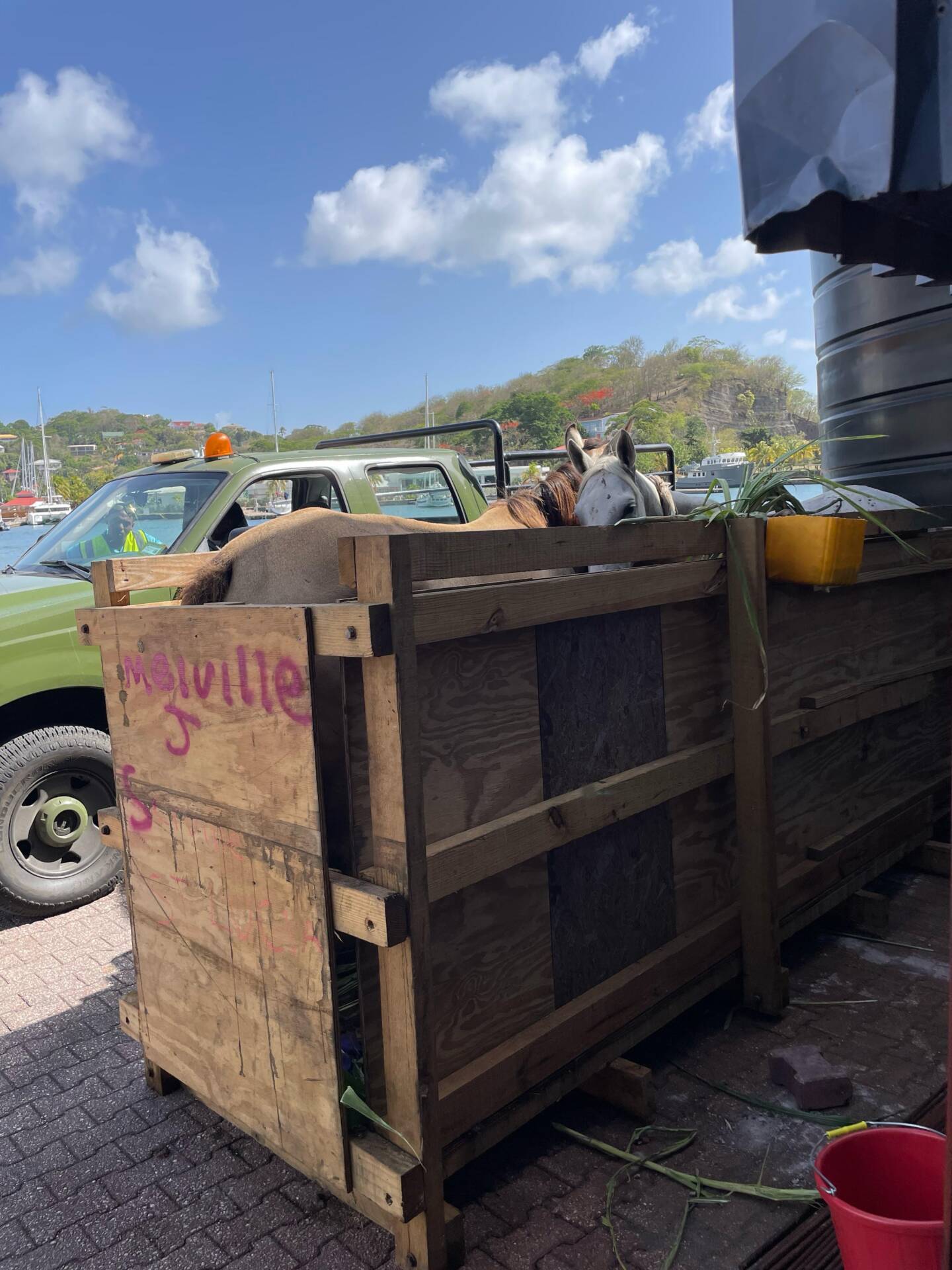
Grenadian authorities have launched formal legal proceedings and announced sweeping new biosecurity measures following a high-stakes incident that resulted in the euthanasia of two horses illegally imported from St. Lucia that tested positive for a tick-borne disease not currently found in the country.
Javan Williams, Permanent Secretary of Grenada’s Ministry of Agriculture, outlined the government’s full response during a post-cabinet media briefing on Wednesday, stressing that the illegal import incident will be prosecuted to the full extent of national animal health law to uphold regulatory standards.
“This matter will not be treated lightly,” Williams told reporters. “The ministry will take all actions outlined in our legislation to establish the clear standard that the law intends to enforce.”
The two horses were brought into Grenada without the mandatory import permit required under the country’s Animal Disease and Importation Act. Official veterinary testing from St. Lucia confirmed both animals were infected with Babesia, the parasite that causes equine babesiosis – a dangerous disease that targets horses and other equines. Unlike St. Lucia, which maintains established treatment protocols for the infection, Grenada lacks the specialized infrastructure, quarantine facilities, medication stockpiles, and clinical protocols to safely manage infected animals, and has long maintained a disease-free status for equine babesiosis.
After entry was denied and options to return the horses to St. Lucia were ruled unfeasible, veterinary authorities ordered the humane euthanasia and incineration of the animals under official supervision. Ministry officials confirmed the decision aligned with domestic legal obligations and guidance from the Caribbean Animal Health and Food Safety Agency (CAHFSA), which sets regional standards for animal health and biosecurity.
Williams explained that while the individual attempting to import the horses had held preliminary discussions with veterinary authorities about a permit, submitting an application does not guarantee approval – all regulatory requirements must be met before a permit can be issued. The final decision to block the imports was made jointly by veterinary officials from both Grenada and St. Lucia, he added.
To prevent similar illegal import incidents in the future, the Ministry of Agriculture has finalized two key new initiatives. First, a comprehensive summary of official import standard operating procedures will be distributed to all ports of entry across the country, including every commercial airport and seaport, to ensure all border stakeholders understand and follow legal requirements for animal and animal product imports. Second, a nationwide public education campaign will be rolled out to raise awareness among the general public of import rules and procedures for live animals.
On the criminal enforcement front, Williams confirmed the full case file has already been submitted to the Commissioner of Police and the Criminal Investigations Department (CID). Authorities are currently reviewing evidence to determine if criminal charges will be filed under Section 20 of the Animal Disease and Importation Act, and the individual responsible for the illegal import has already been formally notified of the government’s intent to pursue legal action.
Chief Veterinary Officer Dr. Daniel Johnson emphasized that the action taken was a critical biosecurity safeguard, noting that allowing equine babesiosis to enter Grenada could have triggered widespread infection of the local horse population, led to the permanent establishment of the disease in the country, driven up veterinary costs for livestock owners, and resulted in harmful trade restrictions for Grenada’s animal exports on regional and global markets.
Officials stressed the incident is a purely technical animal health matter, not a political issue, and that all actions taken were exclusively to protect Grenada’s disease-free status and preserve the long-term economic viability of the country’s livestock sector.