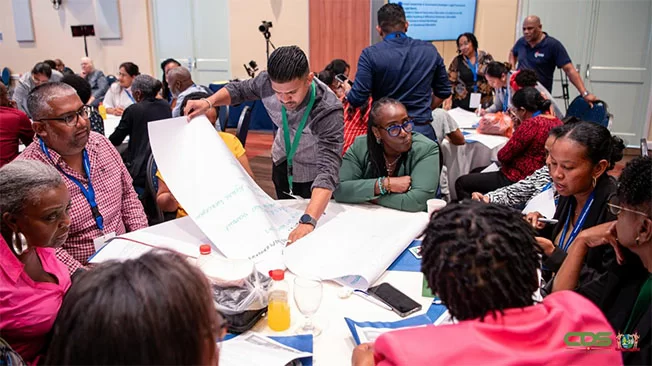
On the second day of the 2026 National Education Congress held in Paramaribo, Suriname, education experts, policymakers and key stakeholders from across the sector united around a clear consensus: meaningful, long-lasting education reform requires far more than ambitious policy blueprints and good intentions—it demands coordinated structural strengthening of teachers, infrastructure, funding and governance alike.
Hosted on Tuesday at the Royal Ballroom of Hotel Torarica, this year’s gathering centered on the overarching theme “Education: The Path from Poverty to Growth and Progress,” framing education reform as a core driver of national economic and social advancement. Per official updates from the Communication Service of Suriname, breakout sessions and plenary discussions repeatedly emphasized that sustainable transformation demands a cohesive, cross-cutting approach, rather than piecemeal changes. This approach must address not just improving student learning outcomes and teacher professional development, they argued, but also the foundational enabling conditions that make quality education accessible to all.
Attendees highlighted a range of non-negotiable prerequisites for effective reform: from supportive learning environments, up-to-date learning materials, functional school furniture and modern educational infrastructure to robust digital tools and clear career advancement pathways for education staff. A particularly urgent priority raised during discussions was boosting competitive compensation for teachers, a step designed to stem the growing tide of educator outflow to other domestic sectors and employment opportunities abroad.
Leading education expert Ivan Fernald opened one of the congress’ keynote sessions by stressing that overall education quality is directly tied to the quality, professional standing and institutional support given to classroom teachers. “The quality of our education system stands or falls with the quality of our teachers, the recognition they receive, and the support we provide them,” Fernald told delegates. He emphasized that no education innovation can succeed without properly equipped, motivated educators, and called on leaders to move beyond rhetorical ambitions, set clear actionable priorities, and track progress through measurable outcome targets.
Fernald further noted that education transformation is a shared responsibility of the entire Surinamese society, not one that falls exclusively to the Ministry of Education, Science and Culture. He added that educators themselves have historically been insufficiently included in the design and rollout of major systemic changes to the education system—a gap that must be closed for reform to work.
Across panel discussions, delegates echoed the need for collaborative decision-making and collective vision to advance durable reform. Hans Lim A Po, Rector of the FHR Institute for Higher Education, emphasized that societies lacking a shared, unified vision for education struggle to build meaningful, long-term progress. Former Education Minister Marie Levens added that Suriname already possesses the necessary local expertise and knowledge to drive successful reform; what is needed now, she argued, is a deliberate choice to adopt an education model aligned with the country’s unique needs and on-the-ground realities, rather than importing systems ill-suited to Suriname’s context.
By the close of the second day of proceedings, delegates reached a unified conclusion: education reforms in Suriname will only deliver lasting positive outcomes if they are implemented systematically, and keep the well-being and holistic development of learners and educators at the center of all policy and practice.