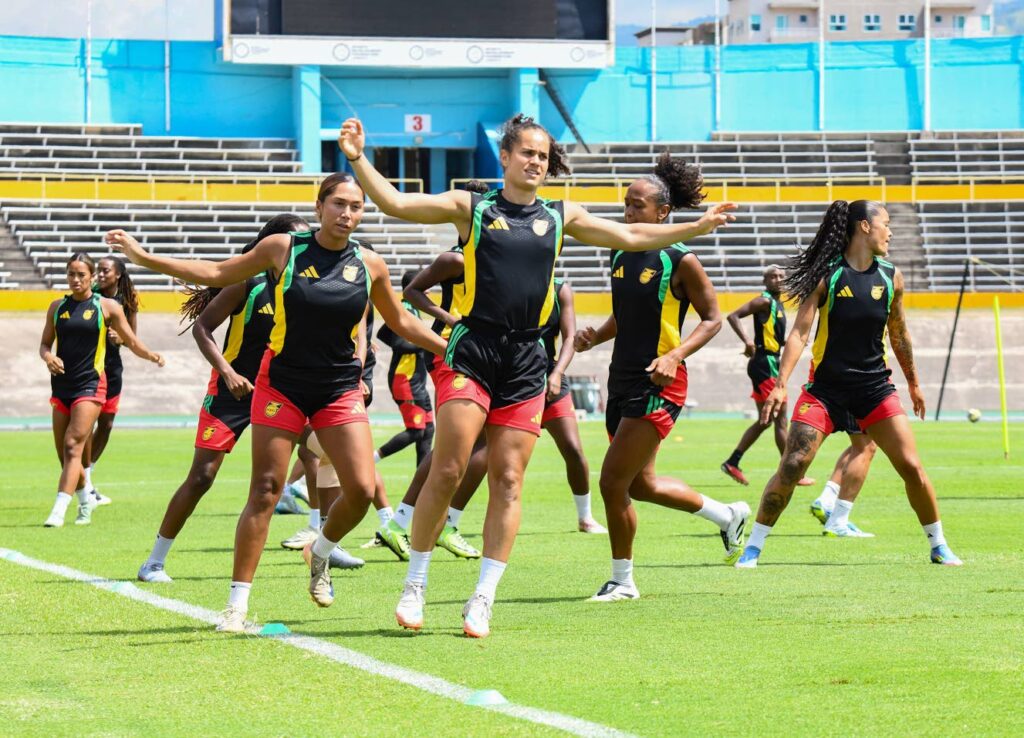
Jamaica has launched a transformative five-year strategic framework to overhaul and grow women’s football across the country, with key leaders optimistic that the initiative will build a more robust, inclusive ecosystem for the sport by 2031 — the year Jamaica is set to co-host the FIFA Women’s World Cup.
Unveiled this Monday in Kingston, the plan is a collaborative effort between the Jamaica Football Federation (JFF), global governing body FIFA, and Professional Women’s Football Jamaica Limited. Beyond outlining clear development targets, the strategy opens the door for Jamaica to access fully resourced support programs from FIFA to kickstart and implement each phase of the work.
The strategic plan is structured around seven core focus areas: governance and leadership, grassroots youth development, competitive pathways for emerging players, technical skill building, national team advancement, long-term commercial sustainability, and workforce capacity building alongside athlete welfare.
Carlene Edwards, who chairs the JFF’s Projects Committee for Women’s Programmes, has led much of the plan’s development. Edwards, a respected figure in Jamaican women’s football who previously served two years as chair of the Jamaica Women’s Premier League’s Marketing and Commercialisation Affairs Committee, was appointed to FIFA’s own Women’s National Competitions Committee in October 2024. She says a December 2024 FIFA Council meeting in Qatar was the catalyst that pushed her and JFF President Michael Ricketts to prioritize a comprehensive local strategy.
“While working with the Jamaica Women’s Premier League, I realized we were not tapping into the full range of development programs FIFA offers,” Edwards explained in an interview with the Jamaica Observer. “I told Ricketts I would lead this work because strengthening the national strategy will directly lift up our domestic league too.”
Edwards expressed visible enthusiasm for the milestone, noting that the plan incorporated feedback from a broad range of stakeholders during a dedicated workshop held weeks before the launch, with FIFA encouraging and pushing for the official public rollout. “To see this work go from initial documentation to a public launch has been incredibly rewarding,” she said.
Across its seven pillars, the plan includes more than 50 distinct actionable initiatives, with three headline targets to achieve by 2031: a 50% increase in the number of registered female players nationwide, licensing for more than 200 new female coaches, and official qualification for 120 new female referees.
Edwards acknowledged that systemic gaps remain — particularly a lack of age-group competitions that create a clear pathway for young female players to transition to the senior national level. But she emphasized that FIFA’s support, which includes direct funding for programs, removes many of the financial barriers that have held back development in the past. She also pointed to growing private sector engagement as a positive sign, noting that corporate sponsors have increasingly reached out to support the domestic women’s league following recent improvements. “It’s still challenging, and we are not where we need to be yet,” Edwards said. “But step by step, we will get there.”
In total, Jamaica is set to receive more than US$265,000 in funding from FIFA through its targeted women’s development programs, a major injection of resources for the initiative. Andres Portabella, a FIFA consultant supporting the plan, expressed full confidence in Jamaica’s ability to meet its ambitious targets after meeting with local stakeholders.
“What makes the difference here is people — you can see a dedicated team ready to leverage FIFA’s development programs and turn this strategy into real action,” Portabella said. “They are ready to turn this moment into impact for the domestic league, for grassroots players, and for coaches across the country. More women will get more opportunities, and over time we will see a far stronger women’s football ecosystem in Jamaica.”
Elaine Walker-Brown, JFF Vice-President and Head of Women’s Football, has issued a call to action for all Jamaican football stakeholders to prioritize women’s development. Many volunteers leave the sport because it does not pay a full salary, Walker-Brown explained, noting that she herself works out of passion for the game. “Our parish associations already run men’s football effectively with volunteer leaders — there is no reason they cannot do the same for women’s development in every parish,” she said. “I am counting on local leaders to step up, and the JFF will hold parishes accountable for contributing to the growth of women’s programs.”
To keep implementation on track, the JFF has announced plans to appoint a dedicated head of women’s football development before the end of the calendar year, who will oversee day-to-day execution of the 2026-2031 strategic plan.