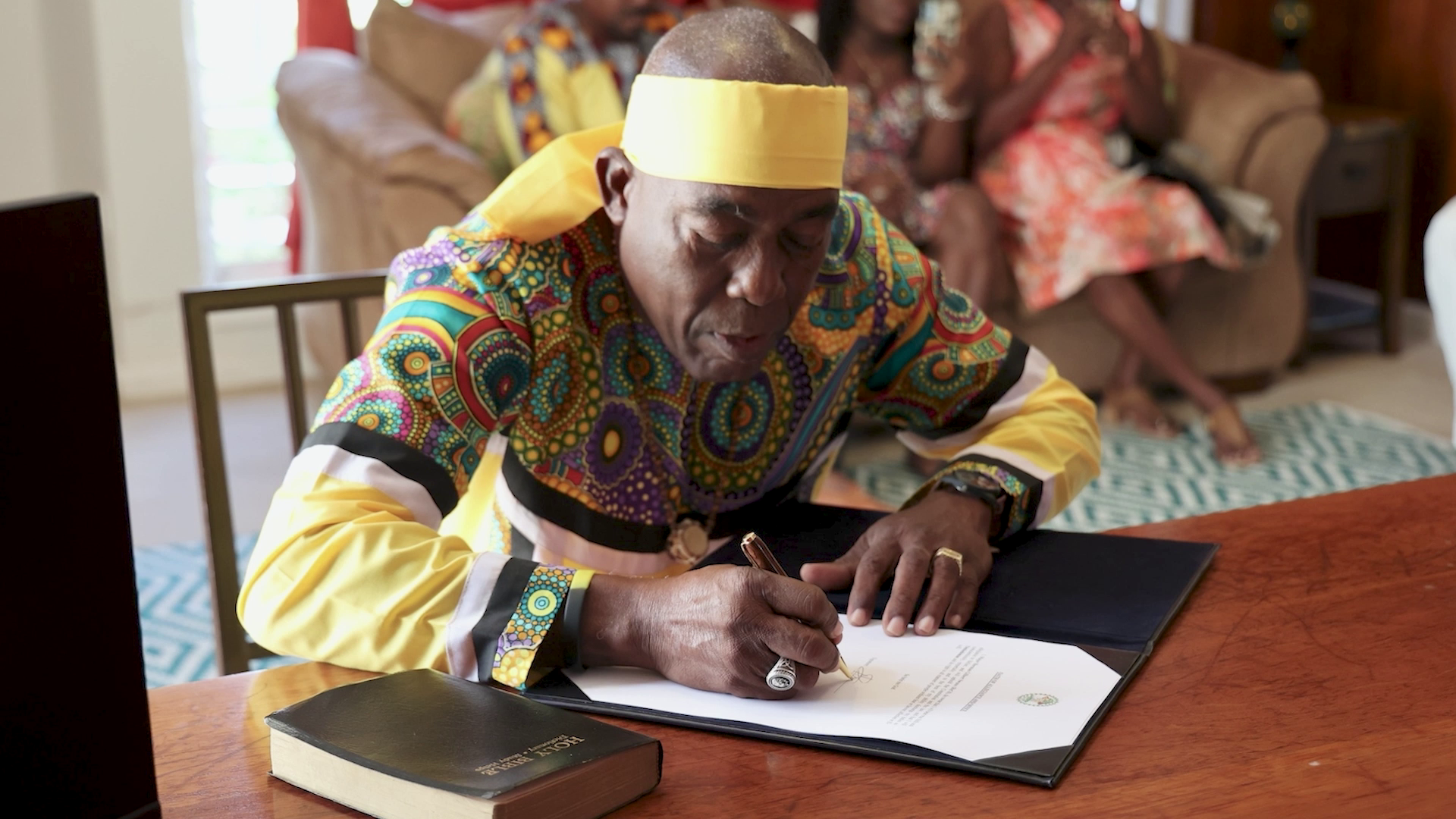
Six months after former Ombudsman Gilbert Swaso’s contract expired in December 2025, one of Belize’s most critical government oversight bodies remains without permanent leadership — a vacancy that has now escalated into a full legal confrontation between the retired major and the ruling Briceño Administration.
When Swaso’s appointment was confirmed by the House of Representatives in early 2023, Prime Minister John Briceño framed the pick as a bipartisan consensus, telling lawmakers that the nomination carried Cabinet backing and had already secured support from the Senate. Swaso was formally sworn in that February, and quickly positioned the Office of the Ombudsman as a champion for marginalized Belizeans seeking redress against government injustice.
“We exist for people who suffer injustice, people who are vulnerable, people who essentially are not getting the service that they believe that they deserve,” Swaso said in a 2023 address. “No need to suffer in silence.”
Swaso’s commitment to transparency ultimately put him on a collision course with the administration. In 2025, prominent social activist Jeremy Enriquez filed a formal complaint with the Ombudsman’s office after the Attorney General’s Ministry refused to fulfill a Freedom of Information Act (FOIA) request. The request sought details on how much taxpayer funding the government was paying private law firms for representation in the high-stakes, controversial redistricting case.
Swaso rejected the government’s refusal to disclose the information, publicly recommending that at least a portion of the requested records be released to the public. Shortly after that ruling, the administration announced it would not renew Swaso’s contract when it expired at the end of 2025.
Enriquez, the activist who filed the original FOIA complaint, said the non-renewal sends a clear chilling message to independent oversight. By standard convention, Belize’s Ombudsman serves a renewable term of up to nine years, making the early end to Swaso’s tenure deeply unusual. “The government has destroyed the credibility of the office, and we are watching very closely to see who will replace him and if there is that level of commitment to the constitution and laws of Belize,” Enriquez noted in comments earlier this year.
Opposition lawmakers have echoed those concerns. Last week, United Democratic Party Senator Sheena Pitts raised the vacancy in the Senate, pointing out that the Ombudsman is a constitutionally enshrined position designed to deliver critical checks and balances on executive power for all Belizean people. “We are here in June 2026 without having to deal with any great efficiency the appointment of an ombudsman,” Pitts said.
Now, Swaso is hitting back with legal action, arguing that administration officials violated constitutional protections for the independent Ombudsman role and mishandled the end of his tenure. In comments from earlier this week, Swaso acknowledged his FOIA ruling likely created friction with the government, but stood by his commitment to upholding accountability. “The FOIA, the act in itself is there for accountability and when citizens are denied of their constitutional right and remember also that the government of Belize is working for and on behalf of the people of Belize who placed them in office to govern on our behalf,” he said.
Swaso also criticized Prime Minister Briceño for comments made in the National Assembly, where Briceño attacked Swaso for supporting a plan to expand the Ombudsman’s mandate to function as a broader national human rights institution. Swaso countered that the expansion aligned with a previous commitment the government itself made to establish a national human rights institute within the Ombudsman’s office.
As of June 9, 2026, the administration has given no public indication of when it intends to fill the vacant Ombudsman post, leaving the key watchdog institution effectively dormant half a year after Swaso’s departure.