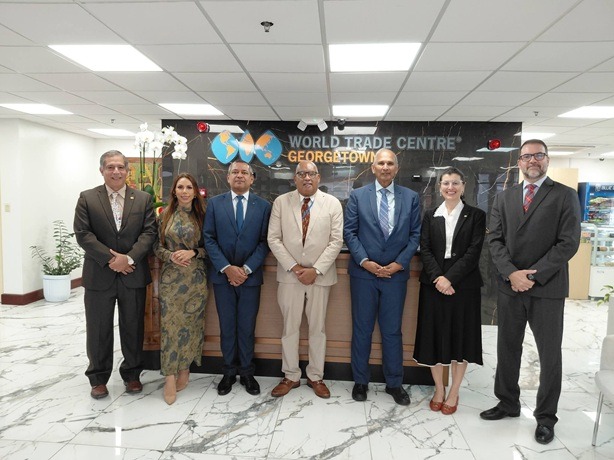
A high-level strategic gathering focused on the future of hemispheric agriculture brought senior representatives from the Brazilian government and the Inter-American Institute for Cooperation on Agriculture (IICA) to the World Trade Centre Georgetown (WTCG) last Friday, with the aging agricultural workforce emerging as a top priority for collaborative action.
Chaired by WTCG Executive Director Wesley Kirton, the meeting opened with urgent discussion of how to reverse decades of aging in farming workforces across the Americas, centering talks on actionable strategies to draw younger generations into agricultural careers. Participants agreed that modernizing the sector’s appeal is critical, outlining a path forward that leverages digital innovation, advanced agricultural technologies, entrepreneurial opportunities, and expanded market access to make farming and agribusiness more attractive to young people.
Beyond workforce challenges, delegates delved into the sweeping transformative power of cutting-edge science and technology in modern agriculture. The conversation highlighted the rapidly expanding adoption of artificial intelligence and precision agriculture methodologies, tools that have already demonstrated clear potential to lift crop and livestock productivity, boost environmental sustainability, and strengthen the sector’s ability to withstand systemic shocks. Additional topics on the agenda included longstanding logistics and transportation bottlenecks that limit market access, strategies to meet global food safety and phytosanitary compliance standards, evidence-based best cultivation practices, and the development and selection of high-performing crop varieties, livestock breeds, and quality seed stock.
Climate change’s growing threat to consistent agricultural output and regional food security also took center stage in the talks. Delegates shared insights into context-specific climate adaptation approaches, emphasizing that coordinated regional and international collaboration is non-negotiable for building agricultural systems that can absorb and recover from climate-related disruptions.
The meeting also laid groundwork for future collaboration between IICA and WTCG, coming just days after IICA signed a formal cooperation agreement with the Government of Guyana earlier that Tuesday. Both institutions confirmed shared interest in partnering on initiatives focused on inclusive agricultural development, streamlined cross-border agricultural trade facilitation, sector-wide innovation, and skills-based capacity building for local agricultural stakeholders.
Attendees highlighted existing private sector investment in Guyana’s agricultural transformation as a model for future growth, specifically calling out two ongoing projects from local industry leader Demerara Distillers Limited (DDL): a large-scale dairy farm under development at Moblissa, and juice production operations run by DDL’s subsidiary TOPCO. These ventures were held up as successful examples of how private investment can strengthen Guyana’s domestic agro-processing sector, cut the country’s reliance on food imports, and generate new inclusive economic opportunities for local communities.
A working lunch wrapping up the formal discussions reinforced a core shared conclusion: cross-sector partnerships between national governments, intergovernmental agricultural bodies, and private enterprise are the foundation for advancing meaningful agricultural transformation and lasting food security across the Latin American and Caribbean region.