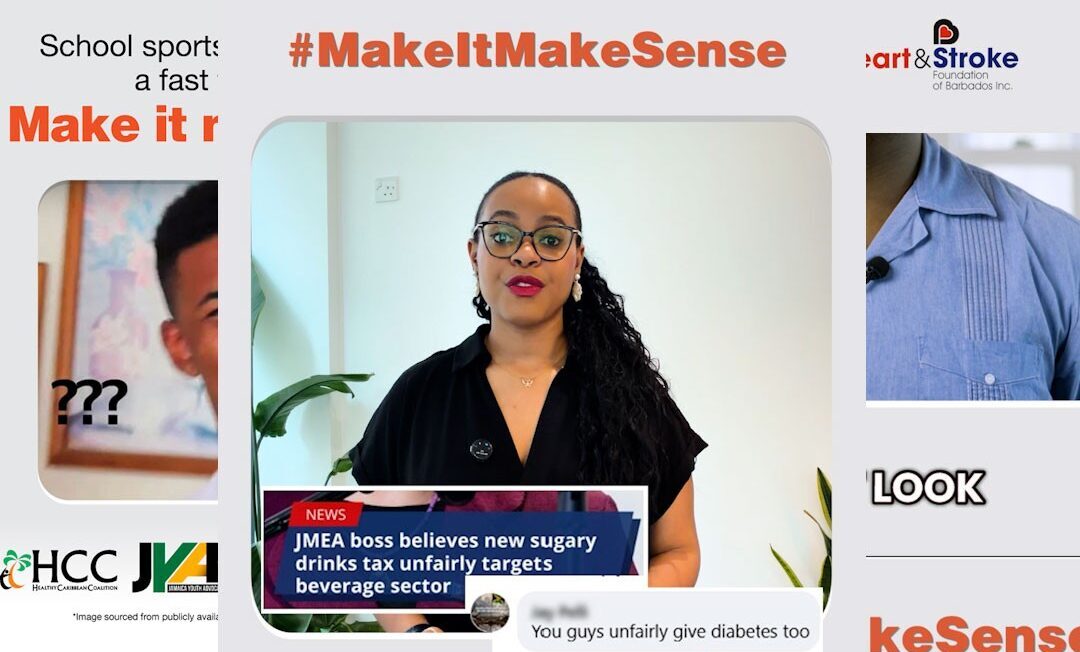
Against a backdrop of soaring childhood obesity rates that outpace the global average, a new regional public health campaign has kicked off across 11 Caribbean territories, calling on local communities and governments to push back against the growing infiltration of unhealthy food and beverage brand marketing within school campuses. Titled “Make it Make Sense,” the initiative is led by the Healthy Caribbean Coalition (HCC) in partnership with three local health and youth advocacy groups: the Heart and Stroke Foundation of Barbados (HSFB), the Heart Foundation of Jamaica (HFJ), and the Jamaica Youth Advocacy Network (JYAN). Running from May 25 to July 16, 2026, the campaign is being amplified via HCC’s Facebook and Instagram channels, and organizers have opened a public petition for citizens to add their support for banning ultra-processed food (UPF) and beverage marketing from all educational institutions.
This year’s campaign builds on a years-long series of regional advocacy efforts that have previously targeted the food and beverage industry’s undue influence over public health nutrition policymaking. Unlike earlier initiatives, however, the 2026 iteration narrows its focus to the school environment, shining a light on how seemingly benign corporate activities—from event sponsorships and branded educational programs to in-kind donations—gradually normalize unhealthy product consumption and shape children’s dietary preferences from a young age. Health experts behind the campaign emphasize that while many schools across the region face persistent budget gaps that make corporate support attractive, accepting funding and in-kind donations from UPF manufacturers comes at a steep long-term cost to public health.
Caribbean nations currently face a public health crisis driven by overconsumption of UPF products, which are typically high in added sugar, sodium, and trans fats. Regional childhood obesity rates now surpass the global average, and public health researchers warn that early adoption of diets heavy in ultra-processed goods puts children at far higher risk of developing preventable noncommunicable diseases (NCDs) including type 2 diabetes, cardiovascular disease, and multiple forms of cancer earlier in adulthood. HCC President Senator Dr. Kenneth Connell stressed that marketing within schools is uniquely insidious, noting that the same persuasive advertising that influences adult purchasing decisions has an even more profound impact on children, who lack fully developed critical thinking skills to recognize corporate persuasion tactics.
JYAN Executive Director Shannique Bowden went further, calling these targeted marketing practices predatory. Bowden explained that many UPF companies frame their school partnerships as acts of corporate social responsibility, positioning themselves as helpful community partners stepping in to fill resource gaps that underfunded public schools cannot cover. In reality, she argued, these practices exploit children’s inherent vulnerability to persuasive branding, violate core child rights principles, and directly exacerbate the region’s growing childhood obesity and NCD epidemics.
HFJ Programme Manager Barbara McGaw acknowledged the real financial constraints many Caribbean schools operate under, but questioned whether accepting support from companies that profit from selling unhealthy products is an acceptable trade-off. McGaw pointed out that the region’s existing National School Nutrition Policy already includes formal recommendations to ban or restrict marketing of high-fat, sugar, and salt (HFSS) foods in schools, including bans on sponsorships, grants, and donations from UPF brands. Despite these existing guidelines, HCC notes that enforcement and regulation of corporate marketing in schools remains extremely weak across most CARICOM member states, even as governments publicly commit to building healthier school environments.
Crucially, campaign organizers stress that schools do not have to choose between unmet budget needs and protecting children’s health. HCC Communications Officer Sheena Warner-Edwards noted that ongoing tracking by the coalition has revealed a growing number of health-neutral and health-promoting businesses are stepping in to fill sponsorship gaps, ranging from large financial institutions like local banks and insurance companies to small, community-focused businesses such as local clothing boutiques and regional radio stations.
HSFB Chief Executive Officer Greta Yearwood emphasized that the campaign’s focus on schools is particularly timely, given that children spend the majority of their waking hours in educational settings. “What children eat and drink impacts their health outcome as they grow and track into adulthood,” Yearwood said. “If we are serious about protecting children and reducing NCDs, then tactics which encourage the consumption of foods high in fats, sugars and salt, targeting children, cannot be permitted. We need to protect public health policies from interference from vested interests.”
After decades of unregulated corporate presence in schools, campaign organizers note that unhealthy branding has become so normalized that it often goes unchallenged by parents, educators, and policymakers. Through “Make it Make Sense,” organizers aim to spark widespread public reflection, push for stronger enforcement of existing school nutrition policies, and build public support for new regulations that prioritize children’s long-term health over corporate marketing profits. Members of the public across all 11 participating territories can show their support by signing the campaign’s open online petition.