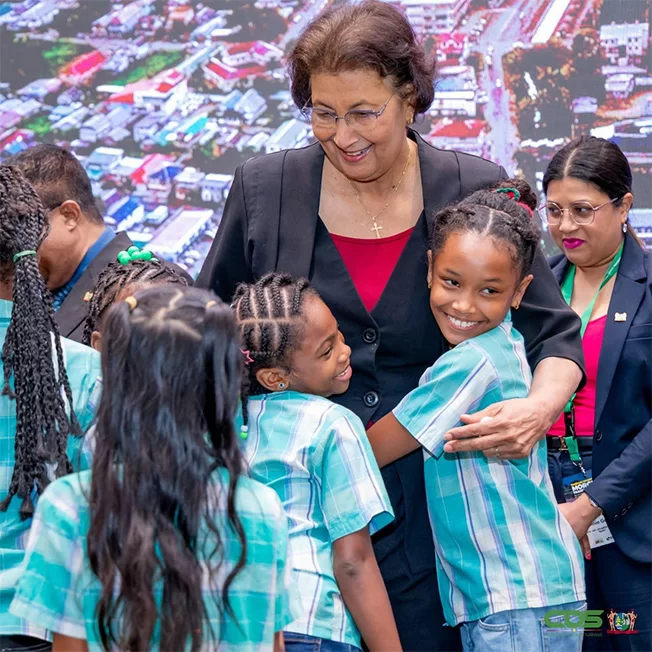
PARAMARIBO, Suriname – June 8, 2026 – Suriname President Jennifer Simons has framed large-scale investment in accessible, quality education as the cornerstone of the nation’s long-term development, laying out a bold five-year strategic agenda for the education sector during her opening address at the inaugural National Education Congress.
Hosted at the Royal Ballroom of Paramaribo’s Hotel Torarica, this year’s congress carries the central theme “Out of Poverty: Toward Inclusive Growth and Sustainable Progress”, a framing that aligns with the Simons administration’s core policy priorities. In her keynote address, Simons emphasized that strategic investment in education remains the most impactful long-term tool to cut systemic poverty, drive inclusive economic expansion, and unlock expanded opportunity for future generations of Surinamese people.
To expand access to educational resources across the country, Simons announced a new policy initiative: the state-owned public television channel GOV TV will now allocate its 8.3 sub-channel exclusively to educational programming. “When we say that development starts early, and that no one can be left behind, those cannot just be words – they must be reflected in the choices our government makes,” Simons told attendees. “Education is the irreplaceable foundation of a prosperous, equitable society. If we want to secure Suriname’s future, reduce poverty, and build sustainable growth, we must start with strong, accessible education for all.”
The congress itself is focused on reshaping curricula and educational outcomes to help children grow into resilient, self-sufficient citizens capable of building long-term well-being for themselves and their families, Simons explained. Beyond preparing young people to enter the workforce, a robust education system should also empower them to contribute actively to civic life and national development, she added. Achieving this transformative goal will require collective action across every segment of Surinamese society, from national and local government bodies to educational institutions, families, and community organizations.
Looking ahead to 2029, Simons outlined five core priorities to guide the sector’s transformation over the coming five years. These priorities include addressing the most pressing systemic bottlenecks currently facing Suriname’s education system; developing a broadly shared national education vision aligned with the country’s development goals; establishing a clear legal framework for a universal national education law; strengthening professional support, compensation, and training for educators to elevate their standing in the system; and securing long-term sustainable funding to support ongoing reforms.
Against a backdrop of rapid global economic and technological change, Simons noted that 21st century education must equip young Surinamese people to think creatively, develop innovative solutions to complex challenges, and maximize their unique individual talents. That shift in outcomes requires a corresponding shift in educator training, ensuring teachers have the tools and support they need to thrive in a modernized education system, she added.
Simons emphasized that the deliberations and outcomes of the National Education Congress will serve as the guiding roadmap for the government’s future education policy. Once stakeholders reach consensus on a clear policy direction, the administration will launch a sweeping national intervention to implement reform. “This intervention will not only address the urgent challenges we face today,” Simons said. “It will lay the foundation for the education system we want to build over the next 10 to 15 years, for the generations that will shape our nation’s future.”