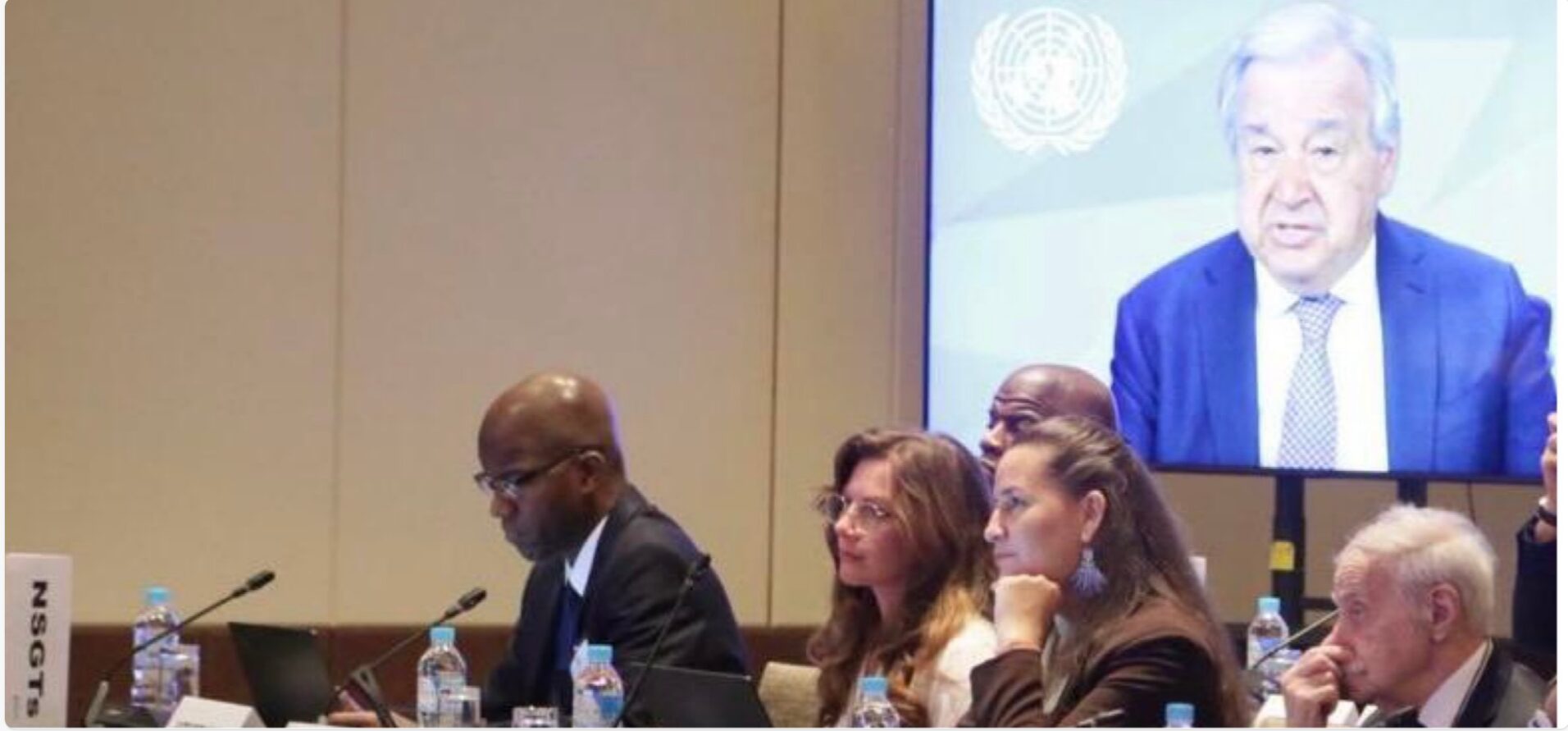
At a recent regional decolonization seminar hosted in Managua, Nicaragua, the British Virgin Islands (BVI) has delivered a clear call to the United Nations Special Committee on Decolonization (C24) to leverage its full authority to accelerate progress toward self-determination for the 17 remaining Non-Self-Governing Territories (NSGTs) across the globe.
The appeal was presented by BVI Special Envoy Benito Wheatley during the UN C24 Caribbean Regional Seminar on Decolonization, a gathering centered on advancing the goals of the Fourth International Decade for the Eradication of Colonialism. In his address, Wheatley laid out two key priorities for the committee to act on immediately.
First, he called on C24 to use its formal good offices mandate to create structured dialogue frameworks between the four current administering powers — France, New Zealand, the United Kingdom, and the United States — and the territories they oversee. This dialogue, he emphasized, should be focused on supporting territories to pursue one of the three decolonization pathways officially recognized by the United Nations: full integration with the administering power, free association, or full sovereign independence.
Second, Wheatley urged the committee to expand its efforts to approve and deploy UN visiting missions to NSGTs that request them. These on-the-ground missions are designed to allow the UN to directly assess political, economic, and social progress toward self-governance, and to document the priorities of territorial populations.
“The Special Committee on Decolonization can make a tangible difference in advancing decolonization by employing the major tools at its disposal, which include good offices and visiting missions,” Wheatley said in his address. “Both provide useful engagement and dialogue for both the Administering Power and the Governments and peoples of those Non-Self-Governing Territories seeking a full measure of self-government.”
Wheatley also shared an update on the BVI’s own decolonization journey. The territory is currently preparing for upcoming constitutional negotiations with the UK, with the goal of securing full internal self-governance. Following those negotiations, a public referendum is scheduled for 2025 to 2031, where BVI residents will select their preferred final decolonization status from the three UN-endorsed sovereignty options.
The special envoy expressed gratitude for the committee’s recent support, including the deployment of a UN visiting mission to the BVI in August 2024 to assess progress toward self-determination, and its ongoing backing for the territory’s democratic institutions. But he also issued a stark warning: if the committee fails to deliver meaningful progress across all remaining NSGTs before the Fourth International Decade concludes in 2030, its ongoing relevance to the decolonization process will be called into question by the communities it is meant to serve.
As of 2025, 17 territories remain on the UN’s official list of Non-Self-Governing Territories: American Samoa, Anguilla, Bermuda, the British Virgin Islands, the Cayman Islands, the Falkland Islands, French Polynesia, Gibraltar, Guam, Montserrat, New Caledonia, Pitcairn, Saint Helena, Tokelau, the Turks and Caicos Islands, the United States Virgin Islands, and Western Sahara. This report is based on an official press release issued by the Government of the Virgin Islands following the Managua seminar.