KINGSTON, Jamaica – A first-term Jamaican government senator has publicly backed the administration’s controversial plan to siphon billions of dollars from the country’s National Housing Trust (NHT) for general budget support, while issuing a clear warning that the practice must not become a permanent fixture of national fiscal policy.
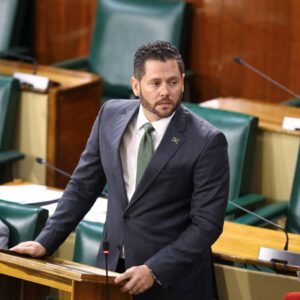
Senator Christian Tavares-Finson, son of the Senate President, laid out his nuanced position during Friday’s upper house debate on the National Housing Trust (Amendment) (Special Provisions) Bill, 2026. The legislation, which already cleared the House of Representatives, ultimately passed the Senate without changes, greenlighting the government to withdraw a total of JMD 11.4 billion from the NHT over the coming five years.
Opening his argument for the measure, Tavares-Finson stressed that policymakers must approach the question with unflinching honesty and a grounded understanding of real-world constraints. “Governments do not operate in ideal circumstances,” he told fellow lawmakers, noting that leaders of developing nations must constantly navigate competing public priorities, tight fiscal limits, sudden economic shocks, and unending demands across critical sectors from infrastructure and public health to education and national security.
He acknowledged that the decision to draw on NHT funds is not an easy one, but argued that maintaining broad economic stability and sustaining core national programs sometimes requires hard trade-offs. “The reality before us today is that the government has determined that a drawdown from the National Housing Trust is necessary at this particular moment,” Tavares-Finson said. “Whether one agrees fully with that decision or not, we must acknowledge the broader fiscal context in which it has been made. Responsible governance requires balancing immediate national needs with long-term institutional objectives.”
The senator emphasized that accepting the temporary need for the withdrawals does not mean abandoning core principles surrounding the NHT’s mandate. “While the government may find it necessary to utilise NHT resources at this time, it must simultaneously commit itself to ensuring that such draw downs do not become a permanent feature of public finance management,” he said.
Tavares-Finson reminded the chamber that the NHT was never created to act as a steady source of general government revenue. “Its principal purpose is housing. Its mandate is housing. Its contributors expect it to focus on housing,” he said. When working Jamaicans make their monthly NHT contributions, he added, they do so with the expectation that those funds will go toward expanding their ability to own, renovate, or finance a home. Any diversion of those contributions must therefore be treated as a rare exception, not a new normal.
Framing the debate correctly, Tavares-Finson argued, the question before the Senate was not whether the NHT matters — it was whether a responsible government should be permitted to deploy a portion of its national resources to protect overall economic stability and advance the well-being of all Jamaicans in extraordinary times. To that question, he said, the answer is unequivocally yes.
The senator pushed back against critics by pointing out that the NHT operates within the broader framework of national development, and a healthy housing sector cannot exist in a failing economy. “Housing cannot flourish in an economy that is unstable. Housing cannot flourish where inflation is uncontrolled. Housing cannot flourish where government finances are weakened and where essential public services are threatened,” he explained.
He added that this is not a new practice unique to the current administration, noting that Prime Minister Andrew Holness has previously documented that past governments also tapped NHT funds to advance cross-cutting national goals, including education reform and fiscal stabilization efforts.
Addressing opponents of the drawdown, Tavares-Finson challenged them to answer a question few have addressed: if the government does not use these available NHT resources, where else will it find the revenue needed to fund critical national priorities? He laid out the stark alternatives: raising income taxes on working Jamaicans, increasing the General Consumption Tax, hiking payroll deductions, or piling new costs onto businesses already grappling with global economic volatility.
Tavares-Finson recalled that Jamaican voters elected the current government on a platform of fiscal responsibility, economic prudence, and a promise not to impose unnecessary new tax burdens on citizens. That commitment, he said, remains the core of the administration’s economic approach.
“The choice, therefore, is not between drawing down NHT funds and doing nothing. The real choice is between utilising available national resources responsibly, or imposing additional taxes on workers, homeowners, small businesses, and consumers,” he said. In this context, the NHT drawdown is a far less harmful option than broad tax increases that would hit every Jamaican household directly, he argued.
The senator also pushed back against claims that the government has abandoned its commitment to housing in order to fund other priorities. The NHT, he confirmed, continues to deliver on its core mandate: it still issues mortgages, provides grants, delivers new housing solutions, and offers financing support to contributors. Loan limits have been raised, benefits expanded, and existing programs strengthened to help more contributors access affordable housing, leaving the institution fully operational, financially solvent, and able to meet its core obligations.
In closing, Tavares-Finson noted that broad economic stability ultimately benefits NHT contributors themselves. When interest rates hold steady, housing becomes more affordable; when employment grows, more Jamaicans qualify for home loans; when public finances are strong, the government can invest in the infrastructure, roads, water systems and public services that support new housing development. Preserved economic stability delivers benefits to all Jamaicans, not just as NHT contributors, but as workers, business owners, taxpayers, and citizens.