The Caribbean tourism landscape is undergoing a dramatic seismic shift, driven by sweeping U.S. sanctions that have forced major international hospitality players to abandon their operations in Cuba, creating an opening for neighboring Dominican Republic to solidify its position as the region’s preeminent tourist destination.
The catalyst for this unprecedented business restructuring came with the enactment of U.S. Executive Order 14404, which tightened long-standing Washington sanctions on Cuban entities linked to the island nation’s key strategic sectors. The order mandates that any foreign company maintaining commercial ties with organizations blacklisted by the former Trump administration faces immediate asset freezing, creating an untenable legal and financial risk for international operators.
In the wake of this regulatory crackdown, Spain’s Meliá became one of the highest-profile firms to exit the Cuban market, ending management contracts for 15 properties across the island. Fellow Spanish hospitality giant Iberostar followed suit, withdrawing from 12 joint venture properties it ran with state-owned Cuban conglomerate Gaesa. By mid-2024, Canada’s Blue Diamond Resorts — one of the last major international firms still expanding its Cuban footprint in recent years — confirmed its full withdrawal from the market effective June 1. Blue Diamond operated roughly 15 properties across five premium and mid-tier brands, with properties concentrated in top Cuban tourist hubs including Havana, Varadero, and Cayo Largo del Sur.
In official statements shared with Dominican outlet Diario Libre, Meliá framed its exit as a response to overlapping geopolitical, legal, and economic pressures that eroded the operational and legal security of its Cuban investments. The company also acknowledged that most of the affected properties were already shuttered or operating under severe constraints, hobbled by widespread power outages, plummeting tourist demand, and chronic supply chain disruptions that have plagued Cuba’s struggling tourism sector in recent years.
The contraction of Cuba’s tourism industry extends far beyond the hotel sector. Flagship Spanish carrier Iberia has suspended all direct flights to Havana, while Portuguese airline World2Fly has scrapped its Cuban operations entirely. Multiple other European and Canadian travel and hospitality firms have either scaled back their presence on the island or exited entirely, accelerating the downward trajectory of Cuba’s once-bustling tourism economy, which has long been the country’s largest source of foreign currency.
While Cuba grapples with an unprecedented economic and tourism crisis, the Dominican Republic is experiencing a boom that has positioned it as the primary beneficiary of the regional shift. The country has secured its status as the Caribbean’s top tourist destination, posting consecutive years of record visitor arrivals and pursuing an aggressive growth strategy backed by upgraded airport infrastructure, expanded global air connectivity, macroeconomic stability, and clear, investor-friendly legal protections.
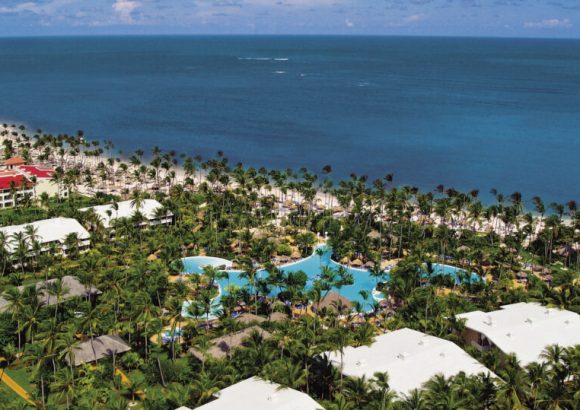
Against this favorable backdrop, both Meliá and Iberostar have doubled down on their Dominican investments, making the country a core pillar of their broader Caribbean and Latin American strategic plans. Meliá now manages one of the largest hotel portfolios in the Dominican Republic, with a footprint across all of the country’s top tourist markets: Punta Cana, Bávaro, Miches, and Puerto Plata. The firm has developed some of the East Coast’s most iconic luxury resorts and continues to expand its offering of high-end and premium travel experiences for international visitors.
For its part, Iberostar holds a strong market position across Punta Cana, Playa Bavaro, Puerto Plata, and Bayahibe, where it has built its strategy around sustainable tourism practices, industry-leading service quality, and high-value-added visitor experiences that draw millions of international tourists each year.