Artificial intelligence has evolved far beyond the popular consumer chatbots that dominate headlines, emerging as a sprawling, interconnected industrial ecosystem that will define 21st century global power. NVIDIA CEO Jensen Huang famously frames this ecosystem as a “five-layer cake”, with energy forming the foundational base, followed sequentially by advanced chips, digital infrastructure, AI models, and real-world applications. This architecture makes clear that every layer is critical to the whole ecosystem – remove one, and the entire system cannot function. When we analyze the intensifying race between the United States and China for AI dominance through this framework, one inescapable geopolitical reality rises to the surface: Taiwan holds the decisive fulcrum that can tip the global balance of technological power.
As Huang recently emphasized, Taiwan has become the undisputed geographic center of the global AI revolution, hosting end-to-end production for everything from cutting-edge chips to advanced packaging, system assembly, and AI supercomputers. This central role undermines misleading political narratives that claim Taiwan “stole” the U.S. chip industry. Such claims fundamentally misunderstand the deep, mutually beneficial technological symbiosis that binds the U.S. and Taiwan’s tech sectors together.
### The Irreplaceable U.S.-Taiwan Tech Symbiosis
Taiwan’s decades of deliberate, strategic investment in semiconductor research and industrial development have built a leading position in the global chip market that cannot be easily duplicated. Backed by world-class academic research institutions, a highly skilled talent pipeline, and relentless incremental innovation, homegrown tech leaders including TSMC, MediaTek, and Foxconn have woven together a tightly integrated, specialized ecosystem unmatched anywhere in the world. This makes Taiwan an irreplaceable strategic partner for the U.S., as Washington works to build a resilient “Non-Red Supply Chain” to protect its national technological security.
The U.S. has long positioned AI competition as a core national priority, outlining in its America’s AI Action Plan a goal to set the global benchmark for AI development and eliminate dependence on technologies from adversarial powers. However, export controls and software leadership alone are not enough to maintain U.S. primacy – Washington requires a stable, secure physical supply chain for AI hardware, and that is where Taiwan’s unique value becomes clear across every layer of Huang’s five-layer framework:
– **The Chip Layer**: While the U.S. boasts the world’s most advanced chip design capabilities, blueprints only become functional AI hardware when they can be manufactured and packaged at extremely high yields. Taiwan sits at the core of this critical step, producing roughly 90% of the world’s advanced AI server hardware and over 90% of the most cutting-edge advanced-node chips. U.S. leadership in AI software and models cannot be translated into real-world capacity without Taiwan’s specialized hardware manufacturing prowess.
– **The Infrastructure Layer**: The U.S. is home to the world’s largest hyperscale cloud platforms, including Microsoft, Google, and Meta. Taiwan, by contrast, controls a comprehensive end-to-end supply chain for hardware and information and communications technology. When U.S. platform leadership is combined with Taiwan’s manufacturing expertise, the result is the most robust and complete AI infrastructure ecosystem in the world.
### Securing the Democratic AI Frontier
This mutually beneficial technological partnership forms the core foundation of the landmark Silicon Age Declaration, signed during the latest U.S.–Taiwan Economic Prosperity Partnership Dialogue (EPPD). The agreement covers AI supply chain security, digital infrastructure development, and high-skilled tech talent exchange, locking in a formal framework for bilateral economic and technological security cooperation.
This collaboration also extends into the third layer of the AI ecosystem: model development. While the U.S. holds a clear qualitative lead in cutting-edge large AI models, Beijing has actively weaponized low-cost open-source AI models to expand its influence across the Global South. In response, the U.S. and Taiwan are jointly advancing “Sovereign AI” initiatives, designed to protect data security and national sovereignty for partner nations and prevent the global AI order from being dominated by authoritarian ideological frameworks.
### The Next Critical Battleground: Physical AI
The ultimate test of supremacy in the U.S.–China AI race will unfold in the fifth and final layer of Huang’s framework: Physical AI, the integration of artificial intelligence into tangible technologies including industrial robotics, unmanned aerial vehicles, smart manufacturing, and defense systems. For Taiwan, this emerging frontier brings both unprecedented opportunities and intense competitive pressure.
To capitalize on its advantages, Taiwan must evolve beyond its traditional role as a contract manufacturing hub and take the lead in building a broad Democratic AI Alliance. This alliance would combine Taiwan’s chip manufacturing strength, U.S. model development leadership, Japanese robotics expertise, and European industrial application experience to create a coordinated, competitive alternative to authoritarian tech expansion. At the same time, Taiwan can transform its own domestic sectors – including precision machine tools, medical devices, and drone manufacturing – into leading real-world testing grounds for Physical AI innovation.
Taiwan’s Ministry of Foreign Affairs has already aligned its diplomatic and economic strategies to match this historic moment, integrating Sovereign AI development into the broader Global Democratic Value Chain, reinforcing unmanned aerial capabilities across the Indo-Pacific’s First Island Chain, and securing the stable global distribution of semiconductors through the Non-Red Supply Chain initiative.
Bound together by the shared Silicon Age cooperation framework, Taiwan stands as the decisive pivot point in the U.S.–China competition for AI supremacy. By enabling the U.S. to fully leverage its advantages in capital and market access while deploying Taiwan’s unrivaled supply chain strengths, Taiwan is positioning itself at the forefront of the next global industrial revolution – not merely as a hardware supplier, but as an indispensable co-creator of the democratic world’s technological future.
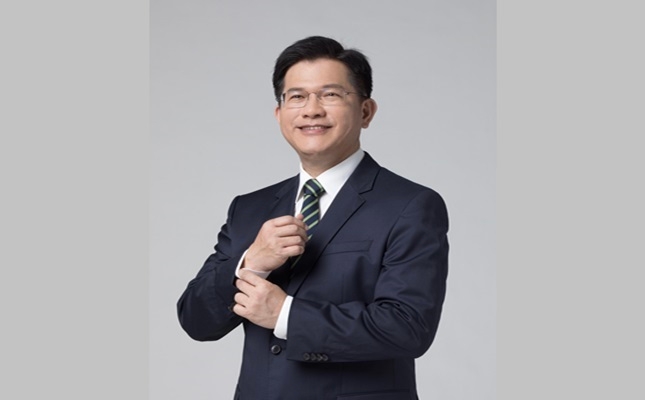
*This commentary is authored by Dr. Lin Chia-lung, Minister of Foreign Affairs of the Republic of China (Taiwan). The views expressed do not necessarily reflect the position of SKNVibes.com.*