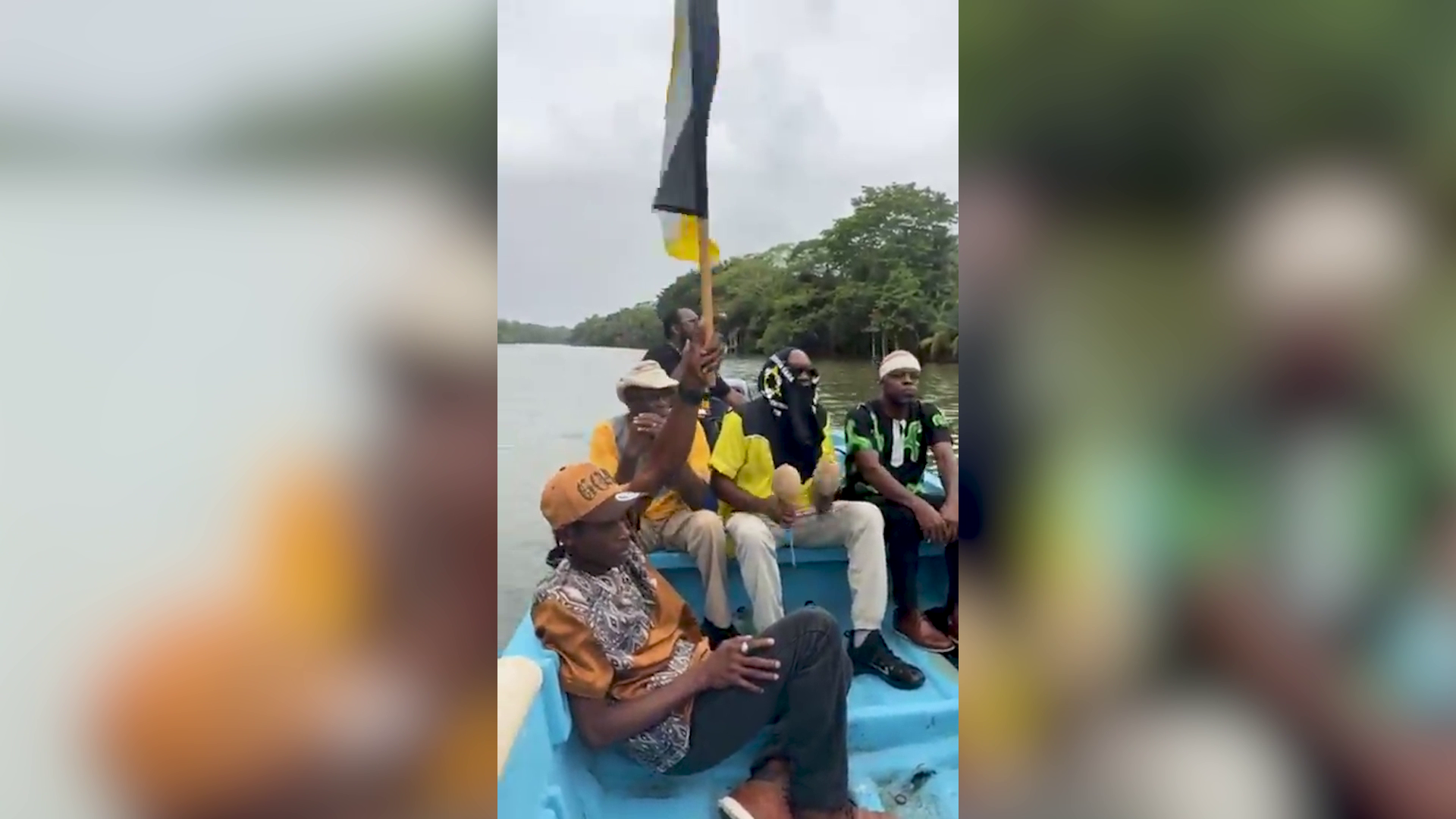
In southern Belize, a growing coalition of Indigenous communities is ramping up pressure on the national government over a proposed village boundary redrawing initiative that directly threatens long-held ancestral land claims at the center of the years-long Sittee River–Hopkins dispute. What began as a localized conflict has now expanded into a national movement, drawing cross-Indigenous solidarity and global advocacy attention ahead of a potential legal showdown over territorial rights.
The dispute, which has simmered for more than 15 years, has been reignited by the government’s plan to formally redefine village boundaries across the region. For the Garifuna communities at the heart of the conflict, this government-led process amounts to an illegitimate seizure of land that has been governed autonomously by Garifuna people since Belize gained independence in 1981. Wellington Ramos, co-founder of the global Garifuna advocacy group *The Garifuna Nation*, which has recently joined the fight to defend territorial rights, pushed back against the government’s claim to ultimate authority over the land.
“Belize did not become independent until September 21, 1981. That’s a lot of years. We have been living autonomously in our communities since then. So for them to come now and say, ‘Oh, you know what? We own this land, we gonna tell you all what to do,’ that’s not gonna happen,” Ramos said in an interview with local outlet News Five.
The Garifuna campaign has gained critical momentum in recent weeks after the Maya Leaders Alliance, one of the nation’s most prominent Indigenous rights groups, issued a formal declaration of full solidarity with the Garinagu (the plural term for Garifuna people). The alliance has committed to standing alongside Garifuna communities, framing the fight as a shared struggle to enforce Indigenous territorial rights under international law. Joseph Guerrero, co-founder of The Garifuna Nation, called the cross-group support a transformative endorsement, noting that both the Maya and Garifuna have a shared history of fighting for land recognition through international legal systems.
Guerrero pointed to a landmark precedent set by Garifuna communities in Honduras, who successfully won multiple cases against the Honduran government at the Inter-American Commission on Human Rights (IACHR) after the state attempted to title collective Garifuna land to private third parties without the community’s free, prior, and informed consent – a move he says the Belizean government is replicating. He also noted that the Maya in Belize previously faced similar barriers when local courts initially blocked their efforts to access domestic courts to defend their territorial rights, building a shared history of resistance that underpins the current alliance.
“Their support is greatly appreciated by the Garifuna Nation. We do have a relationship with the Maya Leaders Alliance,” Guerrero added.
Not all local village governing bodies have joined the opposition to the government’s boundary plan, however. The Sittee River Village Council has taken a more moderate stance, confirming it is actively cooperating with the government’s commission by turning over all requested maps and documentation to move the boundary process forward. Council leadership has emphasized that their participation in the government-led process is not an attempt to undermine neighboring Garifuna communities, framing the effort as a matter of following formal administrative procedure rather than an act of aggression.
Windell McDougall Jr., chairman of the Sittee River Village Council, said, “They’re our neighbors, our friends, our family, and like I said, we don’t have any issues with our people. We’ll remain friends, family. We have loved ones in neighboring villages you know, it’s just for us, it’s just following the process. The indigenous rights and different stuff they wanna put forward, that’s a different matter. That’s not for to divide us. And that’s a different matter, you know, if any group want to see something like that through. Well, you know, that’s a process for the high courts to take up.”
Council treasurer Kendis Kelly echoed that sentiment, noting that the dispute has been unresolved for 15 years, and the government’s new commission is simply the latest step toward a resolution. He pushed back against claims that the council’s participation is motivated by opposition to Garifuna rights, saying, “It just so happens now that the time has come that the government has appointed a commission now to see the matter forward. But it has nothing to do with the expats fighting against the Garinagus.”
To advance their legal fight, the National Garifuna Council has launched a dedicated Legal Defense Fund to cover advocacy and litigation costs, and has issued a public call for support from Garifuna people at home and abroad, as well as all Belizean citizens who recognize Indigenous territorial rights. For Garifuna communities, the fight over the land is not merely a legal dispute: it is a battle to protect the foundation of their cultural identity and collective self-determination. As pressure builds from both sides of the conflict, the question of how to balance formal administrative due process and long-standing Indigenous ancestral claims remains unresolved, leaving the future of the contested southern Belize lands hanging in the balance. This report was prepared by Britney Gordon for News Five.