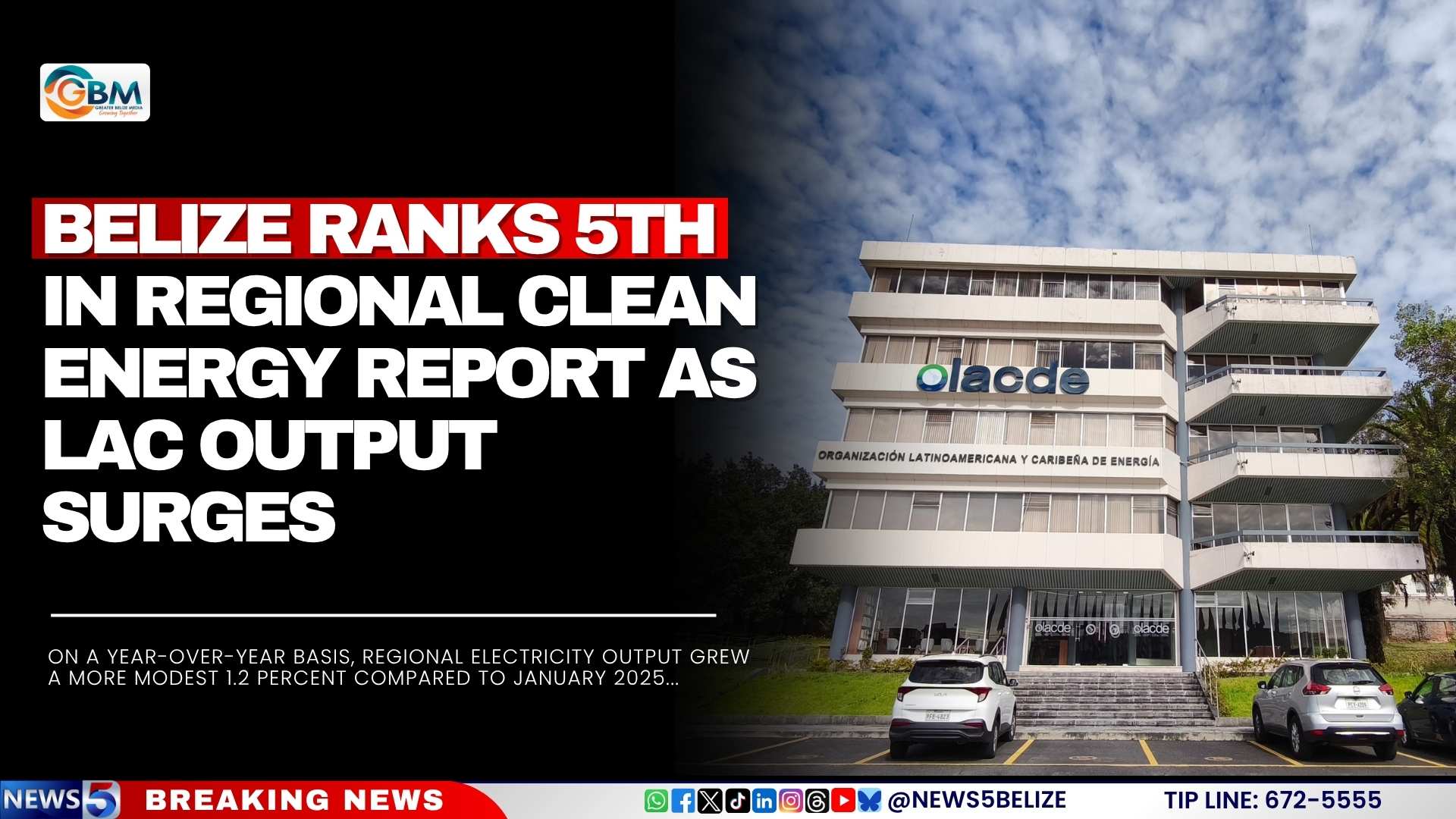
As nations across the globe accelerate their transition away from fossil fuels toward low-carbon energy systems, a new 2026 regional energy report highlights strong progress across Latin America and the Caribbean (LAC) — with Belize emerging as one of the region’s top performers in renewable electricity generation.
Released by the Latin American and Caribbean Energy Organization (OLACDE), the latest report tracks regional energy output for January 2026, revealing that total LAC electricity generation hit 171 terawatt-hours (TWh) that month. This marks a 9.6% jump from December 2025, a surge primarily driven by the rebound of hydropower generation after widespread drought and hydrological constraints that had limited output across the region in prior months eased.
When ranked by the share of total electricity generated from renewable sources, Belize secured the 5th spot in the regional ranking, with 90.9% of its domestic power coming from clean renewable resources in January. Only four LAC nations outperformed Belize: Paraguay, which hit a perfect 100% renewable generation rate, Costa Rica at 97.8%, Uruguay at 96.5%, and Ecuador at 91.6%. Colombia, Brazil and Venezuela also landed in the region’s top tier of renewable energy performers, per the report’s findings.
Across the entire LAC region, renewables now make up 66% of the total energy mix, with hydropower alone accounting for 44.5% of all regional electricity generation. Natural gas remains the most widely used fossil fuel in the region, making up 23.8% of total output. OLACDE notes that natural gas largely functions as a flexible backup capacity for regional grids that have integrated high levels of variable renewable energy sources like wind and solar.
Despite the overall strong growth in clean energy, the report also identifies key seasonal vulnerabilities that challenge grid stability across the region. Compared to December 2025, solar generation dropped by 30% in January, geothermal output fell by 36%, and wind generation declined by 11%. OLACDE analysts emphasize that these seasonal fluctuations underscore the critical need for investment in dispatchable energy technologies that can offset the intermittency of variable renewables and keep regional grids stable through changing seasonal conditions.
Looking at longer-term year-over-year trends, regional electricity output saw a far more modest 1.2% growth in January 2026 compared to the same month in 2025. Hydropower added an extra 10.8 TWh to overall output year-over-year, but lower solar generation pulled total regional output down by 11.2 TWh, offsetting much of the hydropower gain.